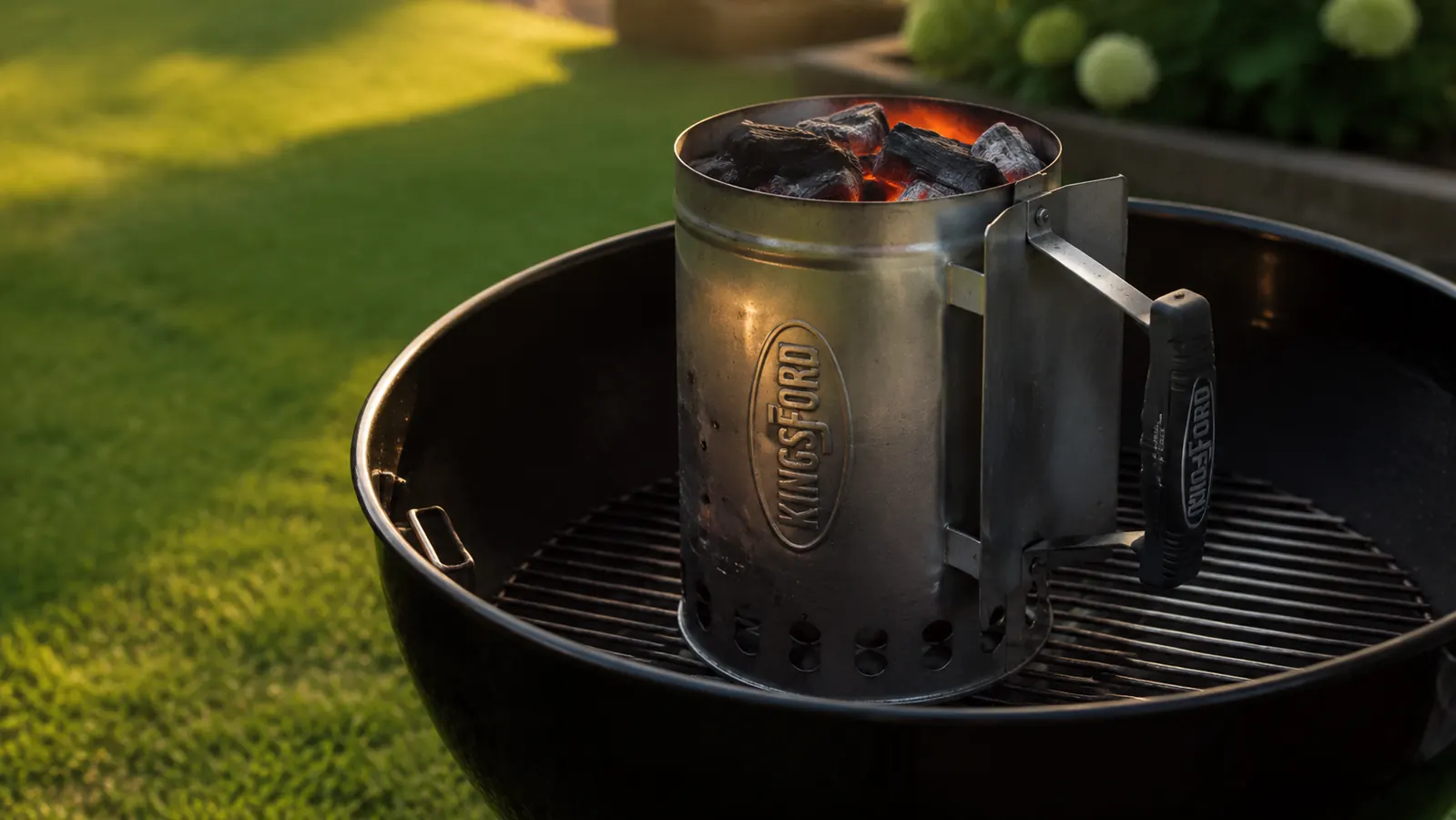
Here is the short answer: if you cook charcoal more than a few times a year, the Kingsford chimney starter wins. It lights faster once you get the hang of it, it costs almost nothing per use after that first purchase, and it does not leave a petroleum aftertaste on your food. Lighter fluid is not dangerous if you use it correctly, but it does have real tradeoffs most people only discover after they have ruined a cook.
I have grilled with both methods for years. For a long stretch in my late twenties I kept a bottle of Kingsford lighter fluid next to the grill out of pure habit. Then a neighbor handed me a chimney starter one Sunday afternoon when mine had cracked, and I never went back. This article is the side-by-side I wish someone had written for me then.
| Factor | Kingsford Chimney Starter | Lighter Fluid |
|---|---|---|
| Time to Ready Coals | 15-20 minutes (all coals ashed over evenly) | 20-30 minutes (coals ready but often uneven) |
| Upfront Cost | One-time purchase, budget-friendly | Ongoing per-bottle cost |
| Cost Per Use | Free after purchase (just newspaper or a fire starter) | Budget to moderate per use for fluid |
| Chemical Taste Risk | None, no chemicals involved | Yes, if coals are not fully ashed before cooking |
| Smoke Odor at Lighting | Clean wood and charcoal smoke only | Petroleum odor during ignition and burn-off |
| Fire Safety | No accelerant, safe to use near kids and pets | Flammable liquid, never add to lit or warm coals |
| Skill Required | Slight learning curve on newspaper fold and placement | Minimal, pour and light |
| Works in Wind | Works well; chimney body shields the flame | Tricky, fluid can blow away or flare up |
| Year-Round Storage | Metal tool, store anywhere, no spoilage | Flammable liquid, requires proper storage away from heat |
Stop buying lighter fluid every month, a chimney starter pays for itself after two cooks.
The Kingsford Compact Chimney Starter has 4.7 stars across more than 21,000 reviews. It holds enough briquettes for a full kettle grill cook and comes ready to use out of the box.
Amazon Check Today's Price on Amazon →Where the Kingsford Chimney Starter Wins
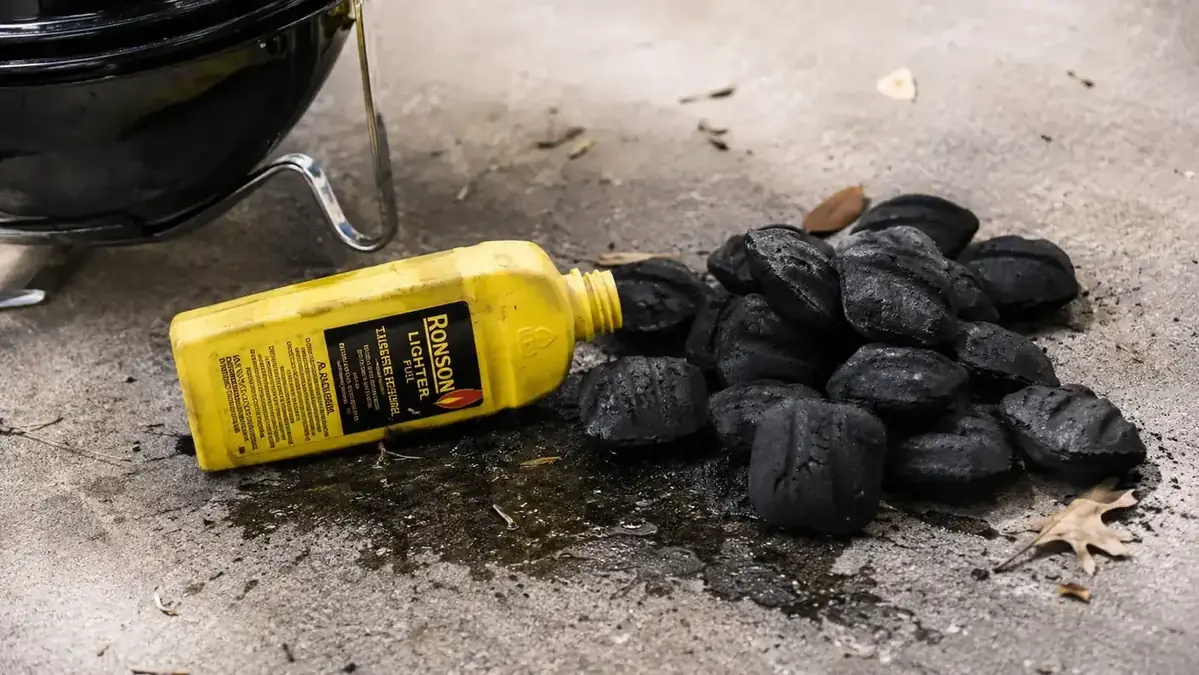
The biggest win for a chimney starter is taste. This sounds like marketing speak until you actually run the experiment side by side. When you use lighter fluid, the coals need a full 20-25 minutes of burn-off before the petroleum compounds dissipate enough to cook over. Most people wait ten minutes, see grey ash forming, and figure they are good. They are not. The result is a faint chemical note on chicken skin and burgers that you probably blame on cheap charcoal. Switch to a chimney and that taste disappears completely, because there was never any chemical in the fire to begin with.
The Kingsford compact chimney also does a better job of producing even, uniform coals. The cylinder design forces air up through the charcoal column from the bottom, which means every briquette gets the same amount of oxygen. Lighter fluid tends to burn hotter in the spots where you soaked the pile, leaving some coals fully lit and others barely catching. You then spend the first ten minutes of your actual cook shuffling coals around with a poker trying to even out the heat. With a chimney you dump everything at once and the spread is consistent.
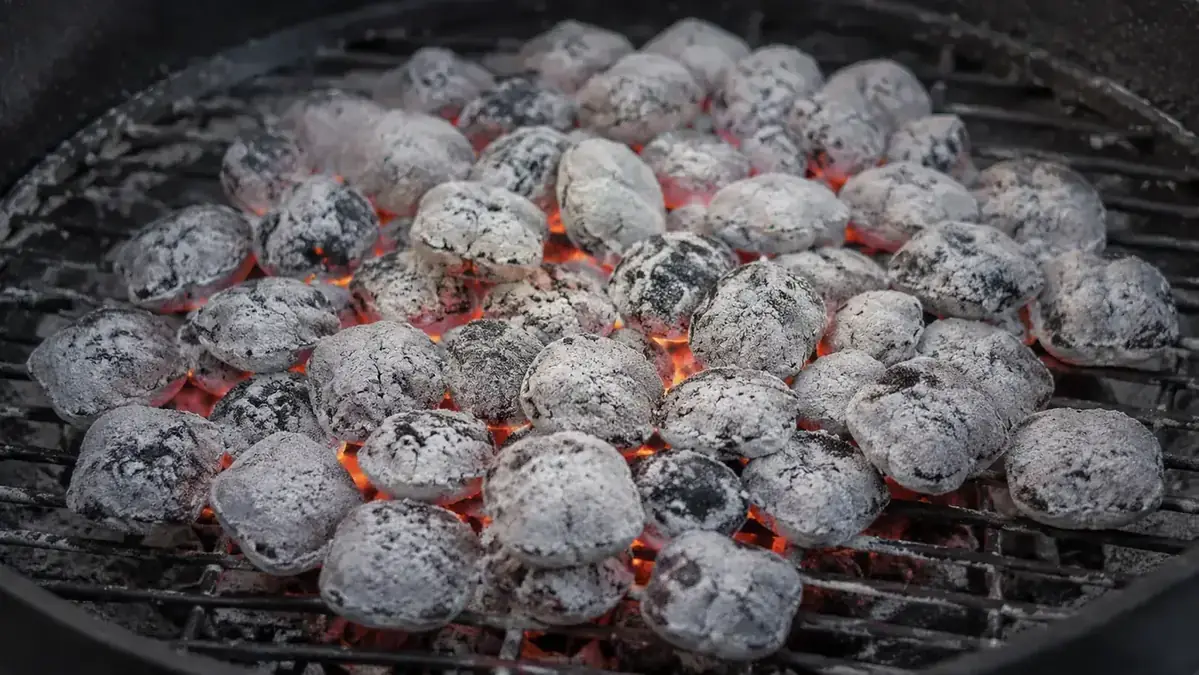
Every briquette in that chimney gets the same heat from the bottom up. When I dump them, the cook zone is ready. No shuffling, no hot spots right off the bat.
Safety is real too, even if it sounds like a lecture. Lighter fluid is a flammable liquid and people add it to coals that are still warm more often than they admit. A chimney removes that risk entirely. There is no liquid involved, no flare-up potential, nothing to store away from your propane tanks. If you have kids running around the yard during setup, that matters.
Where Lighter Fluid Wins
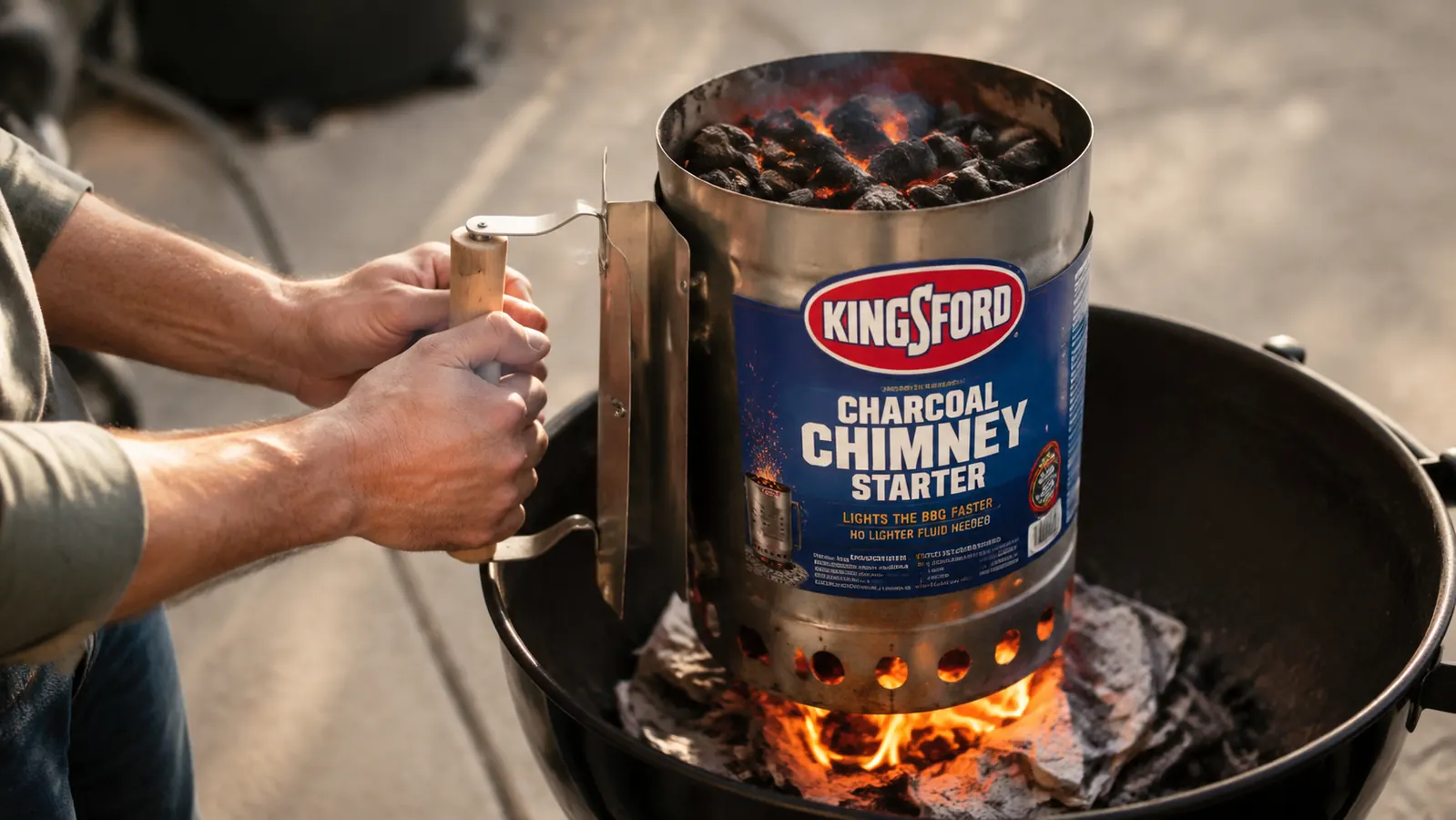
I will be straight with you: lighter fluid is easier to start. You pour it on, you wait two minutes, you touch a match or a long lighter to it, and you walk away. There is no folding newspaper, no tucking it under the chimney basket, no waiting to see if the draft took. If you grill twice a summer and do not want to think about the setup, lighter fluid is genuinely fine used correctly, and correctly means waiting a full 25 minutes after lighting before you put any food over those coals.
Lighter fluid is also more forgiving in cold, damp weather. A chimney relies on good airflow drafting up through the coals. On a cold January afternoon when the air is heavy and damp, that draft can be sluggish and you might need to give the newspaper a second light. Lighter fluid soaked into the briquettes ignites regardless of draft. If you live somewhere with genuinely cold winters and you grill year-round, keep that in mind. I tend to use a bit of a fire starter cube under my chimney on the coldest days and it solves the problem, but it adds a step.
The Ongoing Cost Comparison
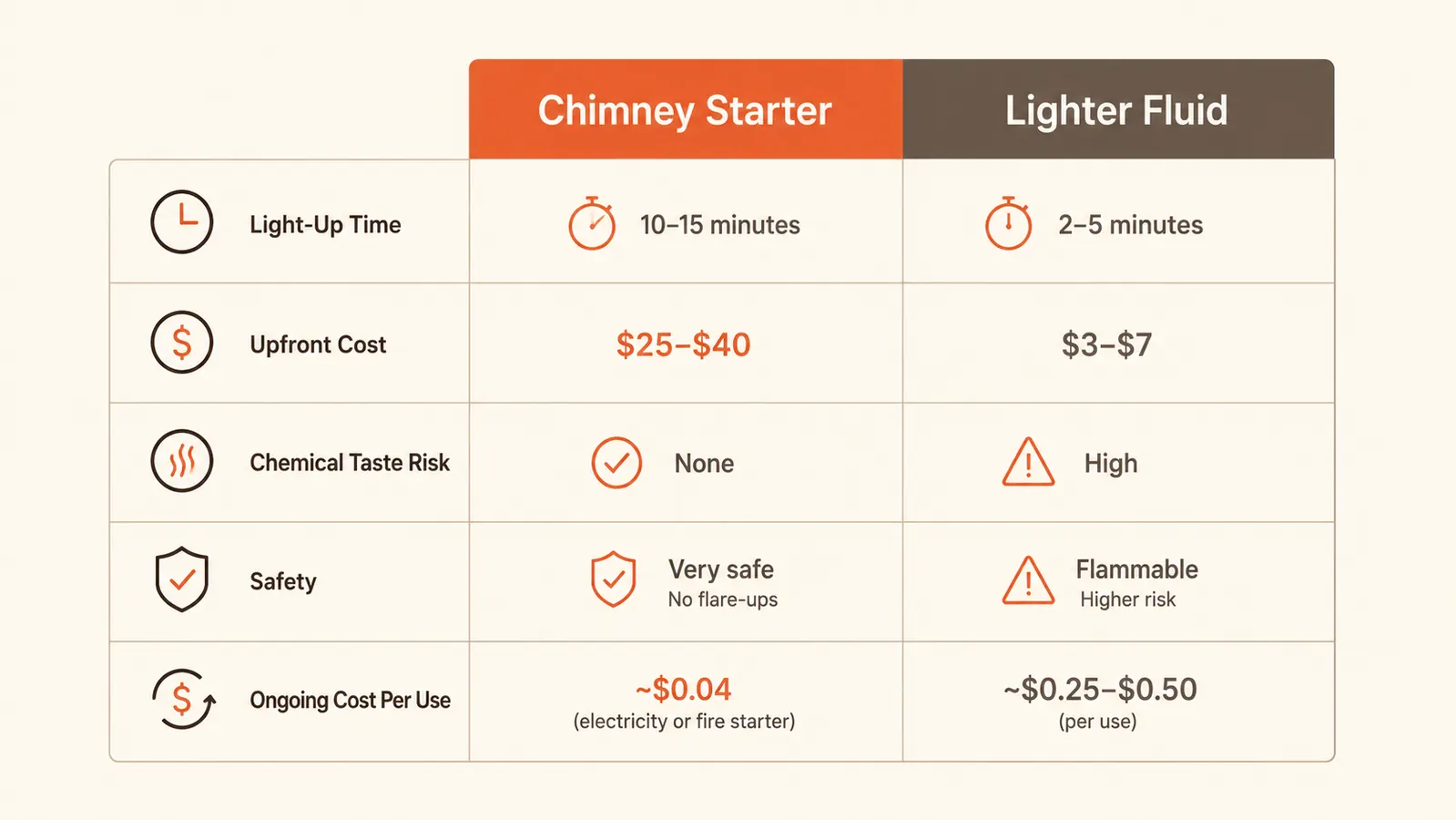
This one is simple math. A bottle of lighter fluid gets you eight to twelve uses depending on how liberally you pour. That is a fraction of the cost per cook. The Kingsford chimney starter runs at typical pricing for this category. After 32 to 40 cooks, the chimney has paid for itself versus buying fluid, and from that point forward your fire-starting cost is zero. You light it with crumpled newspaper pages or a paraffin fire starter cube that costs pennies.
If you grill 30 weekends a year, the chimney pays for itself in roughly one season. If you grill 10 times a year, it takes two or three seasons. Either way, you come out ahead eventually, and you stop making mid-summer runs to the store because you forgot to pick up fluid.
How the Kingsford Compact Size Works in Practice
The Kingsford compact is a smaller-footprint chimney. It holds roughly two pounds of standard briquettes, which fills a 22-inch kettle grill for a standard two-zone cook. For direct grilling, burgers, chicken thighs, sausage, steaks, that is exactly enough. For a long low-and-slow cook like a brisket that needs 12-plus hours of charcoal, you will need to do two loads or supplement with a larger chimney. That is the honest tradeoff for the compact size. Most weekend cooks will never notice it.
The heat shield and the wooden handle stay cool long enough to handle safely during the pour. I have used chimneys where the handle gets uncomfortably warm before you are ready to dump. That has not been an issue with this one in a season of use. The pour spout opening is wide enough to dump into a standard kettle without spillage.
Who Should Buy Which
Buy the Kingsford chimney starter if you grill with charcoal more than eight or ten times a year, you cook anything where flavor matters beyond fast food (ribs, chicken pieces, anything longer than ten minutes over the coals), you have kids in the yard during grill setup, or you want to stop thinking about lighter fluid as a recurring purchase. That covers most people reading this.
Stick with lighter fluid if you genuinely grill twice a summer and already have a bottle on hand, you are cooking something where chemical taste is unlikely to matter much (hot dogs, already-marinated kabobs at a big party), or you need to start your coals in truly cold or wet conditions and do not want to manage the chimney draft. Even then, adding a paraffin fire cube to your chimney setup usually solves the cold-weather problem.
One more thing worth saying: once most grillers switch to a chimney, they do not go back. The taste difference alone tends to close the debate permanently. The lighter fluid stays in the garage until someone asks if they can borrow it.
Ready to cook over clean coals? The Kingsford chimney starter is the one tool most backyard pitmasters say they wish they had bought sooner.
4.7 stars, over 21,000 reviews, works on any kettle or ceramic grill. Check today's price and see what current buyers are saying about the compact size.
Amazon Check Today's Price on Amazon →