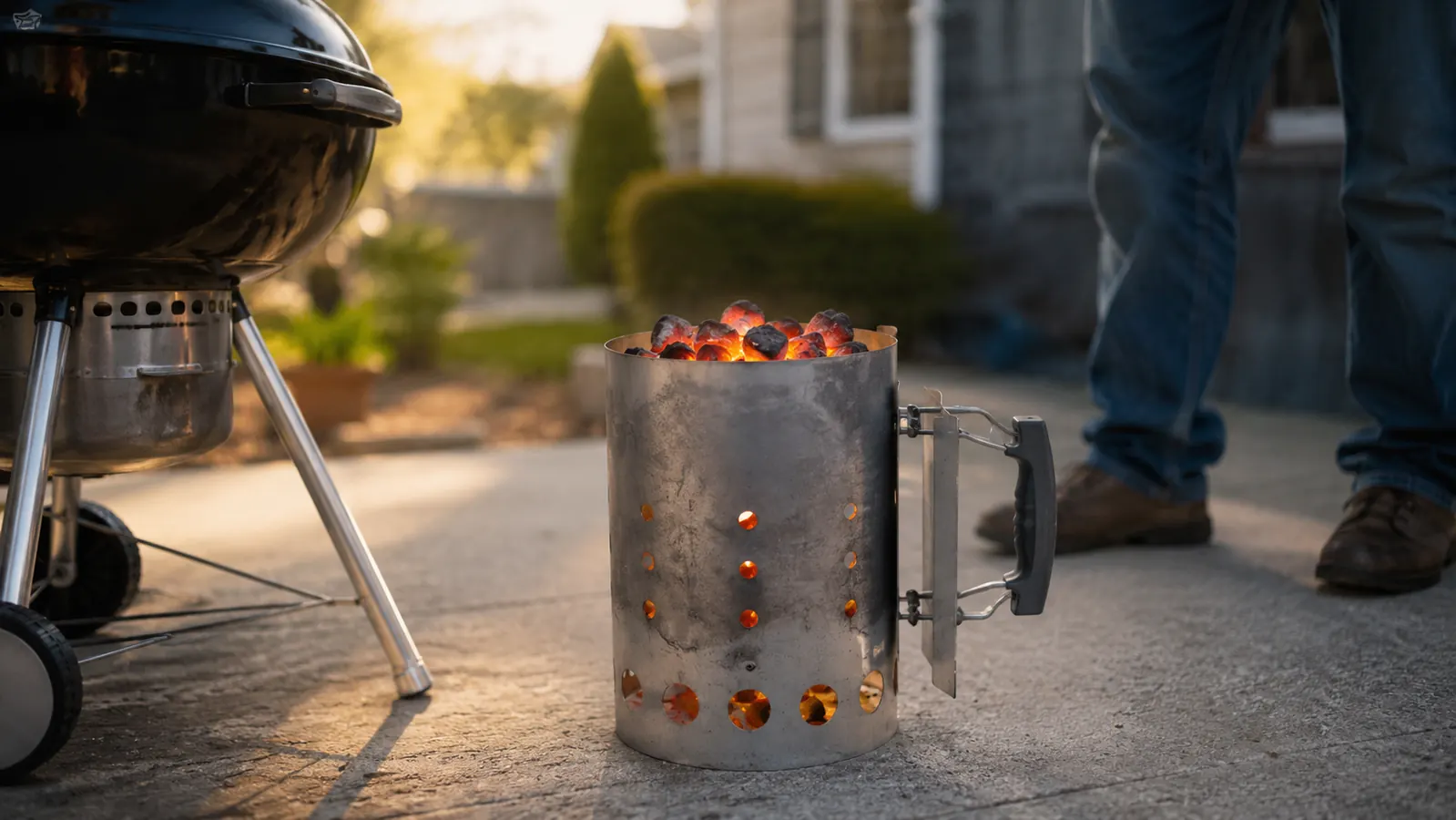
I used lighter fluid for years before a neighbor talked me out of it at a block party. He handed me a beer, pointed at my grill, and said, "That petroleum smell is going in your chicken." I thought he was being dramatic. Then I borrowed his chimney starter for one cook and never went back. The Kingsford Compact Chimney Starter is now the first thing I reach for every time I fire up charcoal, and I have had it running most weekends for going on two years.
Below are the 10 reasons I make that choice every single time. If you are on the fence about switching, this list should settle it.
Your coals taste like what you light them with. Stop using petroleum.
The Kingsford Compact Chimney Starter is one of the simplest swaps a backyard griller can make. Budget-friendly and it pays for itself in a single cookout.
Amazon Check Today's Price on Amazon →No chemical taste on your food
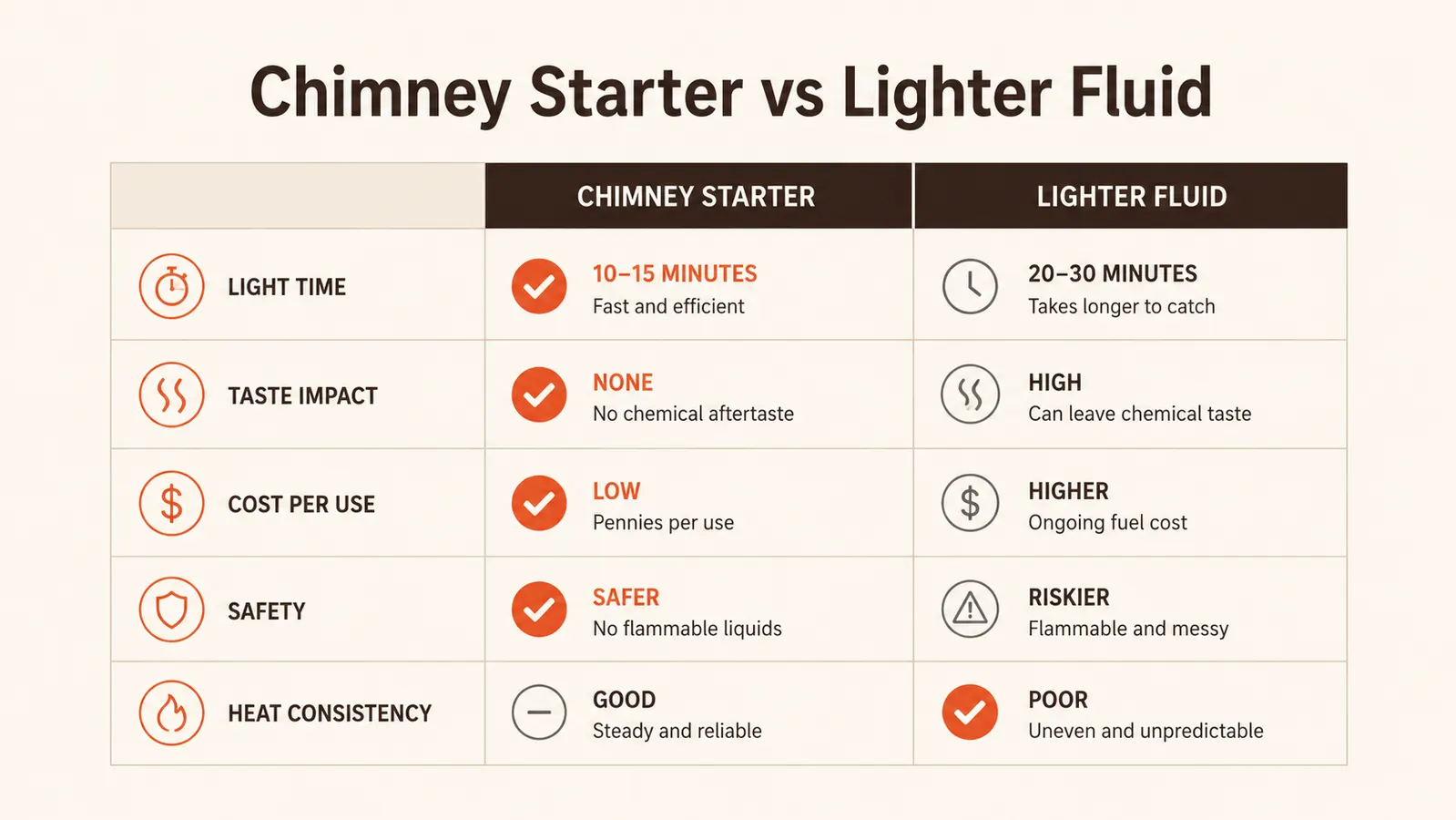
Lighter fluid is petroleum-based. When it burns off incompletely, the vapor lingers in and around your coals and gets absorbed by whatever is on the grate. You may not taste it on a heavily sauced rack of ribs, but you will notice it on a plain burger or a chicken breast. A chimney starter uses nothing but newspaper or a fire starter cube and air. The coals burn clean from the start.
Your coals are ready in about the same time
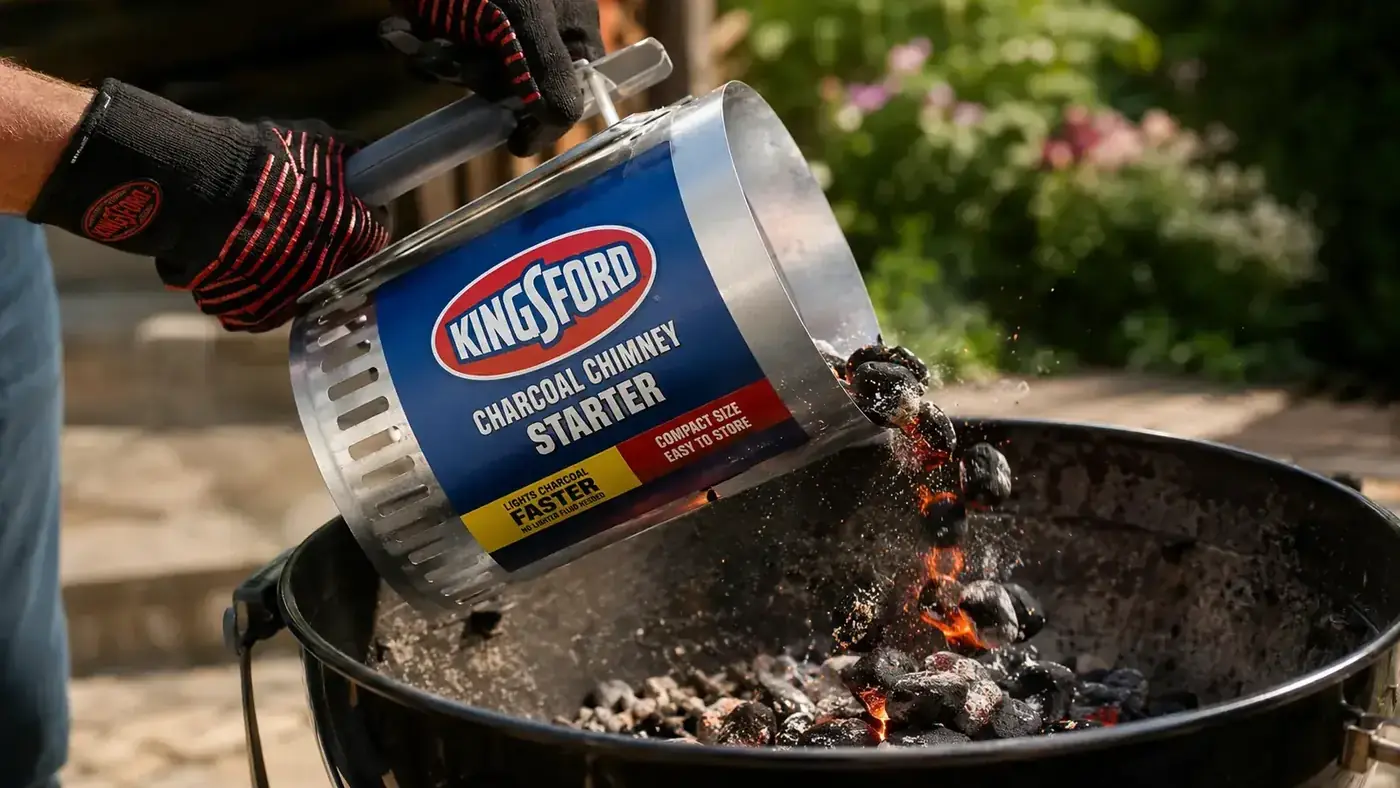
People assume lighter fluid is faster. It is not, not really. You still have to wait for the fluid to burn off before you can cook, or you risk flaring up and burning the outside of your food while the inside stays raw. With the Kingsford chimney, coals are fully lit and showing an ash-gray edge in 15 to 20 minutes. That is comparable to waiting for lighter-fluid coals to be truly cook-ready, not just on fire.
More consistent heat from the start
When you pour lighter fluid unevenly or some coals soak up more than others, you get hot spots and dead zones before you even start cooking. A chimney starter stacks coals in a compact column and forces airflow through them from the bottom up. Every coal lights from the same heat source at the same rate, so when you dump them, the bed is uniform. That makes a real difference when you are trying to hold 225 degrees for a long brisket cook.
Safer for kids and pets nearby
Lighter fluid is flammable in the can, flammable as a liquid on the coals, and flammable as vapor in the air. People get burned every summer squirting it on partially lit coals that suddenly flame back. A chimney starter has the fire fully contained inside a metal cylinder. The outside does get hot, so you use a handle and gloves, but there is no exposed flame and no flammable liquid sitting around near curious kids or dogs.
Saves money over a full season
A bottle of lighter fluid costs several dollars and lasts maybe eight to ten light-ups if you are not overdoing it. The Kingsford chimney starter is a modest one-time purchase and lasts indefinitely if you store it dry. I use two sheets of newspaper or a cheap fire starter cube each time. Over a full grilling season of 40 or 50 cookouts, that adds up to real savings. The chimney starter pays for itself inside the first month.
The compact size actually works in your favor
The Kingsford Compact holds about 4 quarts of charcoal, which is the right amount for a standard kettle grill cook without over-filling. If you need more heat for a large cook, you can light a second batch while the first one is already going. The compact cylinder heats through more evenly than the tall wide starters, and it takes up less storage space in a shed or garage.
No smell on your hands or clothes
Lighter fluid sticks. If you get it on your hands and do not wash immediately with soap, it lingers through the whole cookout. Same with your clothes if you drip it. A chimney starter eliminates that problem entirely. You crumple two sheets of newspaper, stuff them in the bottom, light the paper, and set the chimney down. You never touch the fuel at all.
Works with any charcoal type
Briquettes, lump charcoal, coconut shell charcoal, a chimney starter handles all of them the same way. Lighter fluid can leave more residue on lump charcoal, which has a more porous surface, and it changes the flavor more noticeably. If you ever want to try different charcoal styles, you are locked into inconsistent results with fluid. The chimney keeps your method the same regardless of what fuel you use.
Better for smoking and low-and-slow cooks
Any residual lighter fluid in your coal bed will absolutely affect the flavor profile of a long smoke. Wood chips pick up those compounds. Brisket, ribs, pork shoulder, these cuts spend hours absorbing smoke, and that smoke passes over coals the whole time. Starting with a clean coal bed from the chimney means your smoke flavor comes from the wood, not the lighting method. This one reason alone made me switch.
It makes you a more intentional griller
This sounds small, but bear with me. When you use a chimney starter, you build a fire deliberately. You stack the coals, you watch them catch, you wait for the right moment to pour. That process slows you down in a good way. You stop rushing. You start thinking about heat zones, about timing, about what the cook actually needs. A lot of the best backyard cooks I know all started making better food right around the time they switched to a chimney. It is not a coincidence.
What I Would Skip Instead
The one thing I still keep in the garage is a small box of fire starter cubes. On cold mornings or when it is damp outside, newspaper alone can be stubborn. A single cube at the bottom of the chimney solves that instantly. What I would not bother with: electric charcoal starters. They work, but they are slow, they require an extension cord, and they wear out. The chimney starter is simpler, cheaper, and more reliable.
The first time I poured clean, fully lit coals from that chimney onto my grate, I could tell the difference in the food before I even took a bite. The smoke smelled different. Better.
One affordable tool. Zero lighter fluid. Better food every weekend.
The Kingsford Compact Chimney Starter has over 21,000 reviews and a 4.7-star rating on Amazon. If you cook on charcoal even a handful of times a year, it will pay for itself fast. See the current price and grab one before your next cookout.
Amazon Check Today's Price on Amazon →