
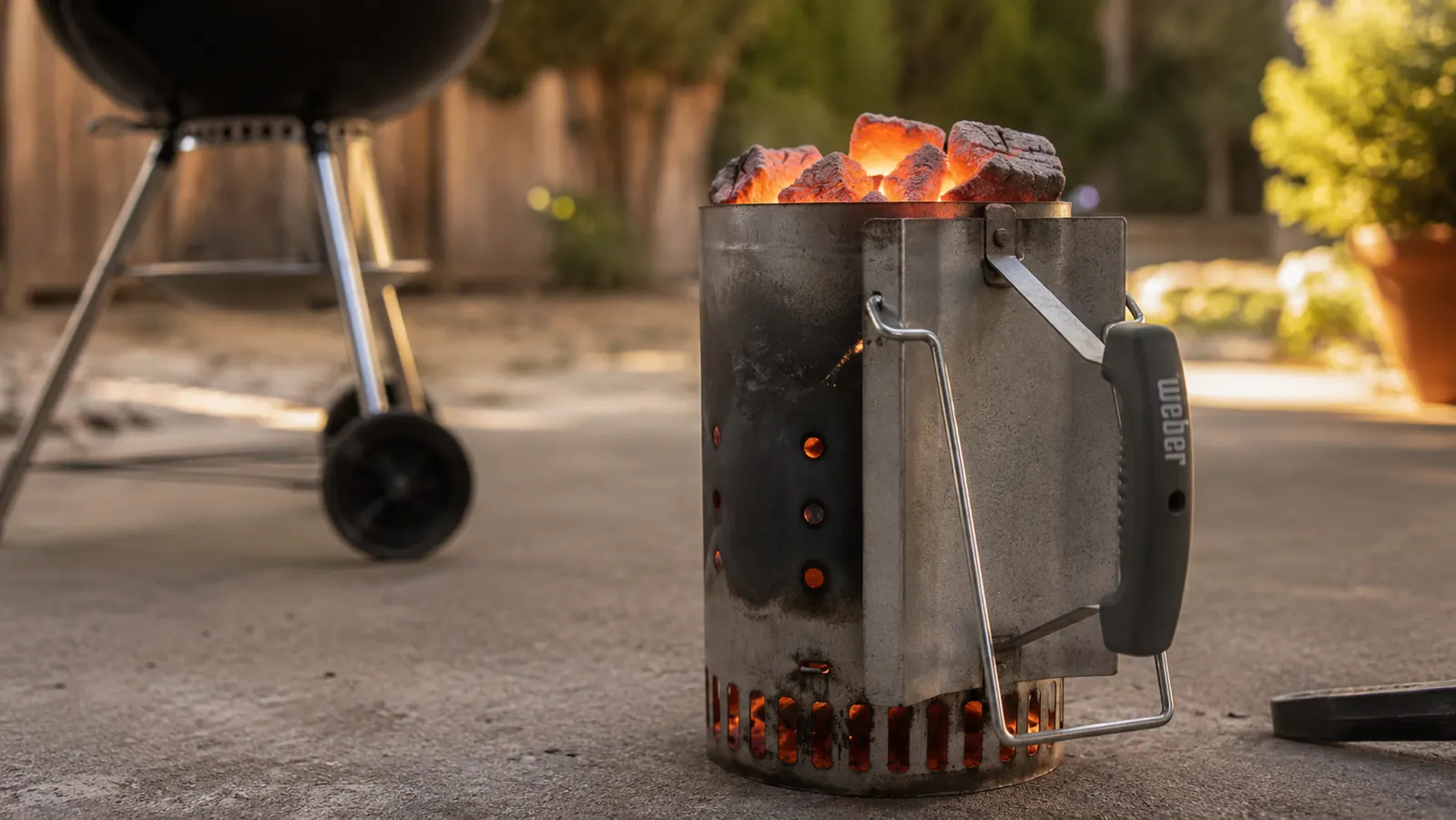
Last spring I bought the Kingsford Compact Charcoal Chimney Starter because I was tired of the lighter fluid routine. You know the one: douse the coals, wait, light it, wait some more, smell that petrochemical smell on your first few burgers. I wanted clean heat and I wanted it faster. After about 50 weekend cookouts on my 22-inch kettle, I have a clear picture of what this chimney actually does well and where it falls short. The short version: it earns its spot in my garage every single week.
The Quick Verdict
A compact, well-made charcoal chimney that lights reliably in 15 minutes without any chemical smell. The smaller capacity is a real trade-off for large cooks, but for a standard kettle on a weeknight or a family cookout it is exactly what you need.
Amazon Check Today's Price →Done squirting lighter fluid and waiting 25 minutes for coals that taste like petroleum?
The Kingsford compact chimney starter has 4.7 stars across more than 21,000 reviews for a reason. Light it once and you will not reach for the fluid can again.
Amazon Check Today's Price on Amazon →How I Have Been Using It
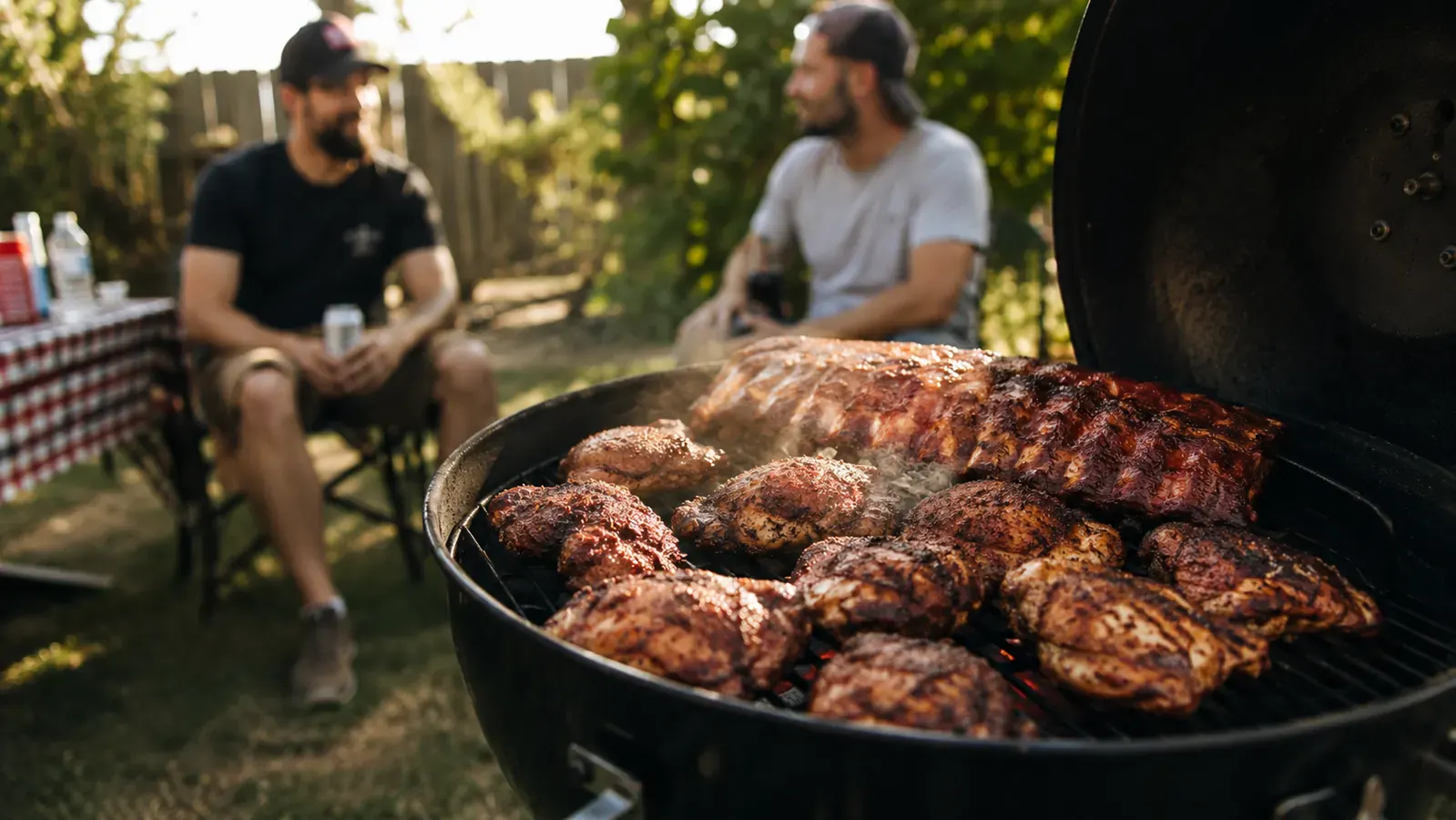
I cook on a 22-inch Weber kettle most Saturdays and some Sunday afternoons. My usual crowd is my wife, two kids (ages 9 and 13), and whoever wanders over from next door. That means I am typically cooking two to three pounds of chicken thighs, a rack of ribs, or whatever went on sale at the butcher that week. I am not running a competition smoker. I am just trying to get good food on the table without burning an hour of my afternoon first.
I load the Kingsford chimney with one full fill of Kingsford Original briquettes, stuff two sheets of crumpled newspaper underneath, and light it with a long-neck lighter. Most weekends the coals are ash-covered and ready to dump in right around the 15-minute mark. On cool or windy fall days it pushes closer to 18 or 20 minutes, but that is still faster than lighter fluid ever was for me. I tip the coals into the kettle, put the grate on for two minutes to preheat, and I am cooking. The whole startup sequence takes less time than it used to take me just to find the lighter fluid can.
Over the past year I have used it in weather ranging from a muggy July afternoon to a 38-degree November evening when we were desperate for one last brisket before the grill went into winter storage. I have filled it with mesquite lump for high-heat searing and with briquettes for low-and-slow chicken. It handled all of it without complaint.
Build Quality and Materials After Extended Use
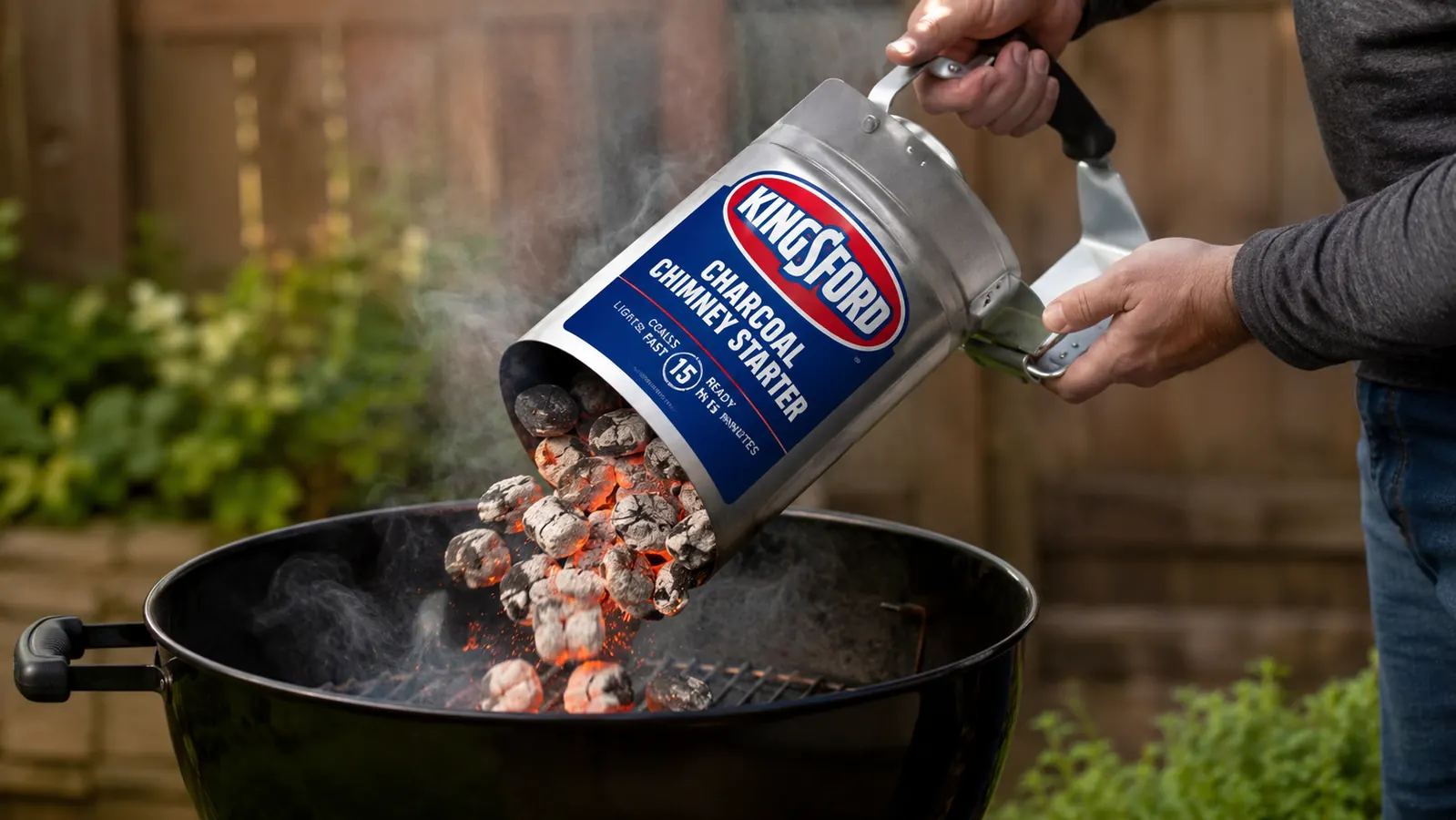
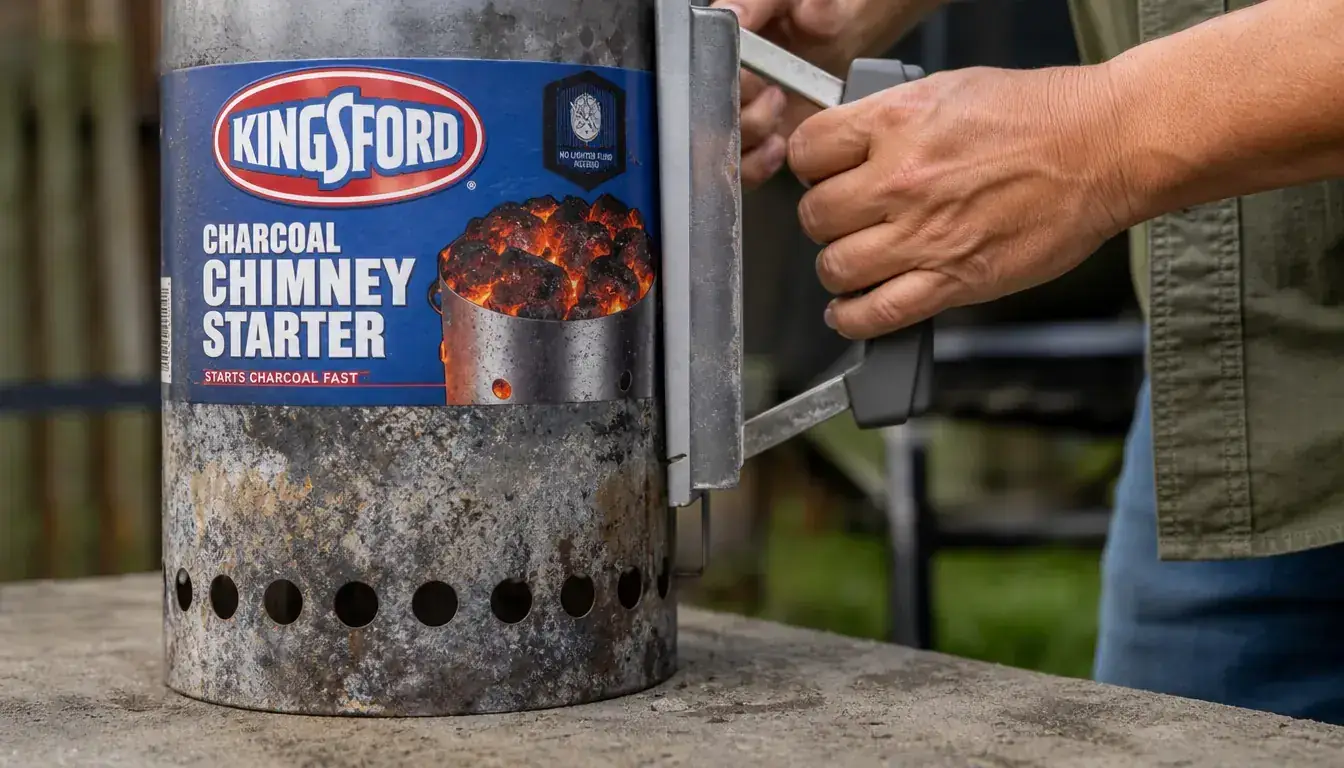
The Kingsford chimney is made from galvanized steel with a black heat-resistant handle and a secondary wire handle for tipping. After a year and around 50 uses, the body has the expected heat discoloration, that blue-gray patina you see on any metal that has been hot a lot. The welds where the handle brackets attach are still solid. Nothing has loosened, warped badly, or burned through. For something that lives in a semi-covered corner of my garage between cooks, that feels like a real vote of confidence.
The stay-cool composite handle is the feature I appreciate most. Early on I was skeptical because the handle on my old no-name chimney was just thin steel that you had to wrap with a towel. The Kingsford handle has some kind of heat-shielded plastic composite that stays genuinely grippy even when the chimney body is radiating heat. I have never had to search for a mitt to tip the coals. That sounds like a small thing until you have burned your wrist reaching for a glove with a hand full of hot coals.
One honest note on construction: the vented base where you put the newspaper can get a little warped after heavy use at very high temperatures. Mine started showing a slight bow around month seven. It has not affected function, the newspaper still catches and the airflow still works, but if you are someone who treats gear roughly or runs the chimney almost to the melting point consistently, keep that in mind.
Coal Capacity: The Compact Trade-Off
The word "compact" in the name is doing real work. This chimney holds roughly 4 to 4.5 quarts of briquettes, which is enough to fill a standard 22-inch kettle for a two-zone setup or for a direct-heat cook at moderate temperatures. For my typical Saturday cook of bone-in chicken thighs or pork chops, one load is exactly right. The fire settles in at about 400 to 425 degrees Fahrenheit at the grate, which is plenty.
Where you will feel the limitation is on longer cooks. If you are doing a full brisket or a big pork butt that needs six-plus hours at 250 degrees, you are going to need to add more coals partway through. With a larger chimney, like the full-size Weber you might already own, you can light a second batch in the same chimney and dump it on top of the spent coals. With the Kingsford compact, you can do the same thing, but the smaller capacity means more frequent reloads on a truly long cook. For me, that happens maybe four or five times a year, so it is not a deal-breaker. If you are doing long low-and-slow sessions every weekend, you might want to size up.
One load gets me to 400 degrees in 15 minutes on almost any fair-weather weekend. That is the only number that matters for a family Saturday cookout.
Light-Up Speed and Consistency
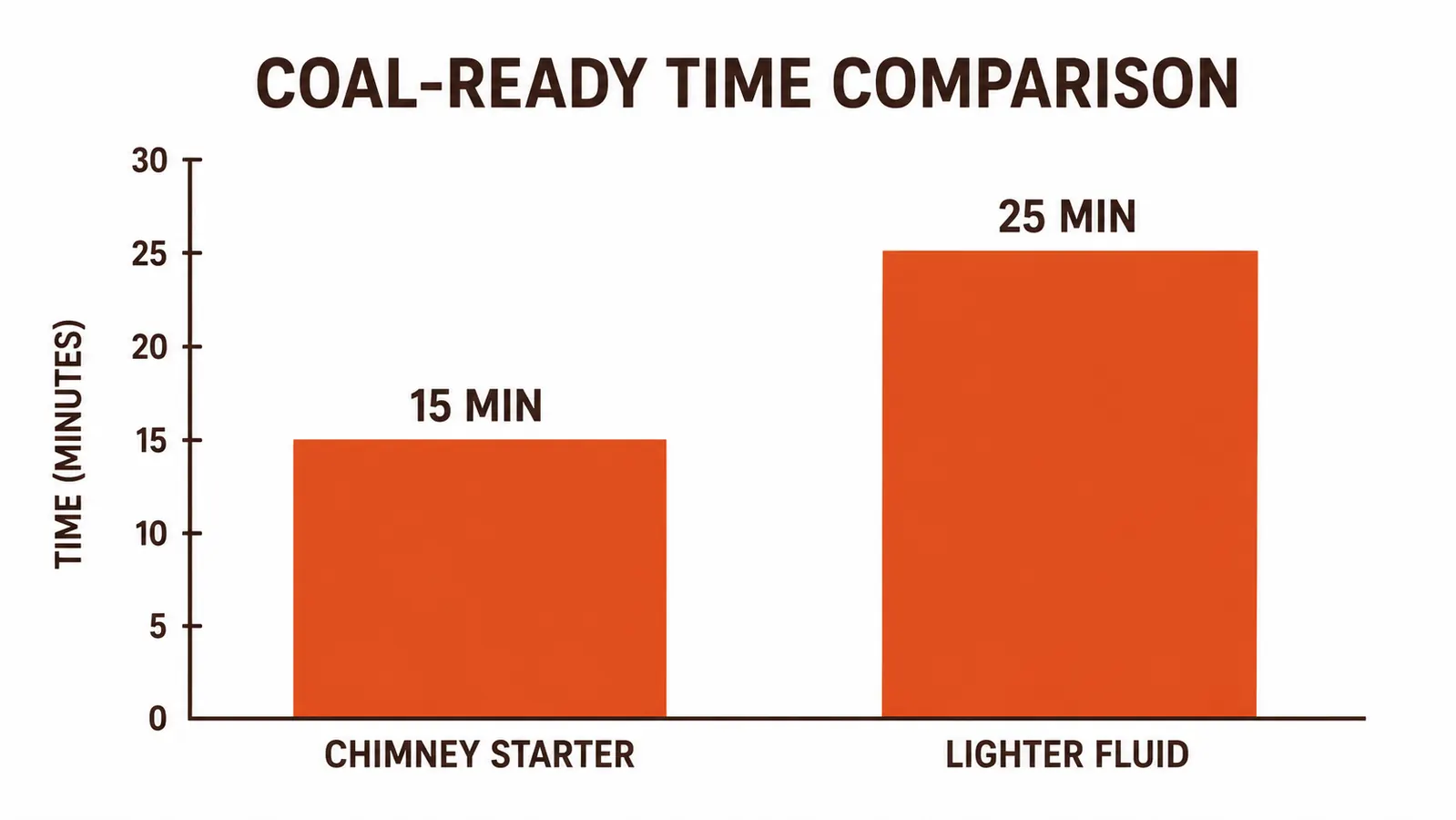
This is where the chimney earns its keep. With lighter fluid, my old timing was: pour, wait two minutes, light, watch it flare, wait another 10 to 15 minutes for the fluid to burn off, and then wait more while the coals finished going gray. Total time from pour to cooking-ready was usually 25 to 30 minutes, and the first burgers still sometimes had a faint petroleum note.
With the Kingsford chimney and two sheets of newspaper, I am consistently in the 14 to 18 minute range for a full load of Kingsford Original briquettes. Lump charcoal lights even faster, sometimes 11 or 12 minutes, because the pieces are smaller and less dense. The convective airflow the chimney creates by drawing heat upward through the coals is the reason. You are basically running a controlled draft through the coal bed the whole time. There is no petroleum taste because there is no petroleum. The coals come out clean.
I have had exactly one failed light in 50 tries, and it was my fault. I used a single sheet of newspaper instead of two on a damp October morning. The paper burned before it could get the coals going. Switched to a paraffin fire starter cube under the newspaper and it has been reliable ever since on questionable mornings. If you cook in the Pacific Northwest or anywhere reliably damp, pick up a box of fire starter cubes. They cost about two dollars for twenty and they are worth every cent.
Cleanup and Storage
After every cook I let the chimney cool completely, which takes about 45 minutes after I dump the coals. Then I brush out the ash with a stiff-bristle brush. There is not much to clean because the newspaper ash and any stray briquette bits fall out through the vented base onto the ground. I have never needed soap or water on it. It stores vertically in the corner of my garage on a small hook I screwed into the wall. The whole footprint is about the size of a large coffee can.
One thing I will say: the first few uses, the galvanized coating burns off a bit and produces a light smoke that smells a little metallic. That is normal and it goes away by the third or fourth use. Just let it burn out fully the first two times before cooking food over those coals. After that it is clean.
Alternatives I Considered
Before settling on the Kingsford I looked at the Weber Rapidfire Chimney Starter, which is the other name you see everywhere in this category. The Weber holds more coal, which is better for big cooks, and the pour spout design is slightly easier to aim into a smaller charcoal area. But it costs more and the Kingsford is built with a handle I genuinely trust more. I also looked at a couple of generic no-brand chimneys on Amazon in the eight to ten dollar range. I have been down that road before with grilling gear and it has cost me more over time than buying a real product once.
The other obvious alternative is just sticking with lighter fluid. I know people who have used it for twenty years and swear by it. If you are careful and patient and your food does not seem affected, maybe that is fine. But once you go through the chimney process a few times and taste the difference on a simple chicken thigh, it is hard to go back. The food just tastes cleaner, and the process feels better.
What I Liked
- Consistent 15-minute light time in fair weather, no petroleum flavor on food
- Stay-cool composite handle is genuinely safe, no glove needed to tip coals
- Compact footprint stores easily in a garage or shed corner
- Solid construction after 50-plus uses, welds and handle brackets still tight
- Works equally well with briquettes or lump charcoal
- Pays for itself in lighter fluid you do not buy
Where It Falls Short
- Compact capacity means extra reloads on long low-and-slow cooks (6-plus hours)
- Vented base showed slight warp around month seven under heavy use
- On wet or cold mornings, one sheet of newspaper is not enough; fire starter cubes are a must
- The pour spout is slightly narrow; tipping into a small charcoal grate takes a little practice
- First two or three uses produce a metallic burn-off smell from the galvanized coating
Who This Is For
This chimney is a great fit for the weekend backyard cook who uses a 22-inch or smaller kettle and does not want to think hard about the startup process. If you are doing chicken, steaks, burgers, pork chops, or shorter rib cooks where you just need a reliable hot fire in 15 minutes, the Kingsford compact handles that without a fuss. It is also a solid choice for someone who travels to cookouts, goes camping with a portable grill, or wants a spare chimney to keep at a cabin. The compact size that makes it a little limiting on big cooks makes it genuinely portable.
Who Should Skip It
If you run a big offset smoker or a large kettle doing full briskets or pork butts regularly, the compact capacity is going to feel limiting week after week. In that case, the full-size Weber Rapidfire or another higher-capacity chimney is the smarter buy. Same goes if you are cooking for a large group consistently and need to get a lot of coal going at once. The Kingsford compact is sized for a family, not a block party.
If you are still on lighter fluid, this is the one tool that actually changes your weekend routine.
The Kingsford compact chimney starter is rated 4.7 stars by more than 21,000 backyard cooks. It does exactly what it promises: clean, fast, reliable charcoal every time. Check the current price on Amazon.
Amazon Check Today's Price on Amazon →