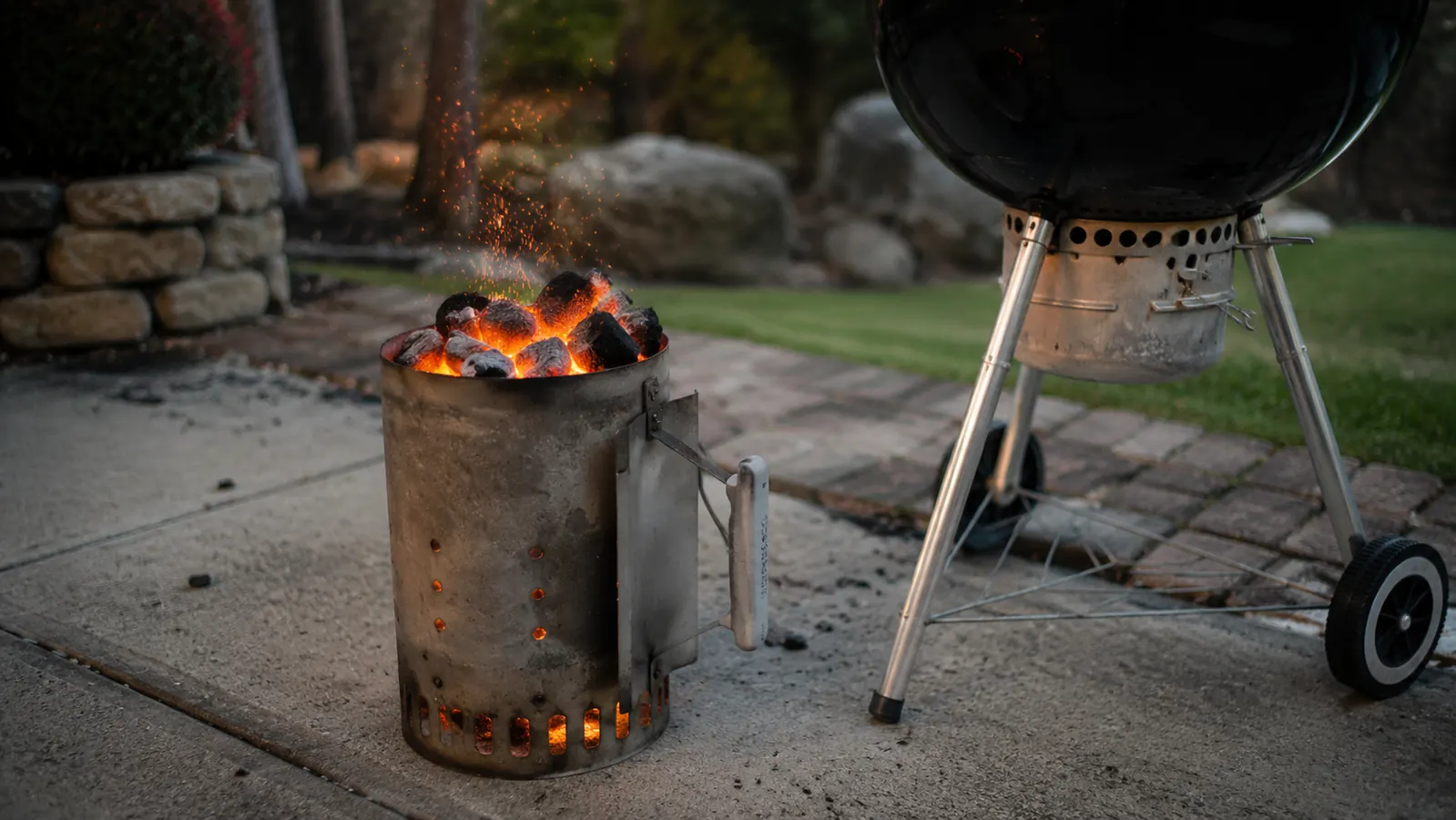
I want to tell you about a Saturday afternoon last October that changed how I start every fire. My neighbor Marcus came over to help me break down a brisket I had smoked the day before. He had his Kingsford chimney starter tucked under his arm because he knew I was going to light up the kettle for some ribs while we worked. I had my usual setup ready: charcoal, lighter fluid, long match. Marcus set his chimney starter down on the concrete and looked at my lighter fluid can the same way you look at a smoke alarm that has been chirping for a week. He did not say anything. He just picked up my can, set it off to the side, and started loading briquettes into the chimney.
I had seen chimney starters before. I had honestly never thought I needed one. I had been using lighter fluid since my dad taught me to grill in the backyard on Bayshore Road in 1994. Lighter fluid worked. Coals lit. Food got cooked. That was the whole story, as far as I was concerned. The chemical smell at the start did not bother me. The extra wait while the fluid burned off did not bother me. What I did not realize was how much both of those things were quietly affecting the finished product.
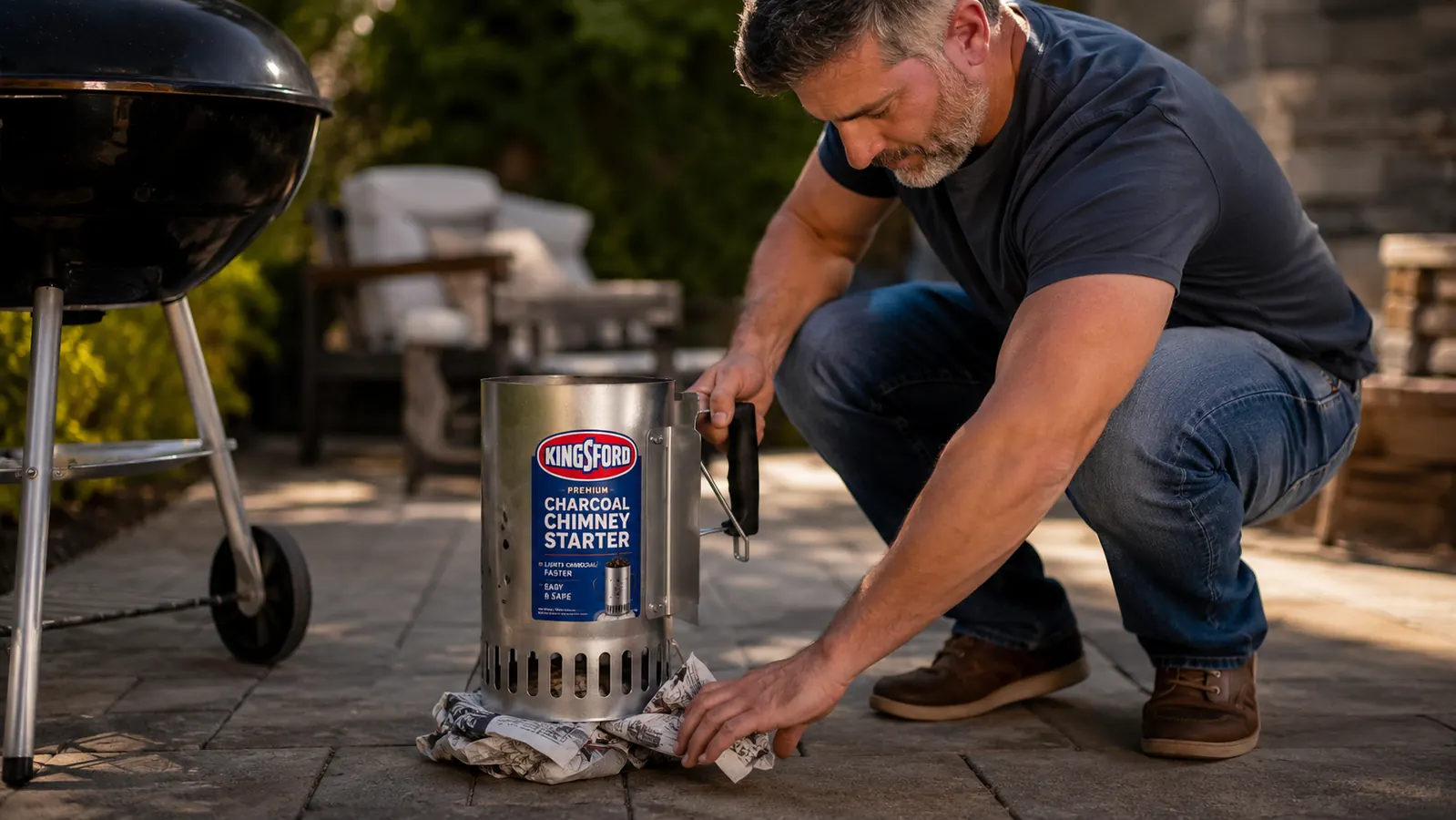
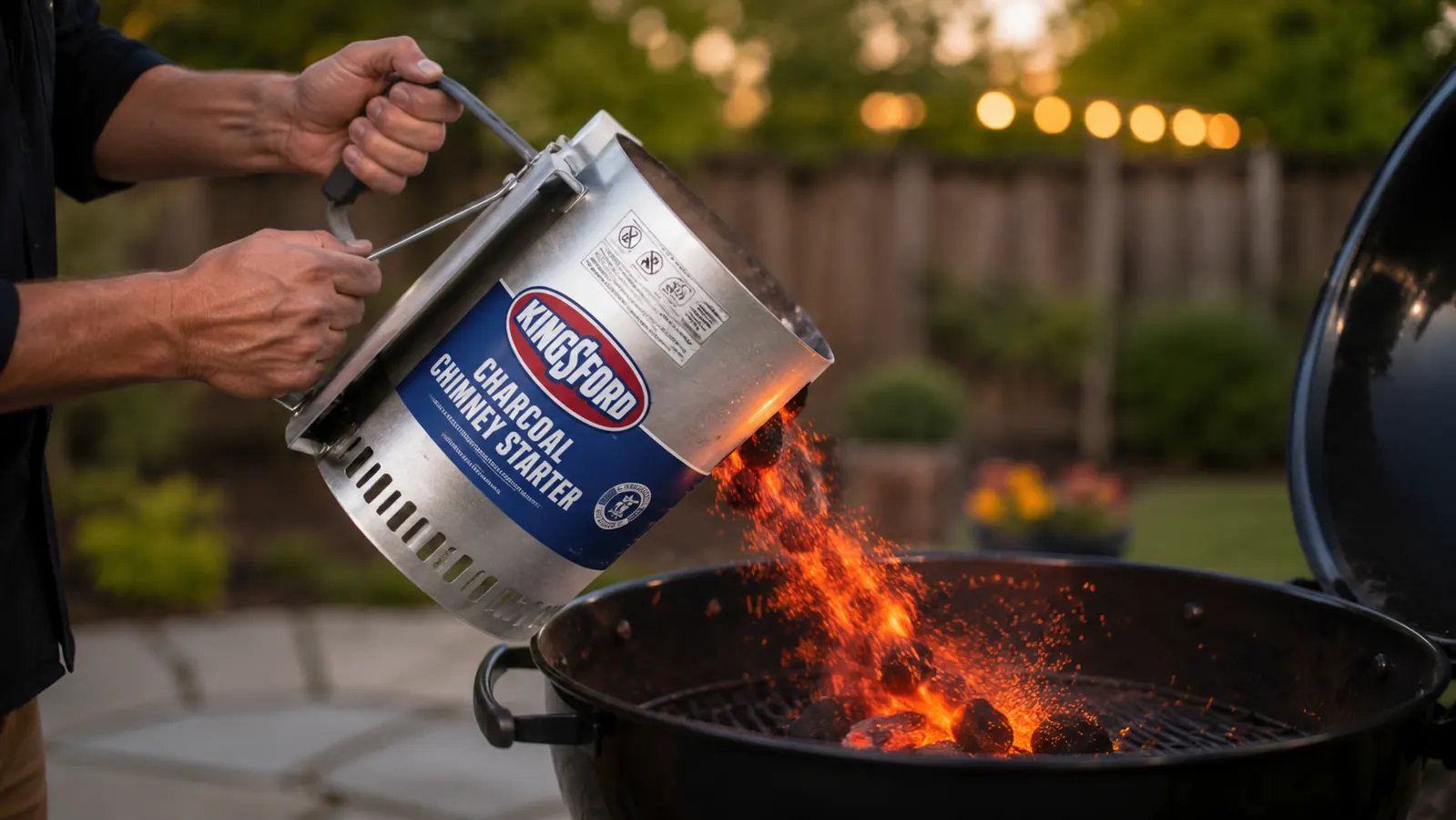
Marcus stuffed two sheets of newspaper under the chimney, lit them with one match, and put the chimney on the bottom grate. That was it. No squirting. No standing back. No nervous moment where the flame shoots up three feet because you used a little too much. We went inside to grab beers and came back out seventeen minutes later to a chimney full of coals that were uniformly ashed over and ready. Not some coals. All of them. That never happened with lighter fluid unless I waited an extra twenty minutes past the point where I thought they were ready.
The ribs came off the grill that afternoon and my wife took one bite and said, 'Did you do something different? These taste cleaner.' I had not changed the rub, the wood chips, or the cook time. The only thing different was how I lit the fire.
We loaded those coals into my 22-inch Weber and put a rack of spare ribs on at 250 degrees with some hickory chips in the smoker box. Three hours later the ribs came off the grill and my wife took one bite and said: did you do something different? These taste cleaner. I had not changed the rub, the wood chips, or the cook time. The only thing different was how I lit the fire. That was enough for me. The lighter fluid can went into the recycling bin before Marcus left that evening.
Your coals light cleaner when there is no chemical residue to burn off first
The Kingsford Compact Chimney Starter is what Marcus uses and what I switched to that Saturday. It is inexpensive and has more than 21,000 reviews for a reason. Check the current price on Amazon and see if it ships free to your zip code.
Amazon Check Today's Price on Amazon →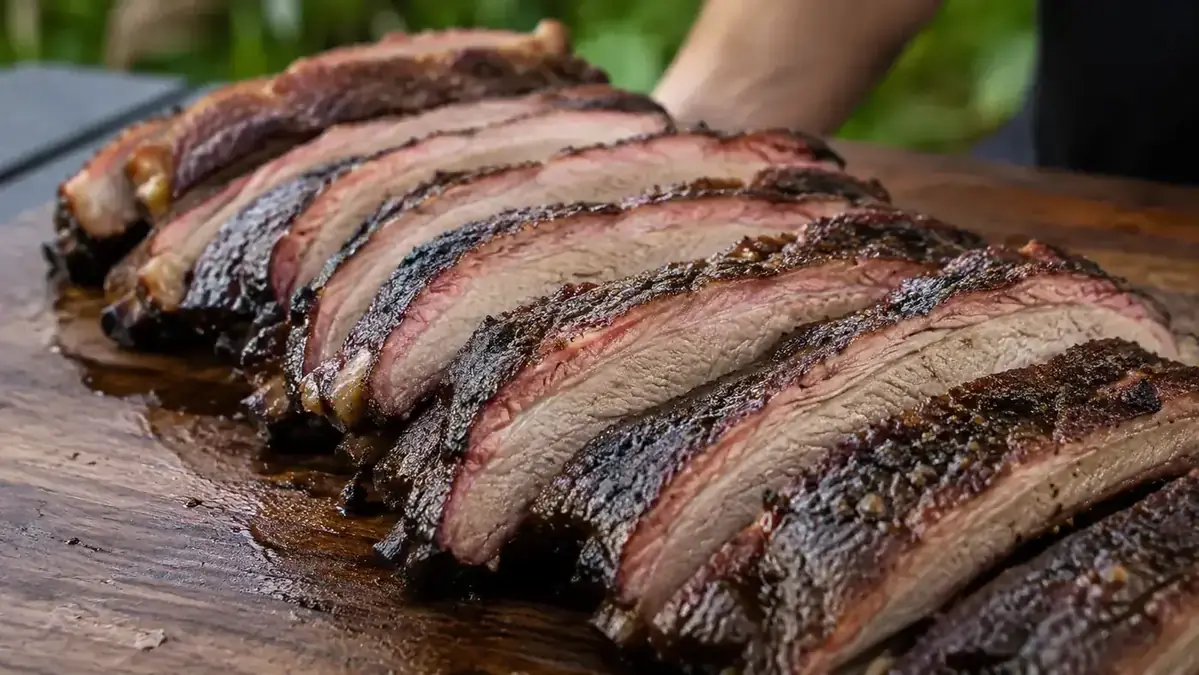
I picked up my own Kingsford chimney starter the following Monday. It is the compact version, which is the right call for most backyard cooks who run a standard kettle or a medium-sized charcoal grill. It holds enough briquettes for a standard two-zone setup or a full grate of chicken thighs. The handle stays cool because of the heat-resistant coating. The bottom grate inside the chimney is positioned perfectly to let air draw up through the coals, which is the whole reason a chimney works so much better than fluid: you are using convection, not chemicals.
What surprised me most was the consistency. Before, my fire was always slightly unpredictable. Some weekends the coals would be ready in fifteen minutes, some weekends twenty-five. With the chimney, it is seventeen to twenty minutes every single time, and the entire load is ready at once. That matters when you are cooking for a group and people are starting to circle the grill. You want to be able to say with confidence: five more minutes. Not: I am not sure, let me check.
The one real limitation with the compact size is that if you are cooking for twelve or more people on a big grill, you might find yourself running two loads. That takes a little planning. Fill the first load, get it started, and while those coals are coming up, fill a second chimney or know that you will be adding a second batch mid-cook. For my usual crew of six to eight people, one load handles it fine.
What I'd Tell You If We Were Sitting at My Kitchen Table
I would tell you to skip the lighter fluid entirely. Not because it is some complicated technique or because I want to sound like a snob about fire-starting. I would tell you because the food genuinely tastes different without the chemical residue, and you deserve to know that after years of using the stuff. A chimney starter costs less than two bottles of lighter fluid if you buy the name-brand stuff. It lasts for years. It is faster than waiting for lighter fluid to fully burn off. And the first time you do a long cook with no chemical taste in the background, you will notice it. Your guests will notice it. That conversation Marcus and I had over those ribs in October was all I needed. I hope you get to have the same one.
One Saturday is all it took to change fourteen years of habit
The Kingsford Compact Chimney Starter is on Amazon and ships free with Prime. If you want the full breakdown of how it held up over a year of weekend use, read the long-term review for more details before you decide.
Amazon Check Today's Price on Amazon →