
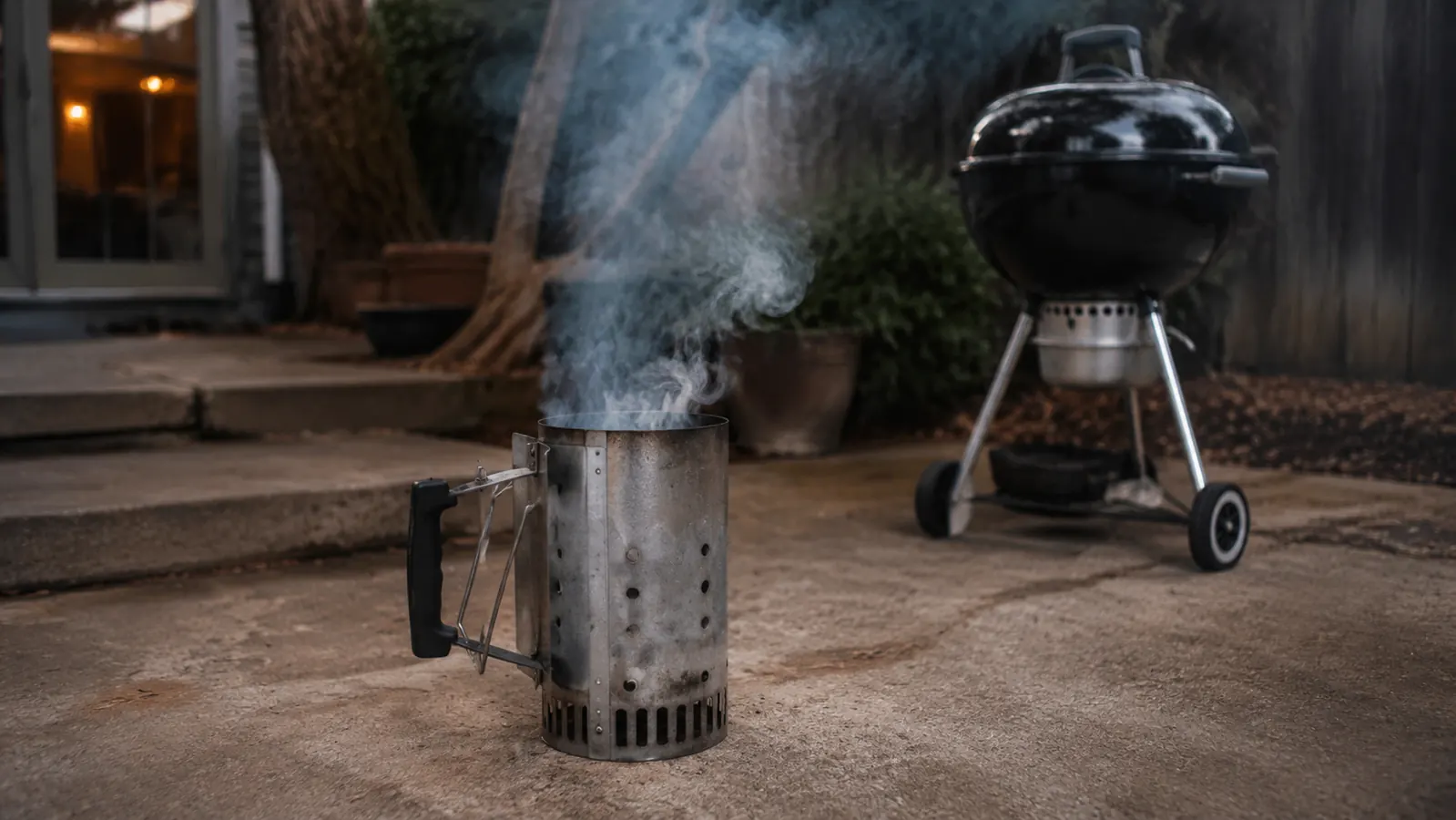
Here is what nobody says in the Amazon listing: the Kingsford Compact Charcoal Chimney Starter holds roughly half the briquettes of a standard full-size chimney. That single fact changes who this thing is for and who should skip it entirely. I bought mine thinking it was basically a normal chimney that takes up less shelf space in the garage. That is not quite right, and I want to be straight with you about what you are actually getting.
The compact design is not a gimmick. For a lot of backyard cooks, it is genuinely the right call. But the gaps in how this thing gets described online left me surprised a couple of times early on, and I would rather you know those things up front before you put down your money.
The Quick Verdict
Excellent build for small-to-medium cooks, but buy a full-size chimney if you regularly feed more than six people or run a 22-inch kettle with a full coal bed.
Amazon Check Today's Price →If you are tired of lighter-fluid taste and slow charcoal starts, this compact chimney fixes both problems fast.
The Kingsford compact chimney starter lights a usable coal bed in 15 to 20 minutes with nothing but newspaper. No fluid, no chemical smell on the food. Check today's price and see if it fits your setup.
Amazon Check Today's Price on Amazon →What 'Compact' Actually Means in Practice
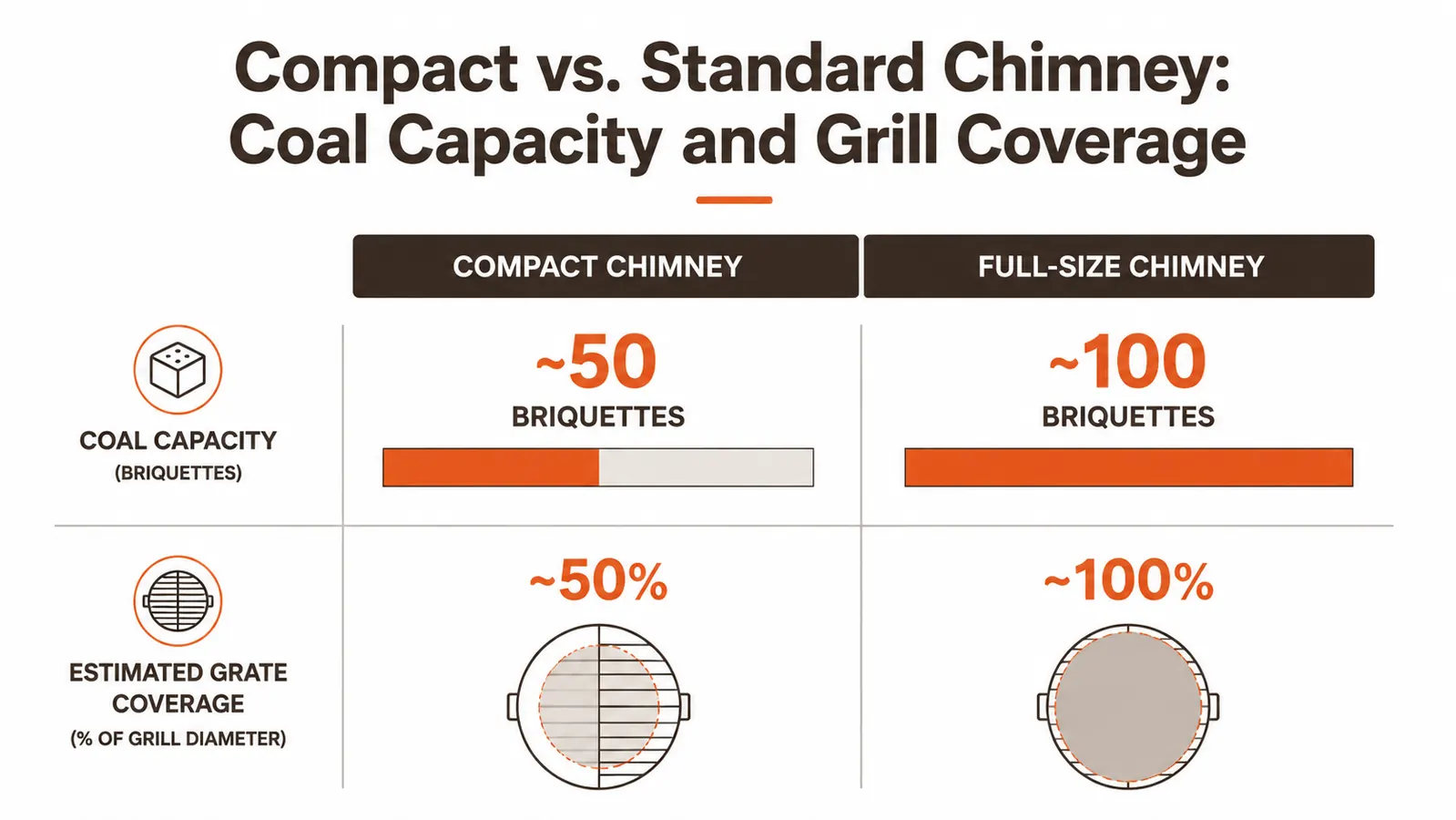
Most full-size charcoal chimneys hold around 90 to 100 standard Kingsford briquettes. The compact version holds closer to 45 to 50. That is not a small difference. On a 22-inch Weber kettle, a full chimney covers the entire grate and lets you bank coals two-zone or run a screaming-hot direct sear from edge to edge. A compact chimney covers roughly the center half of that same grate.
For a 14 or 18-inch portable kettle, a tabletop grill, or a smaller charcoal unit, the compact holds exactly the right amount. You are not fighting with ash overflow or coals piled so high they touch the grate. But on a full-size 22-inch kettle for a cookout with eight people, you will either run two loads through the chimney back-to-back or accept that you are working with a reduced coal bed. Neither is a disaster, but it is worth knowing before you start.
The physical dimensions also matter for storage. The compact sits noticeably shorter than a Weber or Cajun Classic full-size chimney. If you keep your chimney on a garage shelf or tucked in a cabinet next to the grill, the smaller footprint is genuinely convenient. I can fit it in a tote bag with tongs and a brush. That sounds trivial until you are loading up for a cookout at a park or a friend's house.
Build Quality and the Handle Situation
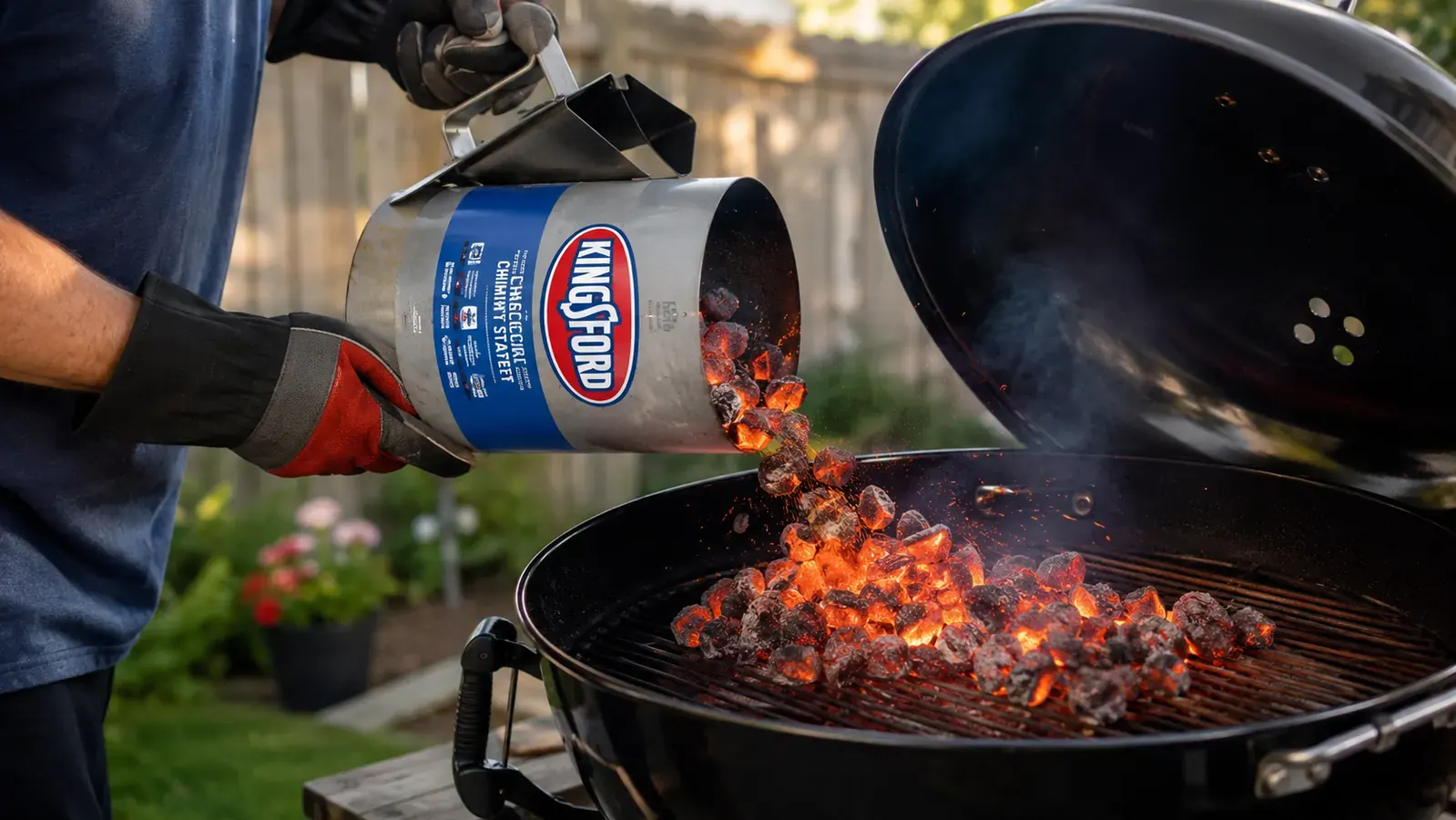
The steel construction feels solid. No flex, no wobble, no thin spot that makes you think it will crack apart after a season. The inner chamber has the ridged grate design that lets air flow under the coals while the newspaper burns below, and it works consistently. I have not had a failed light in probably forty uses.
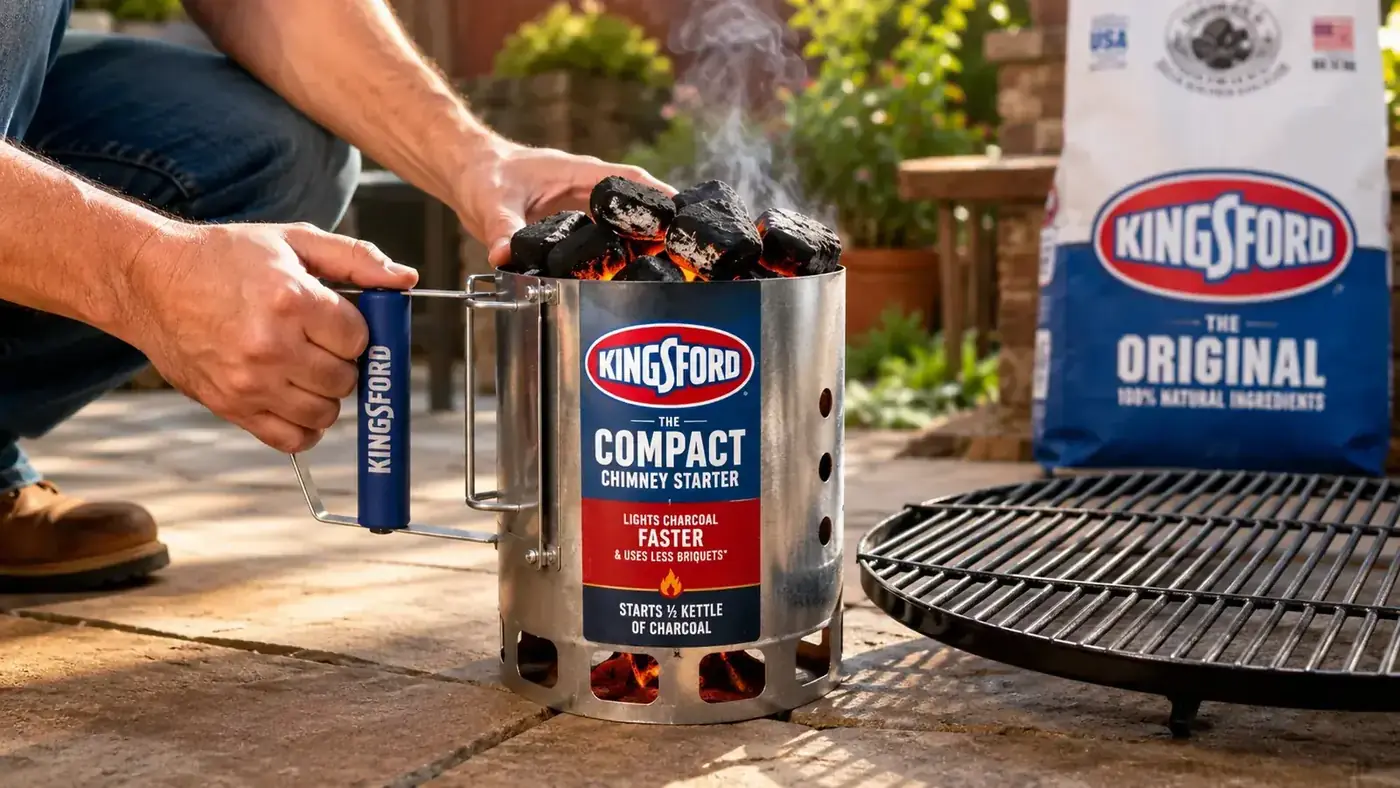
The handle is where I want to be honest with you. The Kingsford compact uses a two-handle design: a main wood-grip handle on one side and a smaller secondary loop handle lower down. The two-handle setup gives you good control when pouring coals into a grill. That part works well. What I will say is that the main handle can get warm if the chimney has been sitting lit for a full 20 minutes in direct sun. Not burning hot, but you want to keep a pair of grill gloves within reach anyway. This is not unique to the Kingsford but it bears mentioning because some reviewers act like you can grab a hot chimney bare-handed. You cannot.
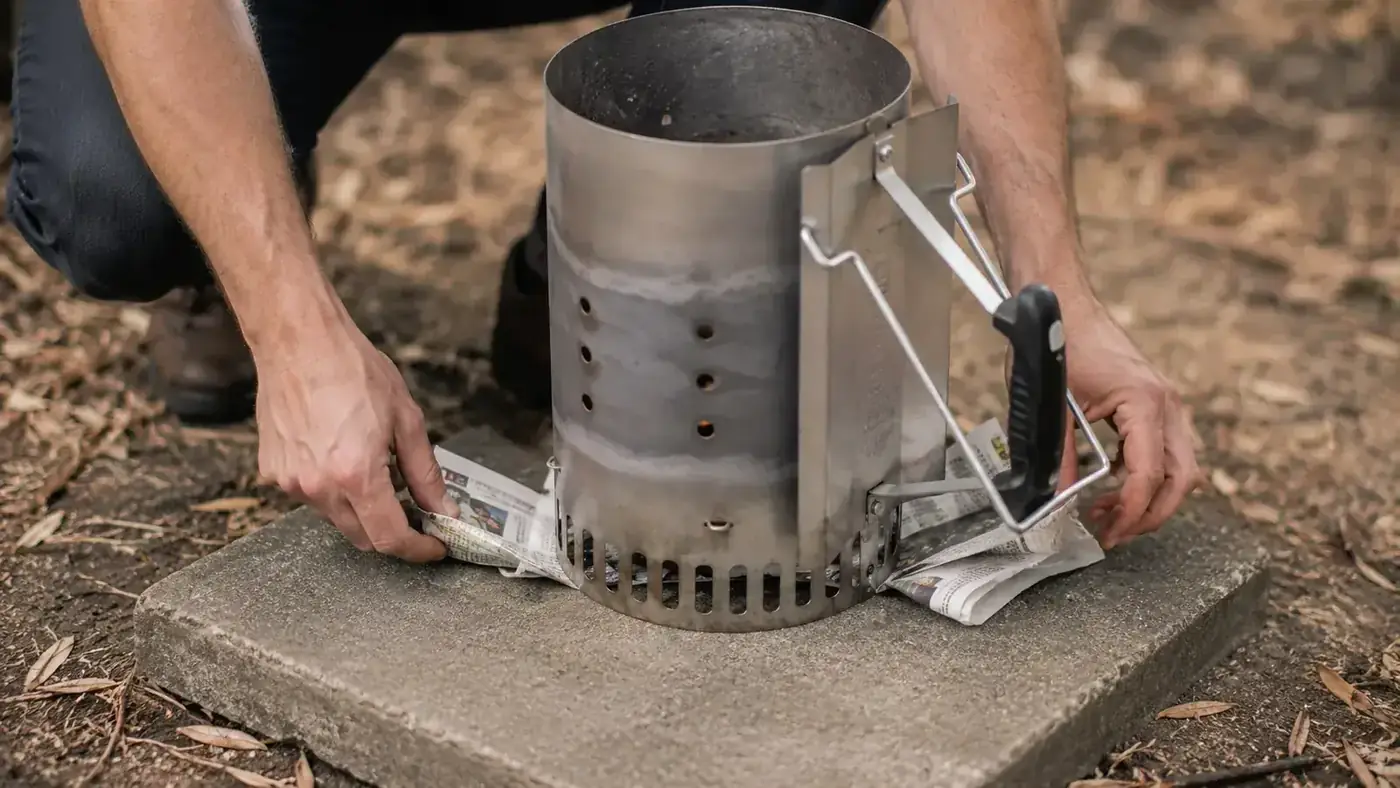
The bottom grate where you place the newspaper sits far enough off the ground that you get airflow under it, but you do need to set the chimney on a non-combustible surface. Concrete stepping stone, a firebrick, the ash door of a kettle grill. Do not put it directly on a wood deck. That is obvious advice but I have watched people skip it.
The Things Nobody Tells You Before the First Light
First time I used the compact, I crammed newspaper in the bottom the way I had always done with my old full-size chimney. Too much. The paper smothered itself and the bottom coals never caught properly. The compact has less airspace under the grate, so you need two sheets of newspaper loosely twisted, not packed in. This is not written anywhere prominent in the packaging.
Second thing: wind is a bigger factor with a shorter chimney. A standard tall chimney creates a strong natural draft that keeps the coals climbing upward. The compact is shorter, so on a breezy day the draft can be uneven. The fix is simple: position the chimney so the air intake holes face into the breeze, not away from it. Once I figured that out, windy-day lights were consistent.
Third thing: ready time. The coals in the compact are lit and ashed over at around 15 to 18 minutes, which is actually faster than a full chimney because there are fewer layers for the heat to climb through. If you are used to walking away for 25 minutes with a full chimney, the compact is ready before you expect it. The top coals look grey but the center coals are still partially black for a minute or two longer. Give it a shake to check.
The compact chimney does exactly what it promises: clean, fast coal lighting with no chemicals. Where it earns an honest caveat is capacity. Know your grill size and your cook size before you buy.
Performance on Different Cooks
Burgers and dogs for four people on a 22-inch kettle: the compact is plenty. One load of coals, two-zone setup with coals banked to one side, you can sear and then hold without any problem. Chicken thighs and legs for six: still workable. I ran a single compact load indirect on a covered kettle, and the thighs hit 175 in about 45 minutes. No complaints.
Brisket or pork shoulder low-and-slow: this is where the compact requires more management. For a long smoke on a kettle, I typically top off the coal bed partway through. With a full chimney, I load up fresh coals every 90 minutes or so. With the compact, I am adding coals more often because I start with a smaller base. The compact can still handle the job, but if long smokes are most of what you do, a full-size chimney is a better tool.
For a dedicated small grill, a portable round charcoal grill like an 18-inch, or a hibachi, the compact is actually ideal. The smaller coal volume matches the grill perfectly. You are not dealing with a pile of coals that overwhelms the grate. The food sits at the right height, the heat is even, and you are not over-fueling a small firebox.
How It Compares to Lighting Charcoal Any Other Way
Lighter fluid gives you a faster initial light but leaves a petroleum smell that absolutely transfers to food if you put it on too early. I have cooked over lighter fluid and over a chimney side by side on the same day and the difference in taste on chicken is real, not imagined. The chimney produces zero chemical smell because the newspaper burns away before the coals ash over. By the time you pour the coals, you are working with clean heat.
Electric charcoal starters are an alternative if you have a nearby outlet. They work without any paper or fluid, but they take longer (25 to 30 minutes), require you to babysit the coil position, and add a cord to the equation. For a garage setup with a wall outlet nearby, an electric starter is convenient. For a backyard with no outlet, or a cookout away from home, the chimney wins easily.
Paraffin starter cubes under the grate work with the compact chimney if you prefer them to newspaper. Two cubes under the bottom grate, light both corners, let it run. I switch between newspaper and cubes depending on what is handy. The chimney itself does not care which fuel you use to start it.
What I Liked
- Solid steel construction with no weak spots or flex after repeated use
- Compact size is genuinely useful for storage, travel, and small grills
- Two-handle design gives secure control when pouring coals
- Lights coals in 15 to 18 minutes with just newspaper, no chemicals
- Produces clean heat with zero petroleum smell on food
- Capacity is well matched to 14 to 18-inch grills and most quick cooks
Where It Falls Short
- Holds roughly half the coals of a standard chimney, limits big cook flexibility
- Main handle can get warm after a long light session, always use grill gloves
- Newspaper placement matters more than with a full-size chimney; overpacking kills the draft
- Shorter stack means wind positioning requires more attention
- For serious low-and-slow cooks on a full-size kettle, you will want a full-size chimney instead
Who This Is For
The Kingsford compact chimney is the right buy if you cook for two to six people on a 14 to 22-inch charcoal grill and most of your cooks are an hour or less. Burgers, steaks, chicken thighs, corn, kebabs, fish. It lights fast, stores small, travels well, and eliminates lighter fluid taste from your food entirely. If you have never used a chimney starter before, this is a great first one because it is approachable without feeling toy-like.
It is also a smart second chimney if you already own a full-size and want something dedicated to quick weeknight fires. I reach for the compact on Tuesday evenings when it is just me and my wife and I want chicken on the table in 45 minutes. The full-size stays on the shelf for weekend cookouts with a crowd.
Who Should Skip It
If you regularly cook for eight or more people, run a 26-inch kettle or a large barrel grill, or do serious low-and-slow smoking sessions where a big coal bed matters, spend a few more dollars and get a full-size chimney. The compact will frustrate you if your standard cook requires a full grate of hot coals. It is not the wrong product, it is just the wrong size for that job.
Also skip it if you want a dedicated chimney for lighting a large offset smoker. The fire management on an offset requires bigger initial coal volumes, and the compact just does not fill that role well. For everything else in the backyard, it earns its spot.
Final Verdict
At today's price, the Kingsford compact chimney is an honest value for what it is. The build is sturdy, the design is practical, and it does the one job a chimney starter has to do: light coals cleanly and quickly without requiring lighter fluid. The compact sizing is a real consideration, not a throwaway detail, but for the right cook and the right grill, it is an advantage, not a compromise. Know your cook size, check the capacity against your grill, and buy accordingly.
If the compact size fits your setup, this is one of the easiest upgrades in your charcoal routine.
Clean coal lighting in under 20 minutes, no lighter fluid, no chemical taste on your food. The Kingsford compact chimney starter is worth checking out if you cook for a smaller crowd or want a portable option. See today's price on Amazon.
Amazon Check Today's Price on Amazon →