The number one complaint I hear from people who cook on charcoal is how long it takes to get going. They squirt half a bottle of lighter fluid on the coals, toss in a match, wait 20 minutes, and then still end up with an uneven fire that tastes faintly like petroleum. I know because I did the exact same thing for three summers before a neighbor at a neighborhood cookout handed me a chimney starter and said, just try it. That was three years ago. I have not touched a bottle of lighter fluid since.
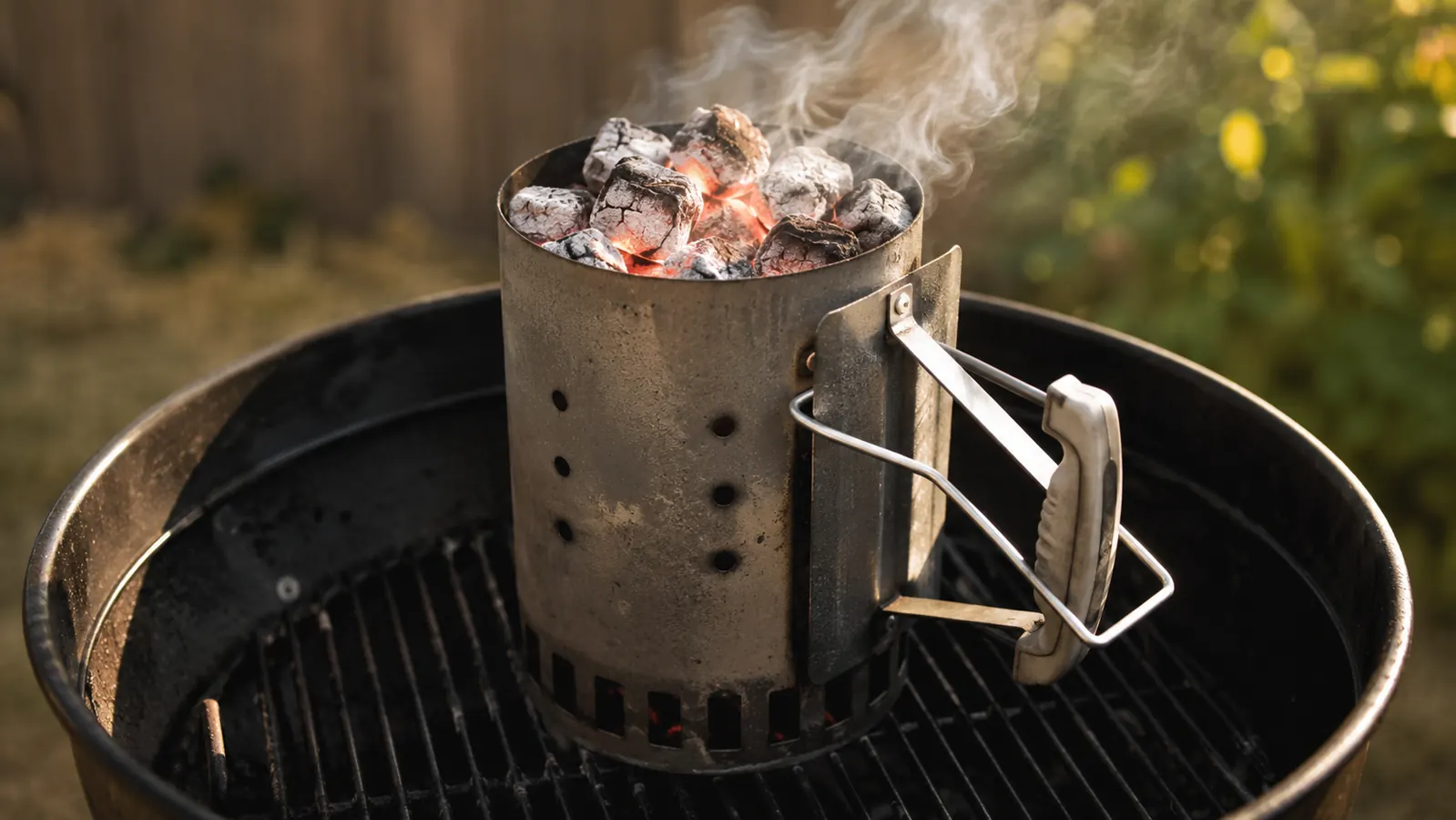
A chimney starter is a simple metal cylinder that uses the stack effect to pull air up through the coals from below. You stuff newspaper in the bottom, pile charcoal on top, and light the paper. In 15 to 20 minutes you have a full load of ash-gray, evenly lit coals ready to pour. No chemicals. No guessing. No babysitting. The one I reach for most is the Kingsford Compact Charcoal Chimney Starter, which handles a solid single-layer load for a standard kettle grill and stores compactly on a shelf without taking up half the garage.
Stop wasting time with lighter fluid, grab the chimney starter that gets charcoal ready in 20 minutes
The Kingsford Compact Chimney Starter has over 21,000 reviews at 4.7 stars. It is what I use on my own grill every weekend. Check today's price on Amazon.
Amazon Check Today's Price on Amazon →Step 1: Gather Your Materials Before You Touch the Grill
Before you start, pull everything together so you are not running back inside mid-fire. You need your chimney starter, a bag of charcoal, two or three sheets of newspaper (plain newsprint works best, not glossy inserts), a long lighter or fireplace matches, and your grill with the bottom vents open. That is it. Some people use paraffin fire starter squares instead of newspaper, which also work well and stay lit in a light breeze better than paper.
Charcoal type matters more than most people realize. Standard briquettes are forgiving and burn long and even, which makes them good for indirect cooking and longer cooks. Lump charcoal lights faster and burns hotter, but it also burns shorter and can run out on you mid-cook if you are not paying attention. For a straightforward grilling session, I default to briquettes. For a quick hot sear, lump charcoal is fine. Either works in the chimney.
One thing to check before you start: make sure the chimney starter's handle is secure. The Kingsford Compact has a heat-resistant handle that stays cool, but on cheaper chimneys the handles can loosen over time and that is a burn risk when you are carrying a cylinder full of 700-degree coals across your patio. Check it. Give it a wiggle. If it wobbles, deal with it before the fire, not after.
Step 2: Load the Newspaper in the Bottom Chamber
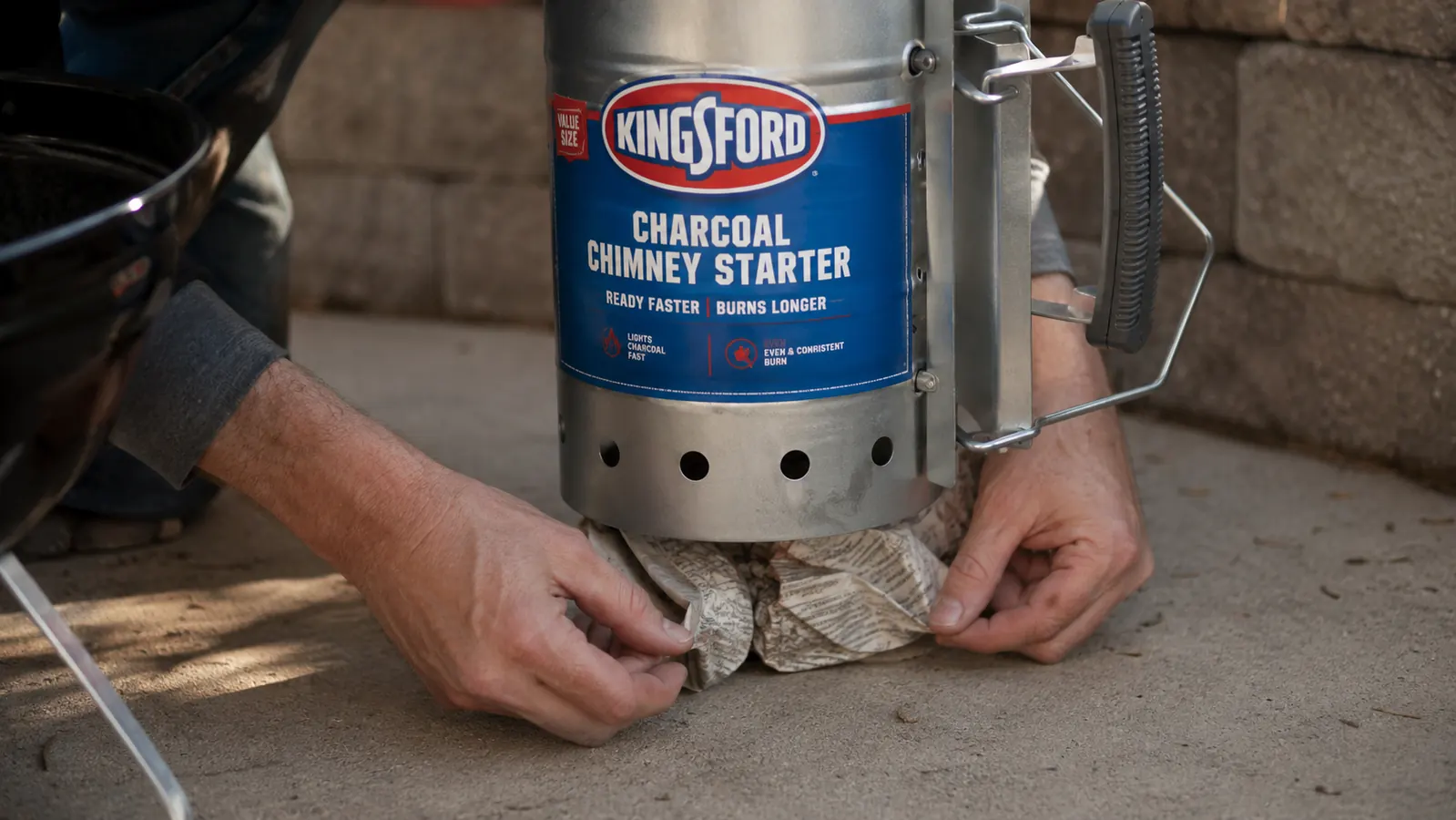
Crumple two to three sheets of newspaper loosely and stuff them into the bottom chamber of the chimney, below the grate. Loosely is the key word. If you pack it in tight, air cannot flow through and the paper burns out before it gets the coals going. You want air pockets in there. Crumple and tuck, not stuff and smash.
If it is a breezy day, use a paraffin starter cube instead. Crumple newspaper works fine in calm air, but wind can blow it out before the coals catch. A starter cube burns for about eight minutes even in a light wind, which is plenty of time. You can find paraffin cubes at most hardware stores or order them with your charcoal order. I keep a box in my grilling cabinet year-round.
Step 3: Fill the Top Chamber With Charcoal
Set the chimney on the bottom grate of your grill with the vents open. Now pour charcoal into the top chamber. How much you use depends on what you are cooking. For a standard two-zone cook on a 22-inch kettle, fill it about three-quarters of the way. For a smaller cook like burgers or hot dogs, you can get away with half a chimney. For a long, low-and-slow indirect cook like chicken thighs or a pork shoulder, fill it all the way and consider having a second load ready.
The Kingsford Compact is sized for a standard backyard grill, not a commercial offset smoker. It holds enough briquettes for a solid single cook on a kettle or a smaller gas-grill size charcoal setup. If you have a big barrel grill or are cooking for a crowd of 20, you may need to run two loads back to back, which adds about 20 minutes. Plan for that before guests arrive.
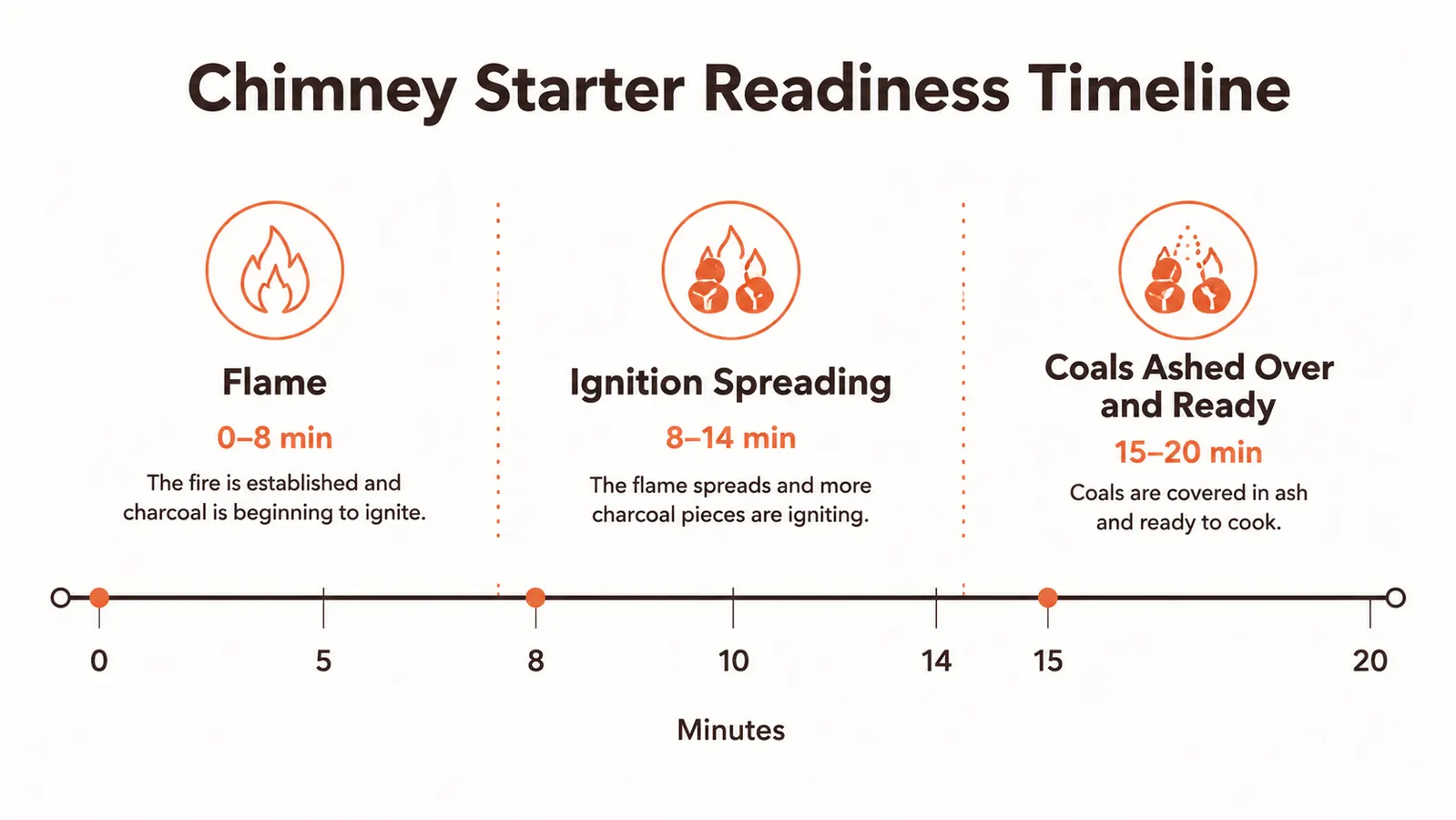
The chimney does all the work. Your only job is to light the newspaper, set the chimney down, and walk away. Fifteen minutes later you have a fire that is ready.
Step 4: Light the Newspaper and Step Back
Hold your long lighter or fireplace matches up to the newspaper through the bottom vents of the chimney. Light it in two or three spots around the base so the paper catches evenly. Once it is lit, set the chimney back down on the grill grate and step back. You do not need to fan it, blow on it, or hover over it. The stack effect does everything. Air pulls up from the bottom, through the newspaper, through the charcoal, and out the top. The coals in the bottom of the cylinder catch first, then the heat climbs.
In about eight minutes you will see flames licking up through the top of the chimney. That is normal. Do not panic and do not touch it. At around 12 to 15 minutes, the flames will die down and you will see orange glowing coals at the top with a thin layer of gray ash starting to form. When the top coals are starting to gray over, that is your signal. The coals are not fully ready yet but you are close.
Step 5: Wait for the Top Coals to Ash Over, Then Pour
Wait until about two-thirds of the top coals show gray ash on their surface. This takes 15 to 20 minutes total from when you lit the paper. At this point all the coals in the cylinder are hot all the way through, not just on the surface. This is the single thing most people rush and regret. Pouring too early gives you an uneven fire that is ripping hot for five minutes and then dies. Waiting the extra three minutes for full ash-over gives you a consistent, even fire that holds for 45 to 60 minutes of grilling.
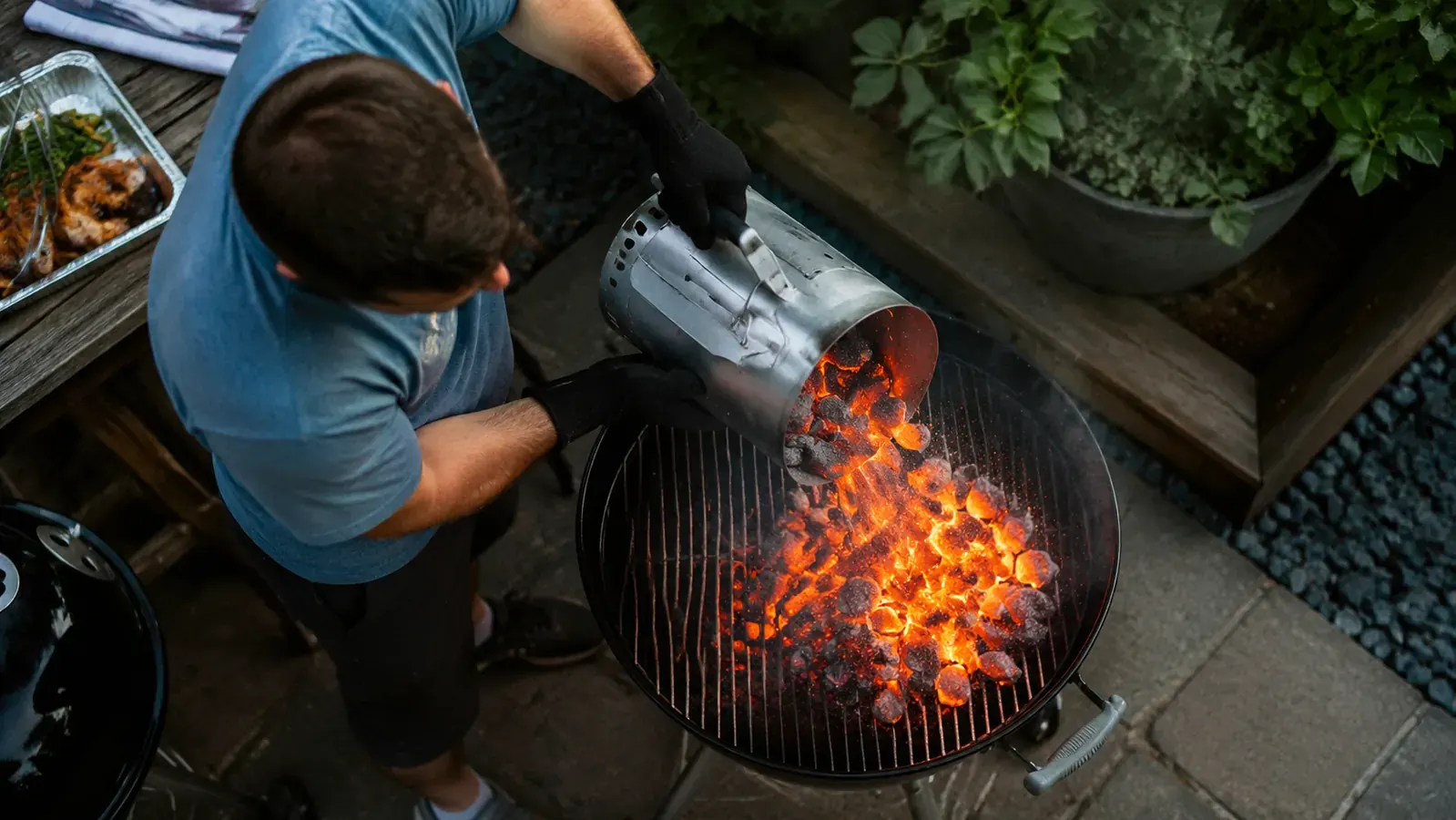
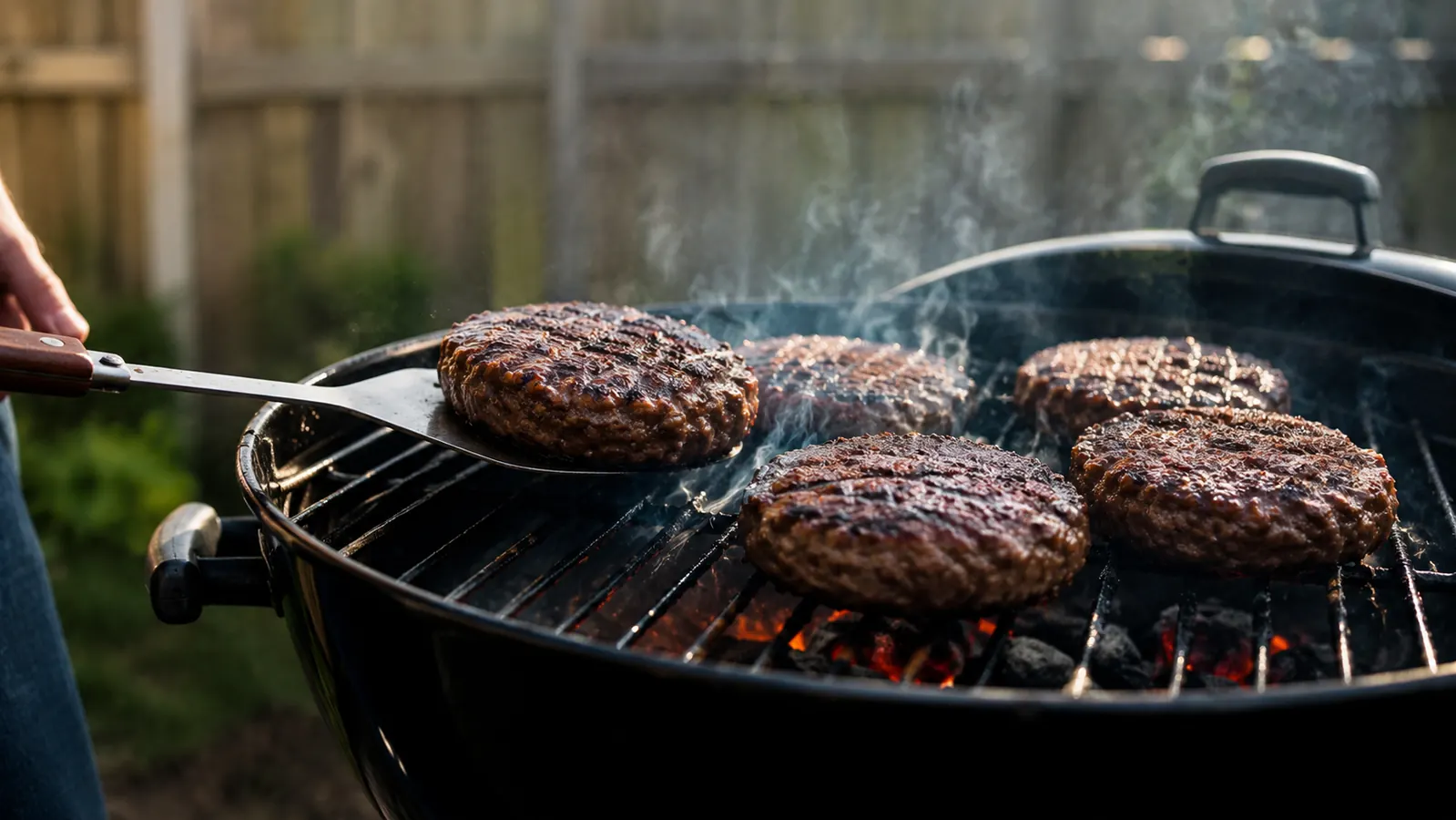
When the coals are ready, pick up the chimney by the heat-resistant handle and pour the coals into your grill. For a two-zone setup, pile them on one side and leave the other side empty. This gives you a hot direct zone for searing and a cooler indirect zone for finishing thicker cuts or holding finished meat. For a straight direct cook like burgers, spread the coals in a single even layer. Put your cooking grate on, close the lid for two minutes to let it heat up, and you are grilling.
One safety note: never pour from a chimney onto a surface you cannot control. Do it directly over the coal grate inside your grill, not over your deck, grass, or driveway. The bottom of the chimney gets extremely hot, and a drip of hot ash or a rolling briquette can ruin a deck in seconds. Keep a pair of heat-resistant gloves nearby just in case, and have a clear path between the chimney's resting spot and the grill before you start the pour.
What Else Helps You Get a Better Charcoal Fire
The chimney handles the lighting, but a few small habits will make every charcoal cook better from start to finish. First, keep your bottom vents fully open while the coals are in the chimney and during the first part of the cook. Restricting airflow too early is the fastest way to kill a charcoal fire before it gets going. Once the grill is up to temperature, you can dial the vents down to fine-tune your heat. Open vents equal more oxygen equal more heat. Closed vents choke the fire and drop the temperature.
Second, let your grill grate preheat on top of the lit coals for two full minutes before you put food on it. A cold grate sticks, a hot grate releases. This is why food sticks in the first place on so many backyards cooks, not the seasoning, not the type of grill, just a grate that was not given time to heat up.
Third, do not overcrowd the grill. It feels efficient but it kills airflow between pieces of food and causes flare-ups from dripping fat with nowhere to go. Leave gaps. You can always cook a second batch. Your guests will wait for a burger that is cooked right.
If you want to go deeper on the chimney starter and why it genuinely outperforms lighter fluid in every metric I can think of, I put together a full piece on the reasons the chimney method wins: 10 Reasons a Chimney Starter Beats Lighter Fluid Every Time. And if you are curious about how the Kingsford Compact holds up over a full season of use, read my long-term review of the Kingsford chimney starter where I cover everything including the handle durability and how it compares to larger models.
Ready to never fight a charcoal fire again? The Kingsford chimney is the tool that makes it easy.
Rated 4.7 stars across more than 21,000 reviews. Simple, durable, and ready to use in about 15 minutes flat. Check what it costs on Amazon today.
Amazon Check Today's Price on Amazon →