

If you have been basting ribs or chicken with whatever brush came in a random BBQ kit, you already know the frustration. Sauce pools in the wrong spots, the cotton strands start to fray after a few cooks, and getting the thing clean after a sticky glaze session is a project in itself. I used a traditional cotton mop for three years before I finally tried the OXO Good Grips silicone basting brush. The difference was immediate enough that I want to walk through the real comparison so you can decide which tool actually belongs in your BBQ kit.
Short answer: the OXO silicone brush wins for weekend backyard cooks. The cotton mop has a narrow use case for large-format pit work, but for most people grilling ribs, chicken thighs, and pork shoulders on a standard kettle or gas grill, it creates more problems than it solves. Here is the full breakdown.
| OXO Silicone Basting Brush | Traditional Cotton BBQ Mop | |
|---|---|---|
| Heat Tolerance | Safe to 600 degrees F | Cotton scorches above 300 F |
| Dishwasher Safe | Yes, top rack | No, must hand-wash |
| Sauce Coverage | Even, controlled layer per pass | Uneven, heavy pooling at strand tips |
| Bacteria Risk After Use | Low, silicone is non-porous | High, cotton fibers hold moisture |
| Dry-Out / Strand Loss | None, silicone does not fray | Strands fray and shed into food |
| Handle Comfort | Soft-grip non-slip handle | Bare wood or thin metal rod |
| Best Use Case | Ribs, chicken, pork, brisket (up to ~12 lbs) | Whole hog, large-volume pit BBQ |
| Price Range | Affordable | Budget-friendly to moderate depending on size |
Where the OXO Silicone Brush Wins
The biggest practical advantage of the OXO brush is cleanup. After you are done saucing a rack of ribs at the end of a three-hour cook, the last thing you want is to spend twenty minutes scrubbing cotton strands that have soaked up a half-cup of sticky glaze. With the OXO, you rinse it under hot water for about thirty seconds, or you drop it in the dishwasher and forget about it. The silicone bristles do not hold sauce the way cotton does, so there is no fermentation risk if you accidentally leave it in the sink overnight.
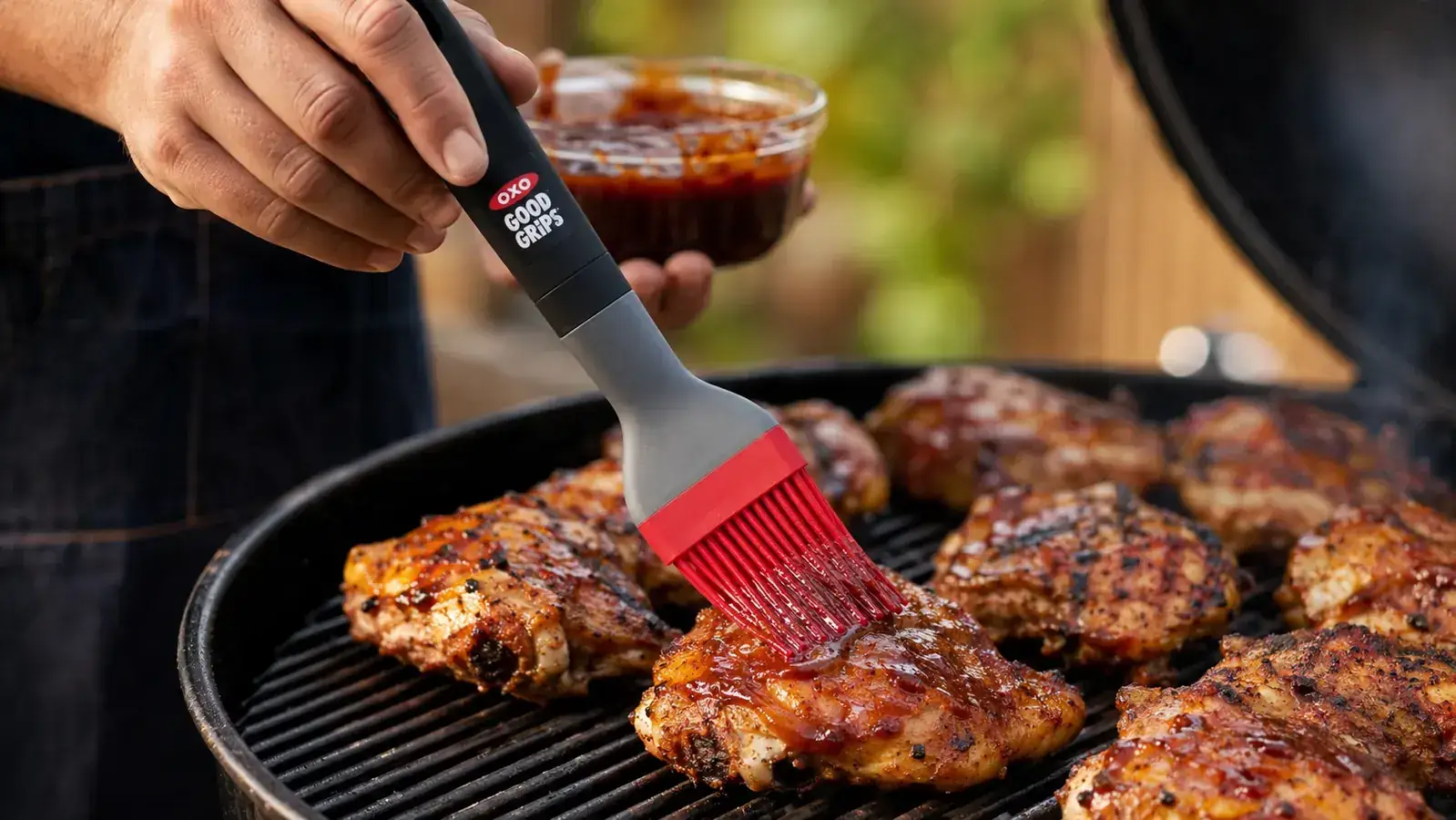
Heat tolerance is the second big win. Silicone is rated safe to 600 degrees Fahrenheit, which means you can baste chicken directly over a hot zone without worrying about the brush melting or the handle charring. Cotton mop heads start to scorch when they contact a hot grate or get too close to a flare-up. I have seen cotton strands catch briefly on a gas burner running high. That does not happen with the OXO. The soft-grip handle is also noticeably better than a bare wooden dowel when your hands are greasy from handling ribs. One-handed basting without fumbling matters more than people think in the middle of a cook.
Coverage precision is the third area where silicone wins for most cooks. The flat silicone bristles let you lay a controlled, even coat of sauce across the surface of the meat in one or two passes. You can see exactly where the sauce landed. Cotton mop strands tend to deposit sauce unevenly, with heavy drops at the strand tips and thin coverage between them. On a full rack of ribs, that translates to patches of caramelized sauce and patches that look like they barely got touched. Precise, even basting is not just cosmetic. It affects how the glaze builds up over multiple applications.
Where the Traditional Cotton Mop Wins
If you are cooking a whole hog or a 30-pound brisket in a large offset smoker and you need to baste a massive surface area in a hurry, the cotton mop does have a real advantage in raw coverage speed. The wide head and absorbent strands can move a lot of liquid sauce quickly across a big flat surface. For backyard pitmasters cooking at competition scale or doing large catering runs, a mop can save time on those enormous cook surfaces that would require ten passes with a standard brush.
There is also a nostalgia argument. Some cooks grew up watching their father or grandfather use a cotton mop, and that tool is part of the BBQ ritual for them. That is a real thing and I am not dismissing it. But it is worth being honest that nostalgia is doing most of the work there, not performance. For a backyard rack of St. Louis ribs or six chicken thighs, the mop is slower to clean, harder to store, and more likely to leave strand bits in your food than the silicone brush.
Stop fighting your basting brush at the grill
The OXO Good Grips silicone basting brush handles heat up to 600 F, cleans in thirty seconds, and lays sauce evenly every pass. Budget-friendly and available with Prime shipping.
Amazon Check Today's Price on Amazon →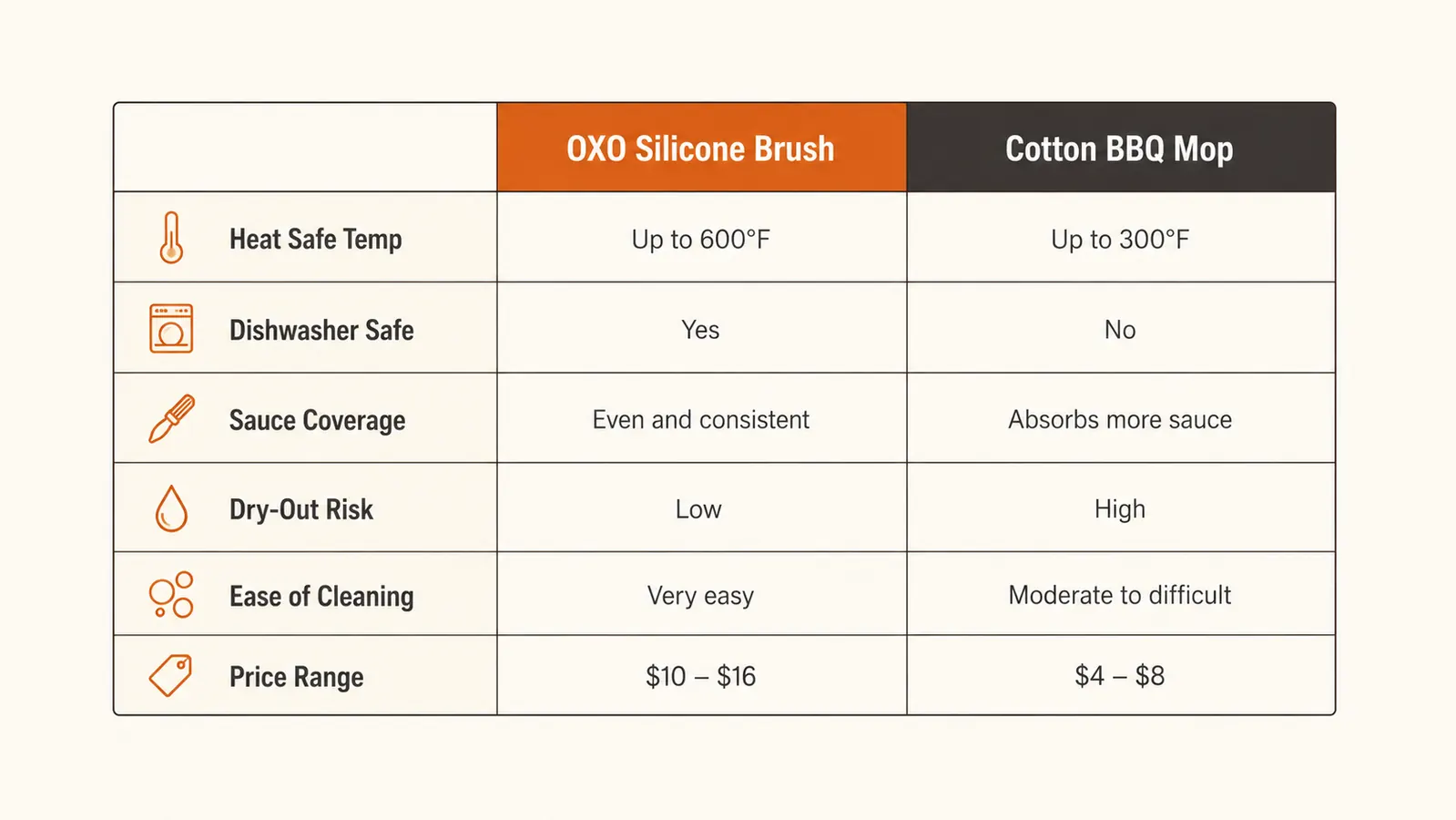
Sauce Application: What I Actually Noticed Side by Side
I ran both tools on the same cook last summer to do a proper comparison. Two racks of St. Louis ribs, same sauce, same timing. I used the cotton mop on the left rack and the OXO silicone brush on the right. By the third basting pass at the two-hour mark, the left rack had visible drips and pooling along the bone side, while the right rack had a more uniform glaze building up. At the end of the cook, the right rack had better bark development on the surface because the sugar in the sauce caramelized more evenly instead of burning at the drip points.
By the third basting pass, the silicone brush had laid a noticeably more even glaze than the cotton mop. The difference showed up on the finished bark.
I also noticed that the cotton mop held so much sauce between applications that it deposited too much liquid each time, which extended my cook window and made the bark softer. The OXO brush lets you meter the sauce load more precisely because the flat silicone head picks up a controlled amount from the bowl each time. For anyone trying to build a proper layered glaze, that control matters.
Durability Over a Full Season
I have had the OXO basting brush for over a year now and the silicone bristles look essentially the same as when I bought it. No fraying, no discoloration beyond normal staining, no loosening of the head. The soft-grip handle has not cracked or degraded. OXO builds this brush with their standard food-grade silicone and their good-grips handle system, which is the same construction they use across their kitchen tool line. That lineup holds up to regular dishwasher cycles, which is the real durability test for silicone.
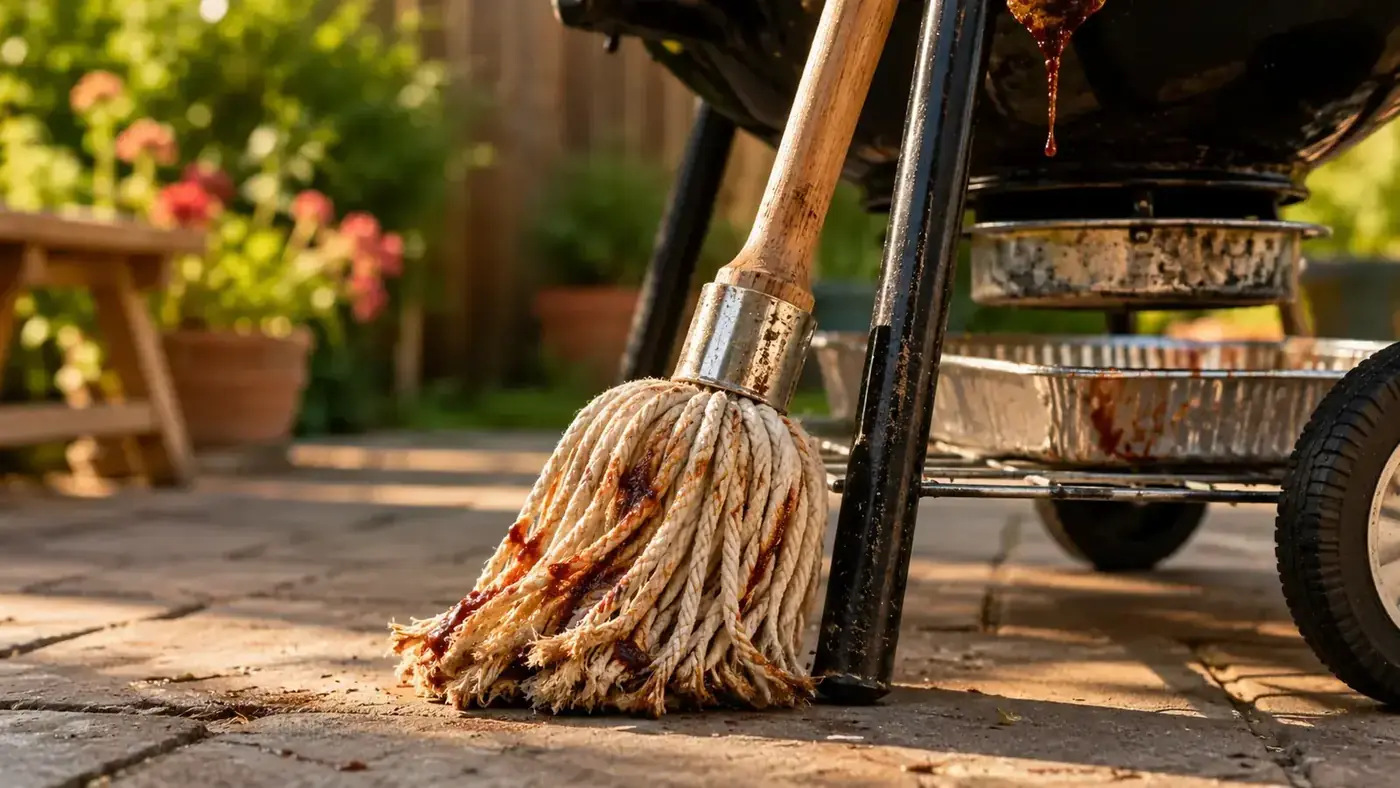
Cotton mops degrade predictably. Strands fray within the first season of regular use, especially when exposed to high heat and acid-heavy sauces. After about fifteen to twenty cooks on mine, I was finding occasional strand bits on the grate that I had to pick off before plating. That is not a food safety crisis, but it is annoying, and it gets worse the longer you use the mop. Silicone does not shed. That is simply not a risk you carry with the OXO.
Who Should Buy Which
Get the OXO silicone basting brush if you are a weekend backyard cook doing ribs, chicken, pork shoulder, or anything on a kettle or gas grill. It is easier to clean, safer at high heat, more precise in sauce delivery, and will last you multiple seasons without degrading. At a low price, it is also not a difficult decision financially.
Stick with or add a cotton mop only if you are regularly cooking at a large scale, specifically whole hog or multiple briskets at once where raw speed across a giant surface matters more than control. Even then, plenty of competition cooks have moved to large silicone brushes or silicone mop heads for the same cleanup reasons. The cotton mop is a legacy tool that works fine in its original context, but that context is not most people's Saturday afternoon cookout.
If you want more detail on how to actually use the OXO brush for different cuts, I covered the step-by-step basting technique in my guide on how to baste ribs for backyard BBQ. And if you want the full long-term review of the brush on its own merits, I have that covered too in my OXO basting brush review.
The OXO brush is budget-friendly with Prime, it is the obvious upgrade
If you are still mopping sauce with a cotton brush that sheds strands and takes forever to clean, the OXO Good Grips silicone basting brush is the straightforward fix. Rated 4.7 stars across more than 15,000 reviews.
Amazon Check Today's Price on Amazon →