
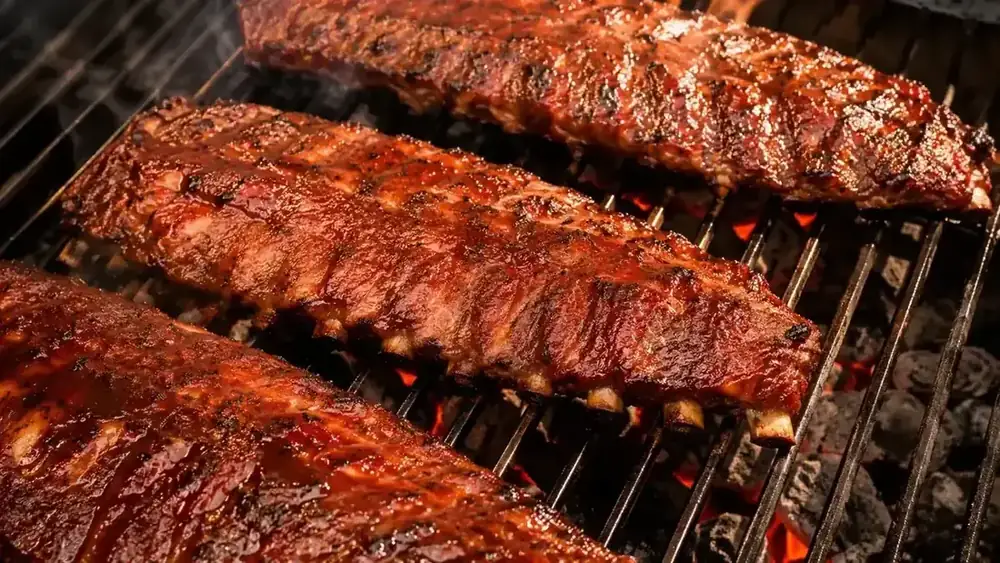
For two summers I had the same problem at every rib cookout. The sauce would look great coming off the brush, thick and glossy right down the center of the rack, but by the time the ribs hit the plate there were always dry patches along the bone ends and the edges. I blamed the recipe. I blamed the wood chunks. I even blamed the weather once, which is the kind of reasoning you do when you do not want to admit something obvious.
The obvious thing was the brush. I had been using a cheap pastry brush I picked up at a grocery store, the kind with natural bristles bundled together with a metal band. It worked fine for butter rolls. It was not made for standing over a 400-degree charcoal fire for two hours, dragging sauce across sticky ribs every twenty minutes.
Here is what that brush actually did. The bristles soaked up sauce and then released it in one heavy wet clump wherever the head made first contact. If I started a stroke at the thick end of the rack, the thick end got a puddle and the thin end got almost nothing. I could go back over the dry spots, but by then the sauce was already setting and I was just smearing it around rather than building another layer. The bone ends burned a little darker than the meat, which told me the sauce was not getting into those crevices at all.
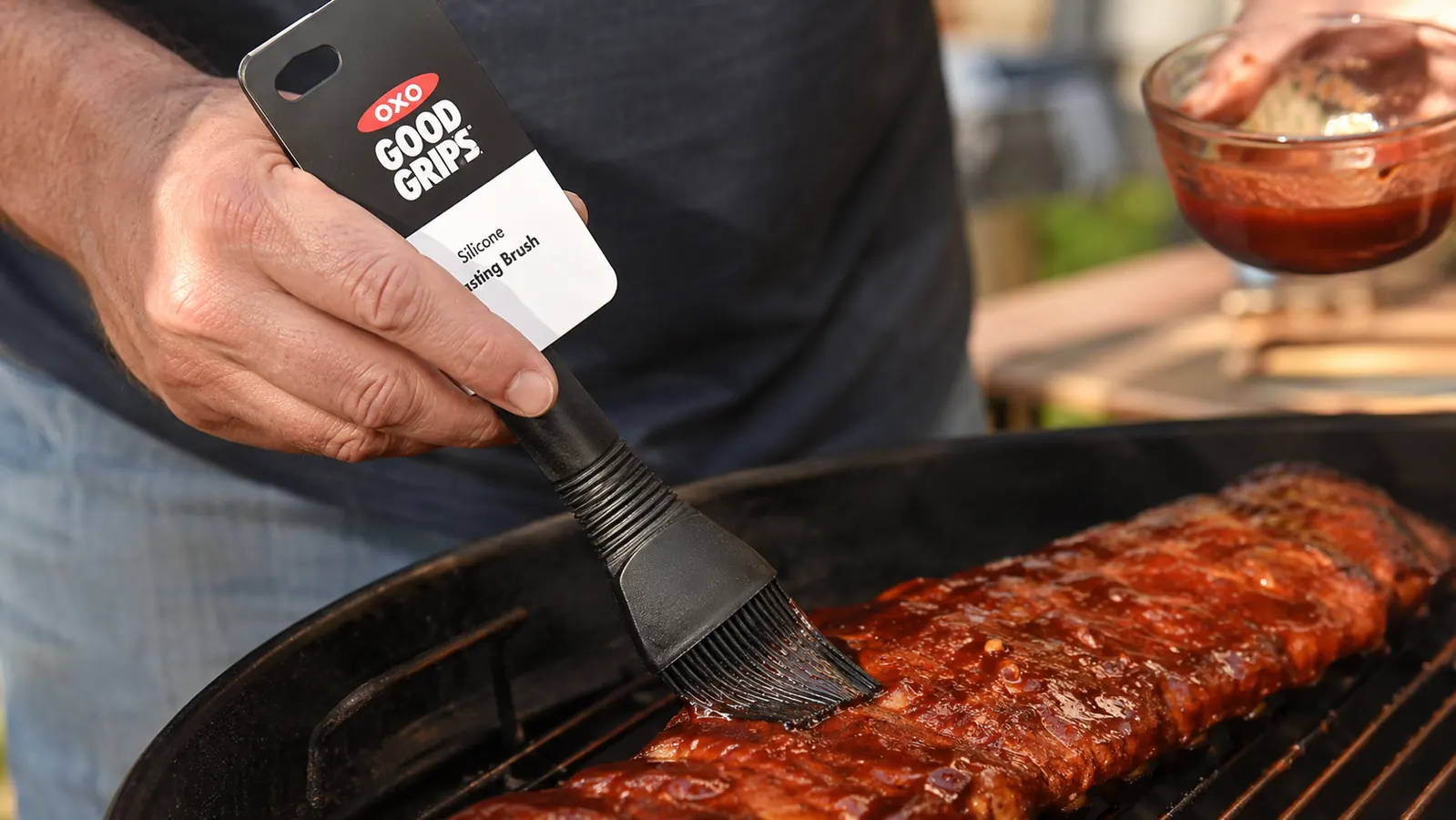
My neighbor Marcus brought over a rack of his own ribs one Saturday afternoon in June. They were lacquered all the way to the bones. I asked him what his secret was. He said he did not have one, just a decent brush. He pulled a silicone basting brush out of his kit bag. It was the OXO Good Grips, the one with the soft rubber handle and the flat silicone head. He handed it to me. It felt completely different from what I had been using. The head was firm and flat, not a bundle of loose threads, and the silicone tips were thin enough that I could actually see the sauce distributing as I stroked it across the meat.
He handed it to me and I could already tell it was a different tool. The head was flat and firm, not a clump of threads waiting to drop sauce in one spot.
I ordered the OXO that evening. It was around fourteen dollars. I was not expecting a fourteen-dollar brush to solve a two-summer problem, but that is what happened.
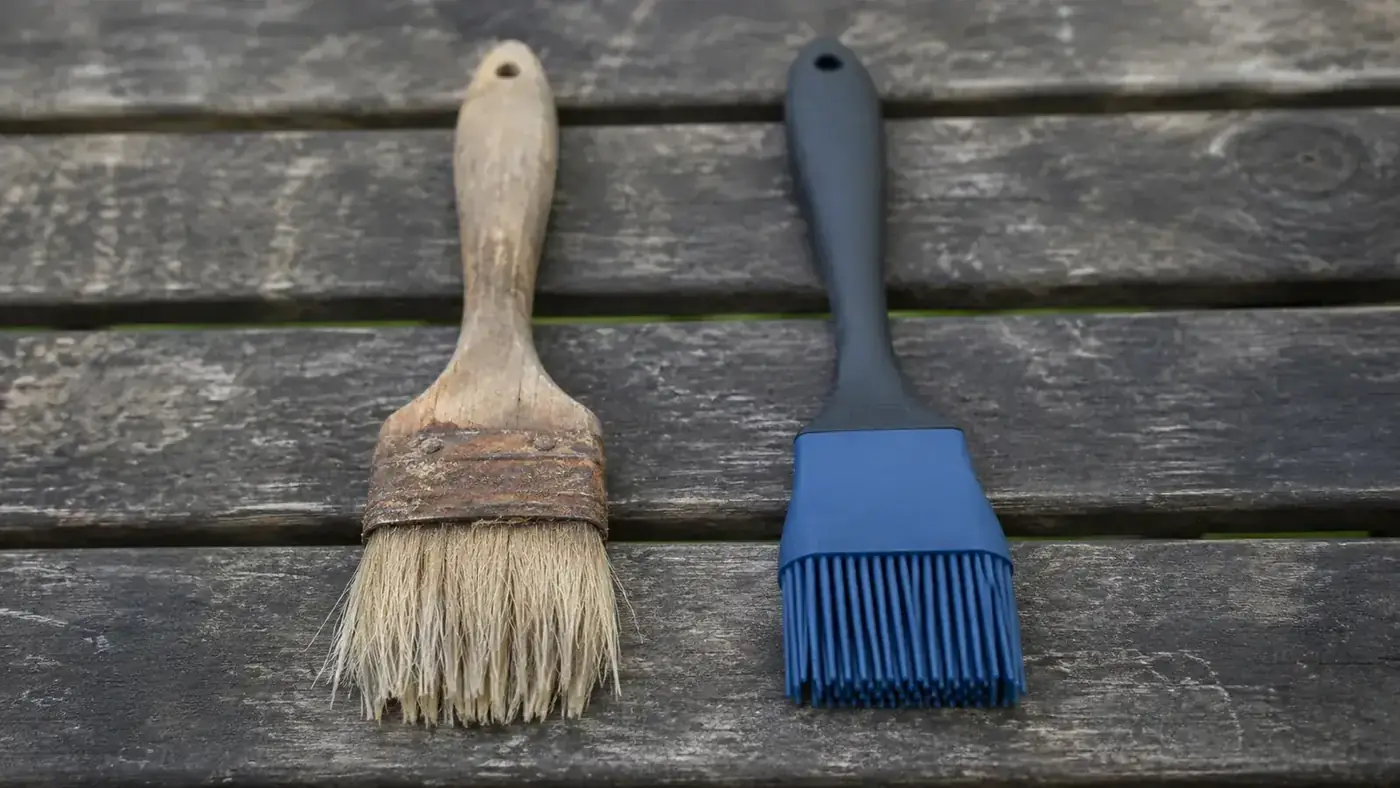
The following weekend I did a St. Louis cut rack, low and slow over indirect heat with a mix of cherry and hickory. I basted every twenty-five minutes starting at the two-hour mark, four basting passes total. The silicone head picked up sauce cleanly from the bowl, carried it without dripping, and then laid it across the rack in an actual even coat. Because the bristles are individual silicone fingers rather than clumped natural fibers, the sauce spread laterally instead of pooling. The bone ends got coated on the first pass. I did not have to go back and babysit dry spots.
Still chasing dry patches with a bristle brush? Here is the upgrade that costs less than a rack of ribs.
The OXO Good Grips silicone basting brush carries sauce evenly across the whole rack without clumping or burning. Dishwasher safe, heat resistant to 600 degrees, and available right now on Amazon.
Amazon Check Today's Price on Amazon →A few other things I noticed over the following month of use. Cleanup is genuinely easy. The old bristle brush held onto sauce in the metal band where the bristles met the handle, and no amount of rinsing fully got it out. After a few cooks it started smelling off. The OXO silicone head comes off the handle and goes straight into the dishwasher. There is nothing for old sauce to hide in. The second thing: the handle stays cool. It is a rubber grip and it sits far enough away from the grill surface that I never felt heat coming through. With the old brush I was always conscious of where my hand was relative to the fire.
There are a couple of honest tradeoffs. The silicone head holds less sauce per dip than a thick natural-bristle brush, so if you are working a very large packer brisket or a full slab of beef ribs you will dip more often. It is not a big deal but it is worth knowing. Also the brush is sized for most backyard cuts but if you are running a full commercial-size smoker load you might want a wider tool. For normal family-cookout quantities, a rack of ribs or a spatchcocked chicken or a pork shoulder, the OXO is the right size.
What I Would Tell You If We Were Sitting at My Kitchen Table

Here is the honest version of this story: the brush was not the whole problem. Part of it was technique. I was not thinning my sauce enough for early basting passes, which meant even a good brush was fighting a thick syrup that wanted to sit in one place. But a bad tool made my bad technique worse, and a good tool covered for it while I figured out what I was doing wrong. That is a useful property in a piece of BBQ equipment.
If you have been basting ribs or chicken with a cheap bristle brush and you keep ending up with uneven sauce coverage, the brush is probably a real part of your problem. It was for me. The OXO is not expensive. It is around fourteen dollars, it holds up, it cleans up in sixty seconds, and it spreads sauce the way sauce is supposed to spread. I have used mine for over a year now. The handle has not cracked, the silicone head has not warped, and it still comes clean after every cook. For a tool I reach for at every single cookout, that is a good return.
You can read my longer notes on how it holds up over a full season, including a side-by-side against a traditional cotton mop, in the full review linked below. But if you are standing in your backyard this weekend wondering why your ribs keep coming out uneven, start with the brush. It is the cheapest fix you will make this year.
Ready to stop chasing dry spots on every rack you cook?
The OXO Good Grips silicone basting brush is the tool I reach for at every cookout. Rated 4.7 stars by more than 15,000 cooks on Amazon. Check today's price and pick one up before your next cook.
Amazon Check Today's Price on Amazon →