
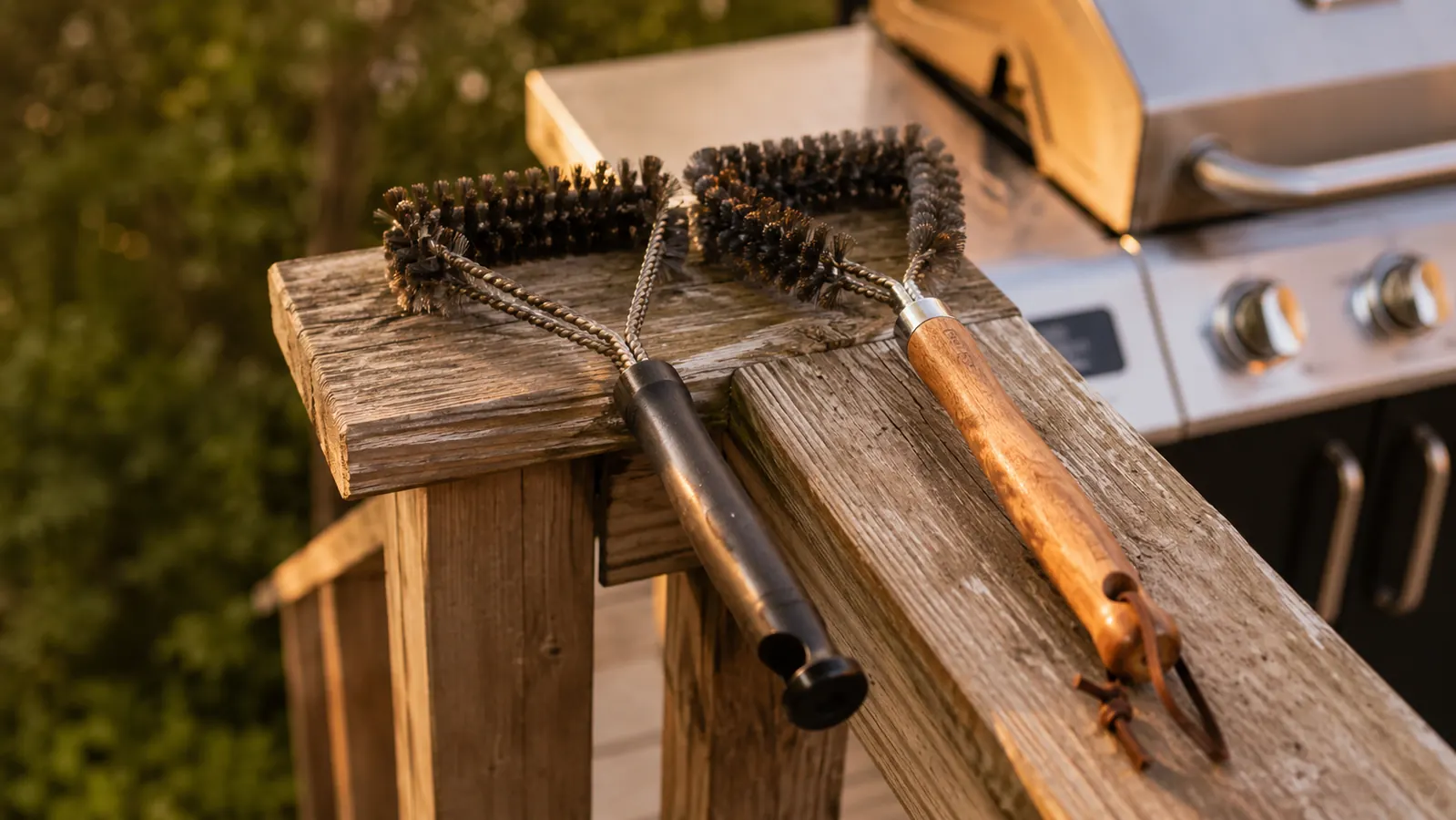
If you have spent any time searching for a grill brush lately, you have probably run across the same two names: the GRILLART bristle-free brush and the Grill Rescue steam-clean pad. Both are pitched as the safe alternative to the old wire-bristle brushes that occasionally shed a wire onto the grates and right into someone's food. That is a real hazard, and both of these tools take it seriously. But they take completely different approaches to solving the same problem, and that difference matters a lot depending on how you cook and how you clean.
The short answer: the GRILLART is my pick for most backyard cooks. It costs less, does not require a bucket of water at the grill, replaces head-on rather than needing a separate replacement order, and handles cast iron, stainless, and porcelain grates without drama. The Grill Rescue is a genuinely clever product, but the steam-cleaning approach has a narrower use case than the marketing suggests. Let me walk you through why.
| Spec | GRILLART Bristle-Free Brush | Grill Rescue Steam Cleaner |
|---|---|---|
| Cleaning method | Woven stainless-steel wire coils scrub grates mechanically | Replaceable Kevlar pad dampened with water to steam-clean on contact with hot grates |
| Handle length | 18 inches, keeps hands well back from heat | Approximately 10 inches, shorter reach over open flames |
| Works on cold or warm grates | Yes, works on grates at any temperature | No, requires grates to be hot (400°F+) to generate steam |
| Scraper included | Yes, integrated scraper for stubborn carbon buildup | No dedicated scraper, relies on steam and pad abrasion only |
| Replacement head availability | Widely available on Amazon, very affordable | Proprietary replacement head required, sold separately |
| Grate compatibility | Cast iron, stainless, porcelain-coated, all confirmed safe | Stainless and porcelain; some users report discoloration on older cast iron |
| Dry-use capable | Yes, no water needed | No, must wet the pad or it can scorch on contact |
| Star rating (Amazon) | 4.6 stars, 15,400+ reviews | 4.4 stars (varies by seller listing) |
| Approximate price | Budget-friendly | Mid-range depending on bundle |
Where the GRILLART Wins
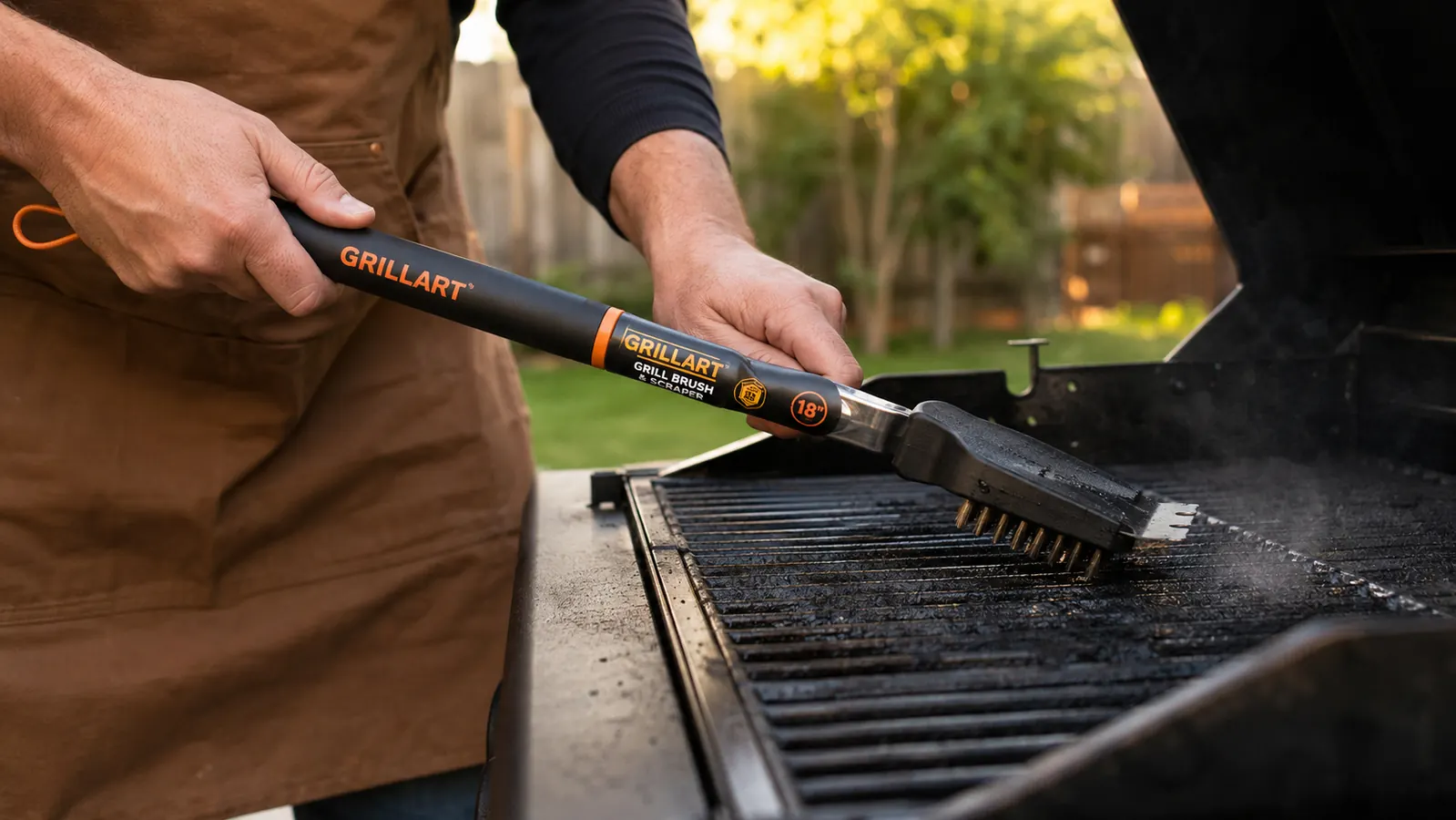
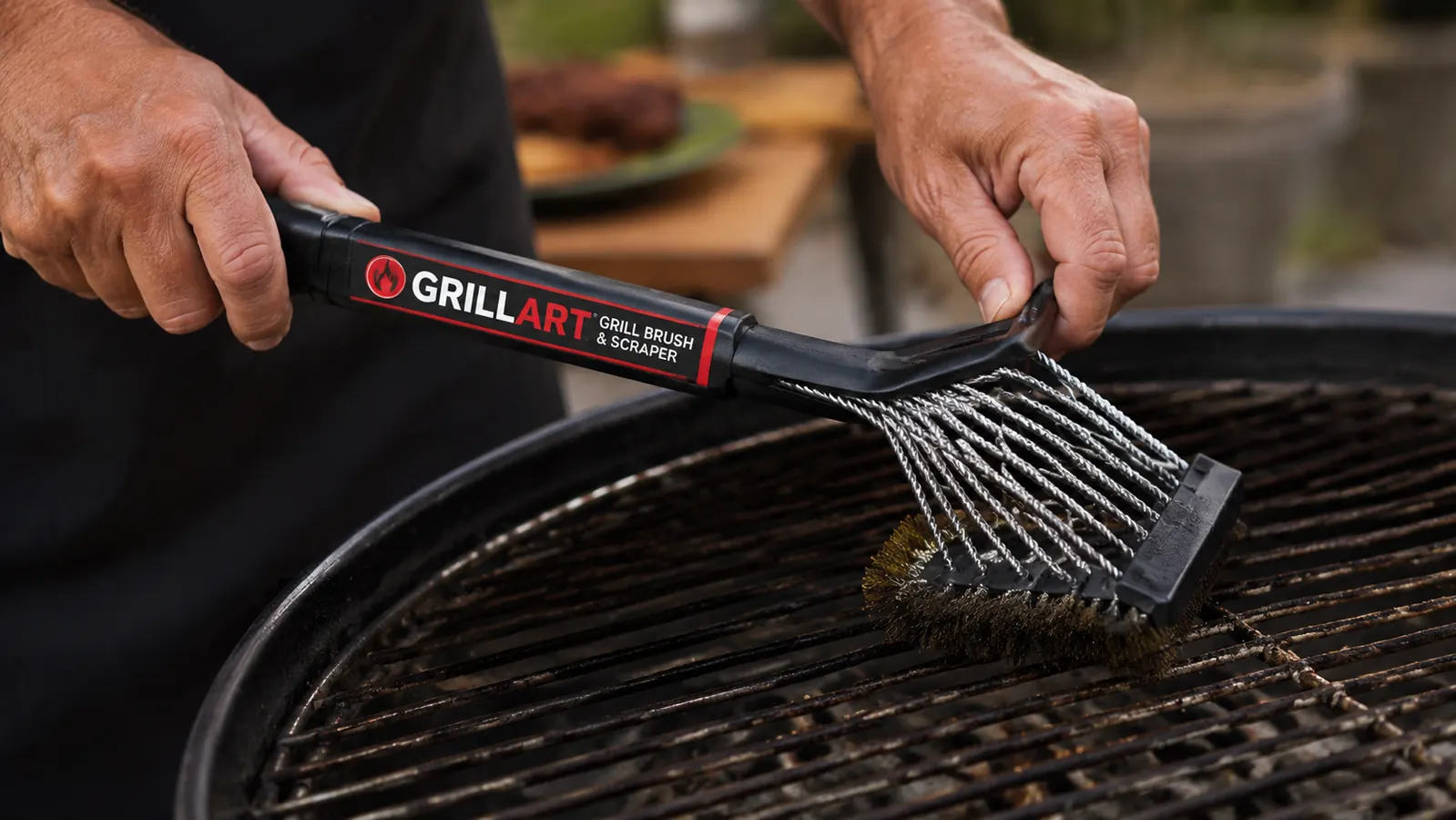
The GRILLART uses a woven stainless-steel wire design instead of individual bristles. The wires are coiled together tightly so there is nothing loose to shed. You get the mechanical scrubbing power of a wire brush without the safety concern. That combination is harder to pull off than it sounds, and GRILLART gets it right. The head is stiff enough to dig into carbon buildup but forgiving enough not to scratch the porcelain coating on coated grates. I have used it on my cast-iron grates, on the porcelain-coated warming rack of my Weber gas grill, and on a buddy's stainless grill grates after a brisket cook. It cleaned all three without leaving any marks I was not expecting.
The 18-inch handle is one of the best things about this brush. When you are cleaning grates over a live fire or right after a cook with the burners still on, that extra distance matters. The Grill Rescue handle sits around 10 inches, which puts your wrist significantly closer to the heat source. For a quick clean while the grill is fully open and aired out, it is fine. But if you are like me and you clean right after the food comes off while the grill is still running hot, the GRILLART handle gives you a noticeable safety buffer. The built-in scraper at the base of the head handles anything the woven wires cannot dislodge in a pass or two. I use it mostly for the edges of the grate bars where carbon tends to build up in ridges.
Where the Grill Rescue Wins
The Grill Rescue genuinely shines in one specific scenario: hot grates right after a cook, especially if there is a lot of grease and you want to lift it off rather than smear it around. The steam method does a surprisingly good job of loosening sticky, greasy residue without spreading it the way a dry brush sometimes does. If you cook a lot of chicken thighs or anything heavily marinated, you have probably noticed that a standard brush can push the grease sideways along the grate bar instead of removing it. The wet pad approach on the Grill Rescue handles that better.
It also makes a strong case for cooks who are dealing with very delicate porcelain grates and are nervous about any mechanical scrubbing. The steam lift is gentler than any wire tool, woven or otherwise. If your grill has older porcelain grates that are already showing some wear, the Grill Rescue reduces the chance of further surface damage. That is a real and valid concern. The problem is that the requirement for hot grates and a water source at the grill adds steps that most backyard cooks find inconvenient, and the replacement pad cost adds up over a full grilling season.
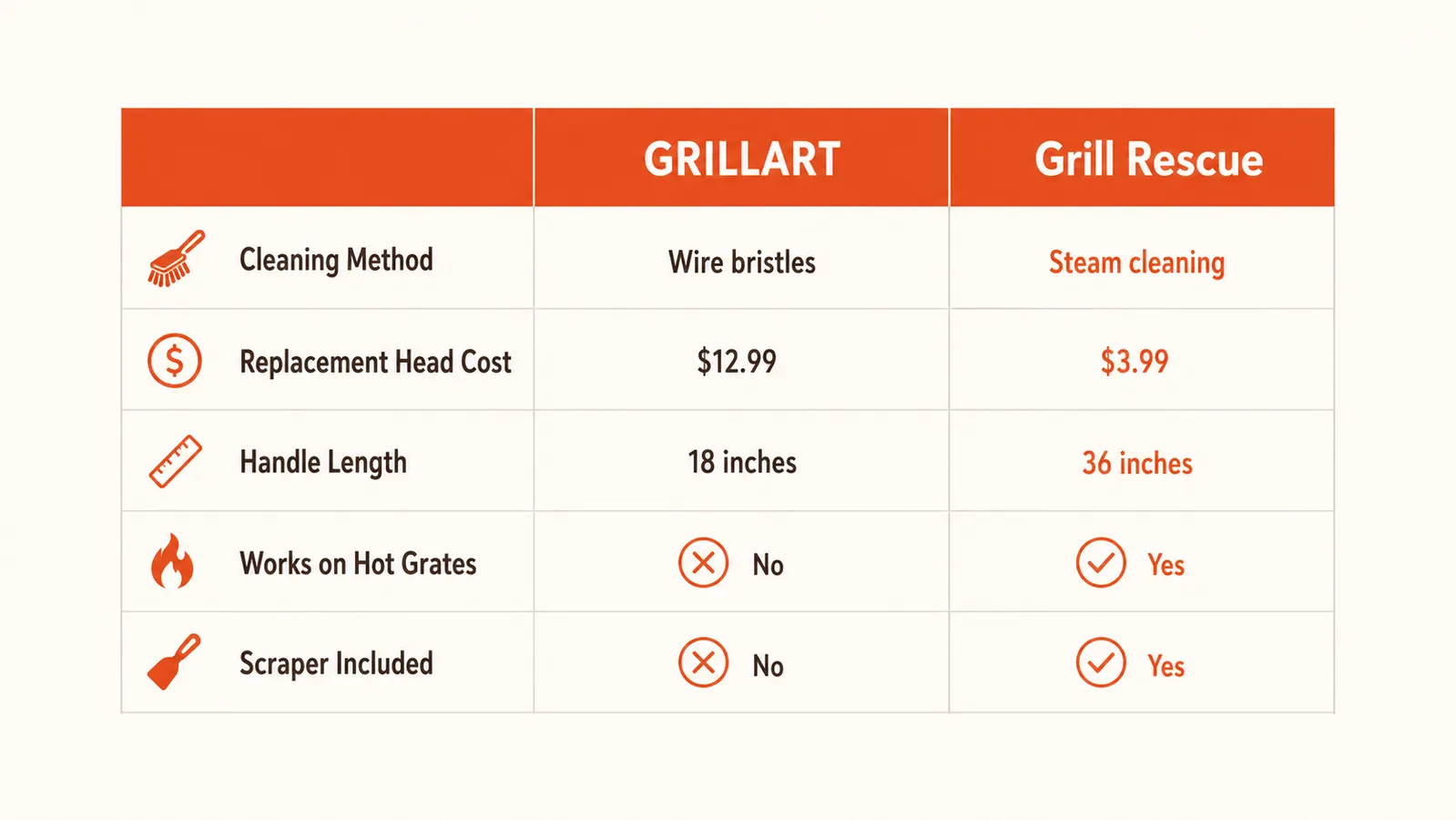
If you clean grates after every cook, the GRILLART is built for exactly that.
Over 15,000 backyard cooks rate it 4.6 stars. It handles cast iron, stainless, and porcelain without any bristle-shed risk. Check the current price before the next cookout.
Amazon Check Today's Price on Amazon →The Replacement Head Question
This is where the two tools start to feel very different financially over time. The GRILLART head will eventually wear down. Woven wire does not last forever, especially if you cook over high heat frequently or you are cleaning heavy carbon off a charcoal grill after every use. But replacement heads are easy to find on Amazon and run inexpensively in most cases. You keep the long handle, swap the head, and you are back in business.
The Grill Rescue pad wears out faster than you might expect. If you are cooking two or three times a week through the summer, the pad loses its cleaning effectiveness within a few months of regular use. The replacement pads are proprietary, meaning you cannot just grab a generic version. You are ordering specifically from Grill Rescue, and the cost is typically in the mid range depending on where you buy. Over a full grilling season, that adds up to real money. If you cook as much as I do, that gap between the two tools becomes a clear tiebreaker.
The GRILLART has been on my grill hook since last spring and I have replaced the head exactly once. That is the kind of ownership math that keeps a tool in the kit.
Grate Types and Cleaning Habits
Your grate material should factor into this decision. Cast iron grates benefit from mechanical cleaning because the seasoning layer on cast iron actually needs a little scrubbing to stay intact. You want to knock off the carbon without stripping the iron bare, and the GRILLART woven head does that well. The Grill Rescue steam approach on cast iron can sometimes leave more moisture on the surface than is ideal, which matters if your grates are already prone to surface rust between cooks.
Stainless steel grates work fine with either tool. Porcelain-coated grates work with both as well, though if your porcelain is cracked or chipped anywhere, you want to avoid any abrasive tool and the GRILLART would fall into that category. A cracked porcelain coating is generally a sign that the grates need replacement, not a gentler brush, but it is worth mentioning.
Who Should Buy Which
The GRILLART makes sense for the majority of backyard cooks. If you grill on a gas, charcoal, or pellet grill with standard cast iron or stainless grates, you clean after most cooks, and you want a reliable tool that does not require prep steps or a water source at the grill, this is the right pick. It is also the right call if you are buying this as a gift or stocking a grill kit for someone and you want one tool that covers all the bases without a learning curve.
The Grill Rescue makes more sense if you cook heavy, greasy proteins frequently and find that dry brushing tends to smear more than it removes. It also makes sense if you have very delicate or older porcelain grates where you want to minimize any mechanical contact. And honestly, some people just prefer the steam method. That is a legitimate preference. But going in, know that you are committing to the proprietary replacement pad system and the requirement to work with hot grates every single time.
One More Thing Worth Knowing
Neither of these tools replaces a good deep clean a couple of times per season. Brushing after every cook keeps the grates usable and safe, but carbon and grease still build up in the hinge points, the drip tray, and along the burner covers over time. For a full breakdown of how to clean grill grates thoroughly from top to bottom, including which tools do what job, see the guide on how to clean grill grates properly. And if you want the full long-term review of the GRILLART on its own, including how it held up across nearly a year of weekly use, the GRILLART grill brush review covers everything I noticed over that stretch.
The GRILLART is my everyday grill brush. It costs less than a dinner out, it handles whatever I throw at it, and after more cookouts than I can count this year I have had exactly zero worries about a wire ending up in the food. For most people reading this, that is the right answer.
The GRILLART is the safer, simpler, longer-lasting choice for most backyard cooks.
18-inch handle, woven bristle-free head, built-in scraper, 4.6 stars from over 15,000 buyers. It is the grill brush I recommend first when someone asks me what to buy.
Amazon Check Today's Price on Amazon →