
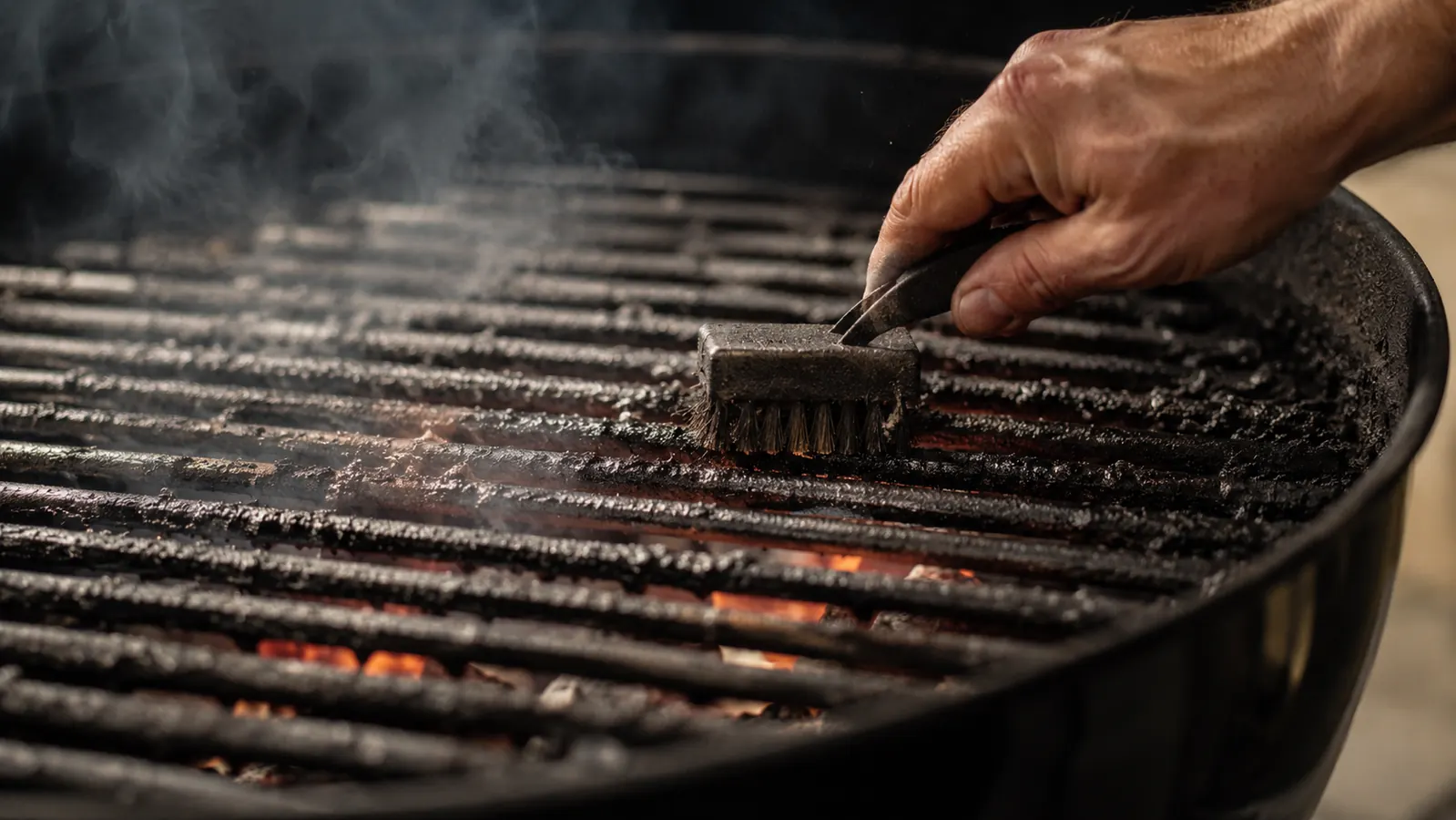
Let me tell you the thing most grill brush reviews skip entirely. They test the brush on warm-ish, lightly soiled grates, take a photo of shiny clean metal, and call it done. Nobody is dragging it across a cast iron grate that has four cookouts of burnt brisket fat welded onto it. That is the actual test. And that is exactly what I put the GRILLART 18-inch Bristle-Free Grill Brush and Scraper through the first weekend I had it.
I want to be straight with you: the GRILLART (ASIN B075NC2MYB, rated 4.6 stars across 15,000-plus reviews on Amazon) is genuinely good at several things and genuinely bad at a few others. The question is whether the things it is bad at matter for how you actually cook. That is what this review is about.
The Quick Verdict
The woven-wire head is a real safety upgrade over standard bristles, the scraper is legitimately useful, but it takes a different technique than a traditional brush and falls short on thick cast iron buildup without extra effort.
Amazon Check Today's Price →Worried about wire bristles ending up in your food? The GRILLART woven design fixes that problem directly.
Over 15,000 Amazon reviews. 4.6 stars. Click through to see today's price and whether it ships in time for your next cookout.
Amazon Check Today's Price on Amazon →What Nobody Tells You About the Bristle Safety Issue
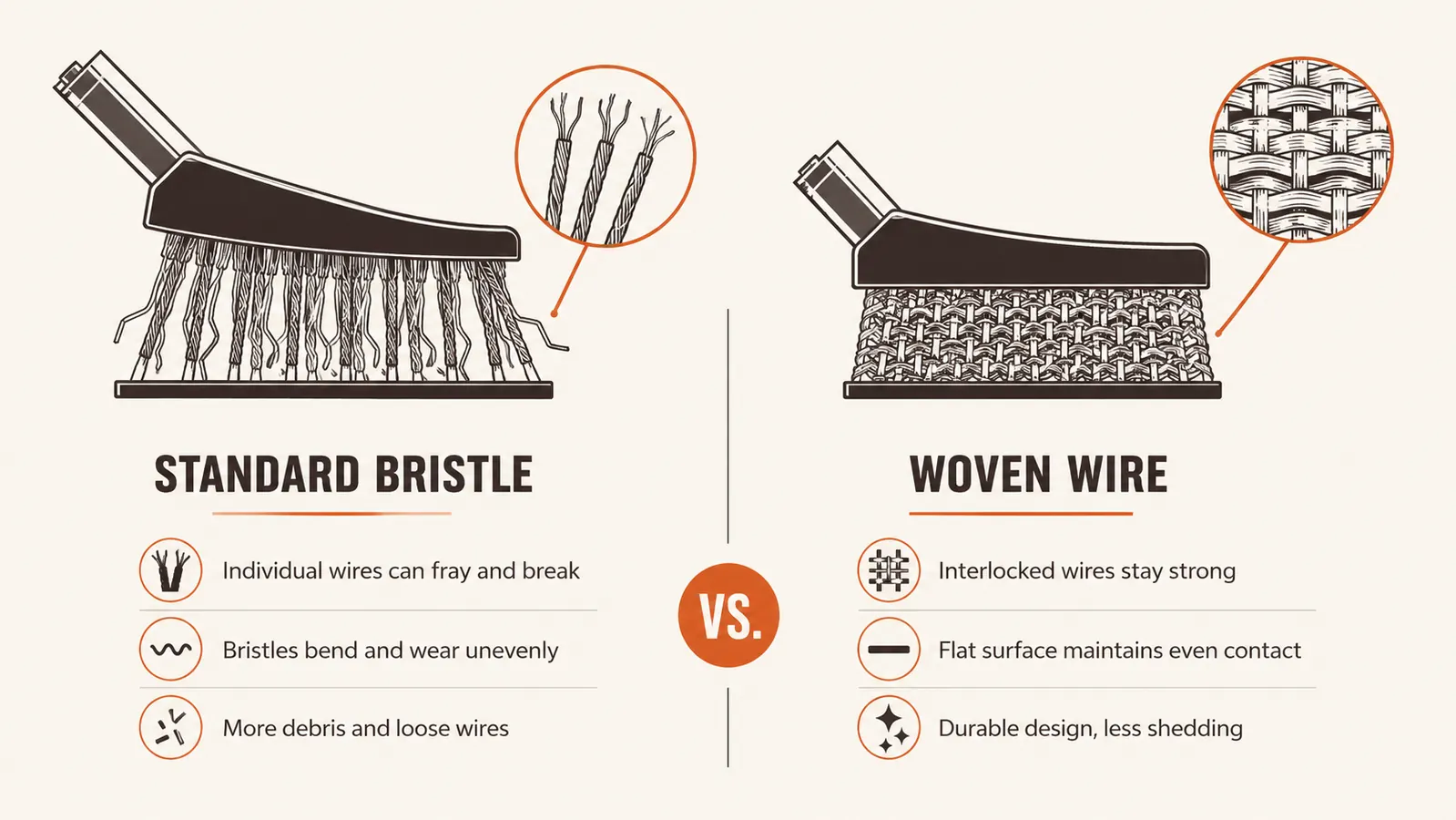
The standard wire bristle brush has a documented problem: individual bristles detach, land on the grate, and end up embedded in food. The ER reports on this are real. Swallowing a wire bristle can cause serious internal injuries. That is not marketing copy. It is the reason the bristle-free category exists in the first place.
Here is what the GRILLART marketing does not explain clearly: the woven-wire design is not some exotic technology. It is a section of interlocked stainless steel mesh that replaces the rows of individual bristles. Because the wires are woven into each other rather than standing alone, there is nothing to shed. The mesh wears down over time as a unit, not strand by strand. That is the actual mechanism behind the safety claim, and once you understand it, the whole thing makes a lot more sense.
One thing I wish someone had told me upfront: the woven head is stiffer than bristles. You feel less flex when you press into the grate. That stiffness is part of why it does not shed, but it also means your scrubbing technique has to change. You press and drag with more deliberate strokes rather than the fast back-and-forth you do with a standard brush. Takes about two sessions to figure that out.
How the Woven Wire Actually Performs on Different Grate Types
Gas grill grates, meaning stainless steel rod grates, are where this brush is most comfortable. The mesh conforms reasonably well to the round rod surfaces and picks up fresh-to-moderate buildup without any drama. After a burger or chicken cook, a couple of passes and you are done. This is the best-case scenario for the GRILLART and it handles it well.
Porcelain-coated grates are where I want you to pay attention. The GRILLART is marketed as safe for porcelain, and the mesh is indeed gentler than aggressive bristles. But if you press hard and use that stiff woven head with real force, you can chip porcelain coating over time. The brush does not cause instant damage. The damage is cumulative from aggressive technique. Go light on porcelain, use moderate pressure, and you will be fine.
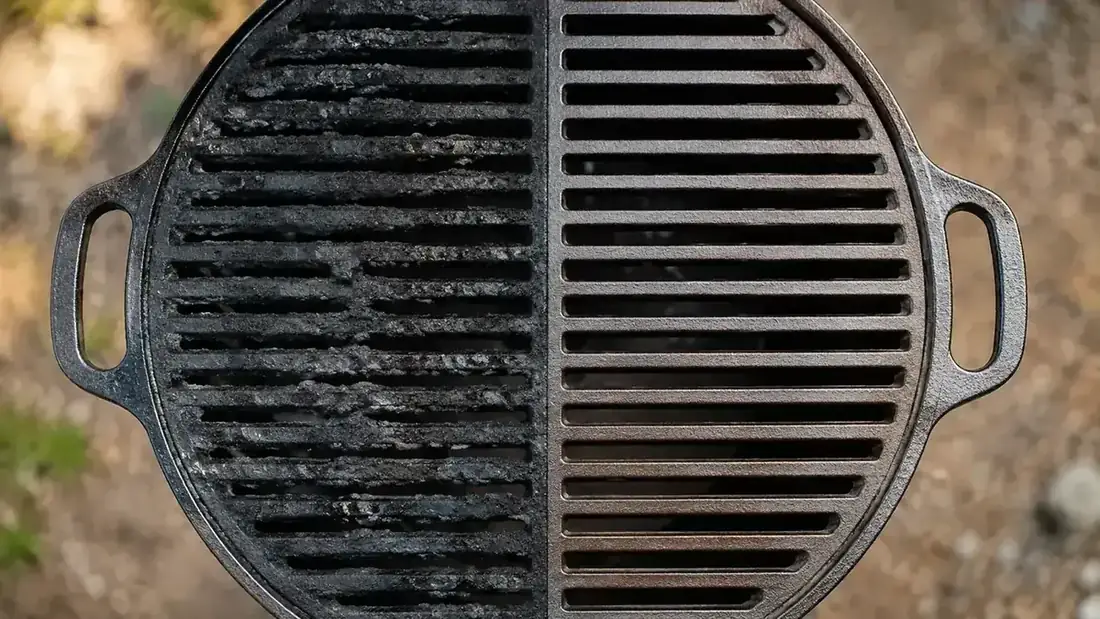
Cast iron grates are the hardest test. Cast iron holds heat, absorbs grease deeply, and develops heavy carbonized crust if you go a few sessions without cleaning. On badly neglected cast iron, the GRILLART woven head alone does not have the bite to lift heavy buildup. This is where the scraper attachment earns its keep.
The woven head alone does not have the bite to lift heavy buildup on neglected cast iron. The scraper on the back end is what rescues you in that situation.
The Scraper Attachment: The Part Most Reviews Barely Mention
There is a solid stainless steel scraper blade built into the back of the brush head. It is not decorative. On cast iron with serious buildup, flip the brush around and use the scraper first. Run it along the grate bars at an angle to break up the thick layer of carbonized fat. Then come back with the woven head for the finer cleanup. That two-step process is what unlocks this brush for heavy-duty use.
The scraper blade is also useful for the drip channels and flavor bars on gas grills, where grease accumulates in spots the main brush head cannot reach at a good angle. It is a genuinely practical feature, and the fact that most reviews treat it as a footnote is a miss on their part.
The Handle: 18 Inches Sounds Like Enough Until It Isn't
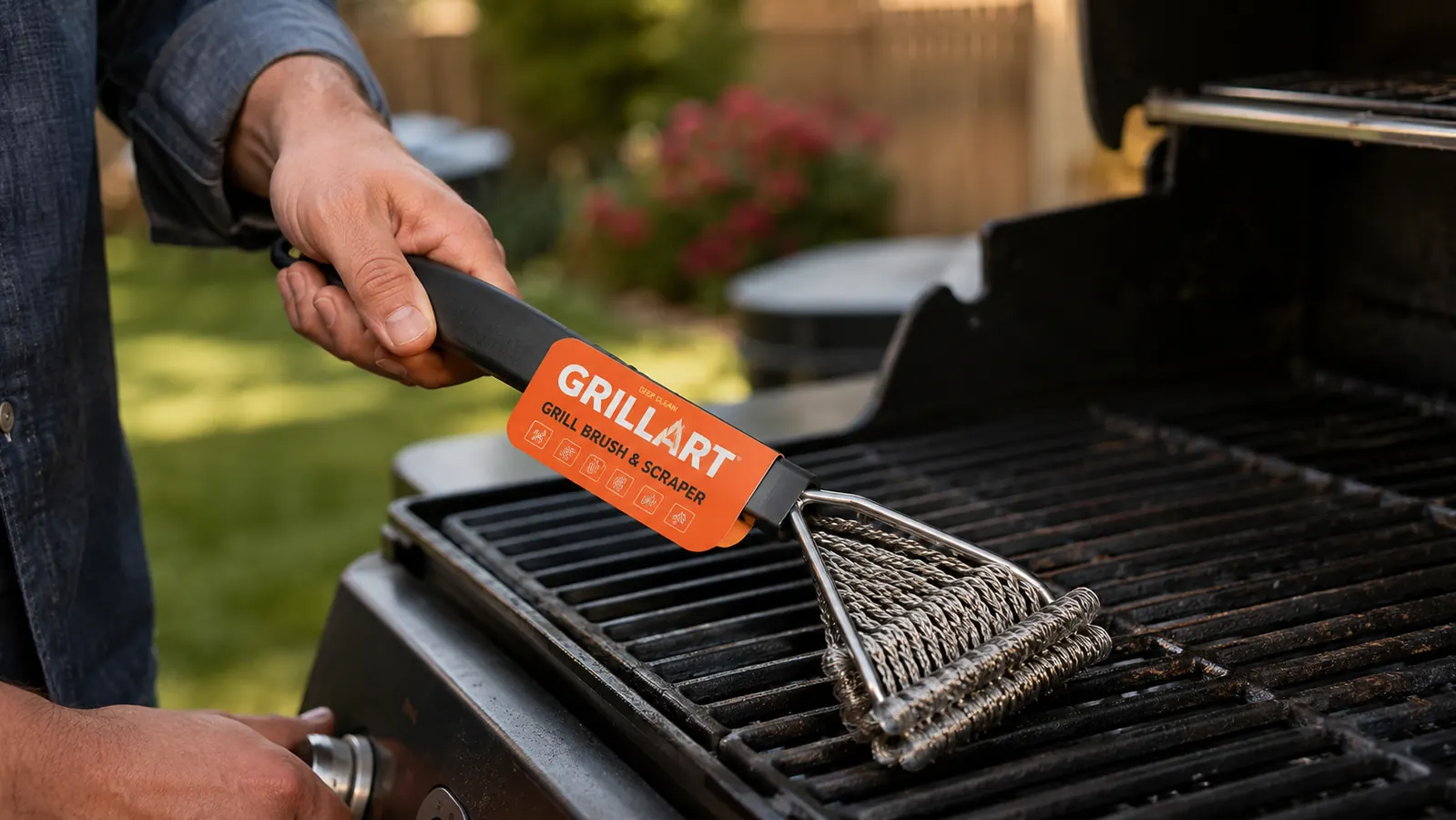
The 18-inch handle keeps your hand a reasonable distance from a hot grate. On most kettle grills and standard gas grills, it is plenty. On a big offset smoker or a large kamado where the cooking surface sits deep in the firebox, 18 inches starts feeling short. If you cook on a full-sized barrel smoker and the grate is set low, you are going to feel the heat on your forearm when you reach to the back of the grate.
The handle itself is rubberized and gives decent grip even when your hands are greasy. I have not had it slip out of my hand, which is the baseline I care about. It is not ergonomic perfection but it is functional and solid.
Where the GRILLART Falls Short
I want to be specific here because this is the part that actually matters for your buying decision. The woven head works well on moderate buildup, but it is not magic. If you go three or four cooks without cleaning your grates, the mesh head struggles with the thick carbonized layer that accumulates between grate bars. A traditional stiff-bristle brush with aggressive individual wires sometimes has more cutting power in that scenario, even though the shedding risk is real.
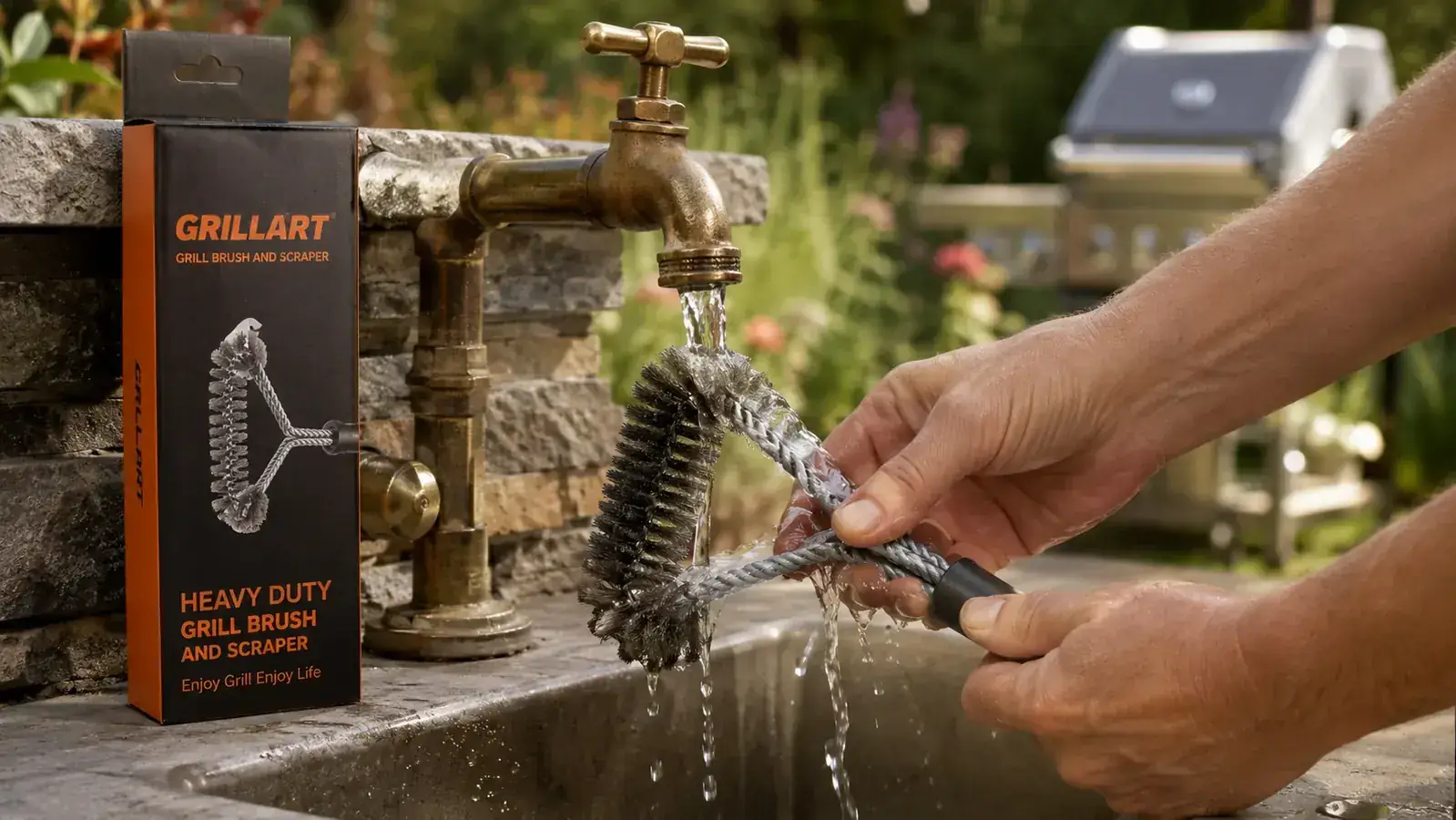
The mesh head also traps burnt food debris in its weave. After a hard cleaning session, you have to rinse it thoroughly and let it dry. If you just toss it in the garage still loaded with carbon debris, it starts to look rough quickly. It is not difficult maintenance, but it is maintenance you have to actually do.
Finally, the head is not replaceable as a separate part. When the woven mesh wears down to the point where it is no longer effective, you buy a new brush. At the current price that is not a financial disaster, but it is worth knowing. Some competing products sell replacement heads.
What I Liked
- No loose bristles shed onto grates or into food, the core safety advantage is real and well-designed
- The stainless steel scraper on the back of the head genuinely handles heavy carbon buildup when used correctly
- Solid grip handle at a good working length for most standard grills
- Works well on gas grill stainless rod grates with moderate buildup
- 4.6 stars across more than 15,000 Amazon reviews, the crowd is not wrong about this one
Where It Falls Short
- Stiffer feel than traditional bristle brushes, requires adjusted technique, especially on the first couple uses
- Struggles with heavy accumulated buildup on cast iron without the scraper assist
- Trapped debris in the mesh weave requires thorough post-use rinse to stay clean
- 18-inch handle can feel short on large offset smokers with deep-set grates
- No replacement head available, full brush replacement required when the mesh wears out
How It Compares to Cheaper Alternatives
I have seen people ask in BBQ forums whether they can just grab a five-dollar bristle brush and take the risk. Here is the honest answer: the bristle shedding problem is not constant, but it is real, and it happens most often with cheaper brushes where quality control on the bristle attachment is lower. The GRILLART is not an extravagant purchase. It is a mid-range tool that eliminates a specific category of risk while cleaning grates reasonably well. That is a clear value proposition.
The main alternative in the bristle-free space is the Grill Rescue steam cleaning pad, which uses water and heat instead of mechanical scrubbing. The Grill Rescue is excellent for fresh-cook cleanup on very hot grates. The GRILLART is better for cooled-down cleanup and for grates with more stubborn buildup, because steam alone does not dislodge thick carbonized fat. They solve slightly different problems. If you cook mostly light protein on gas grates, the Grill Rescue is worth comparing. If you do heavy charcoal cooks or smoke large cuts, the GRILLART handles the mess better.
Who This Is For
The GRILLART makes the most sense for cooks who do regular weekend grilling on a standard gas or charcoal kettle, want to stop worrying about wire bristles in their food, and are willing to spend a few minutes learning a slightly different scrubbing technique. If you cook with kids around or regularly cook for other people's kids, eliminating the bristle risk is worth the cost on its own. At 4.6 stars and over 15,000 reviews, there is substantial real-world evidence that this works as described.
Who Should Skip It
If you run a large offset smoker with heavily used cast iron grates and rarely clean them between sessions, the GRILLART by itself will frustrate you. You will need to use the scraper aggressively and possibly follow up with a second cleaning tool. If you want a single brush that powers through any level of buildup with zero technique adjustment, a heavy-duty commercial-style bristle brush might serve you better in the short term, as long as you accept the tradeoff on bristle safety. If your grill is rarely used and lightly soiled, honestly, a cheap brush probably does the job and you may not need to spend more.
If eliminating wire bristles from your cookouts is the goal, the GRILLART is the straightforward answer.
Check today's price on Amazon and see current availability. Over 15,000 grillers have already made this switch.
Amazon Check Today's Price on Amazon →