
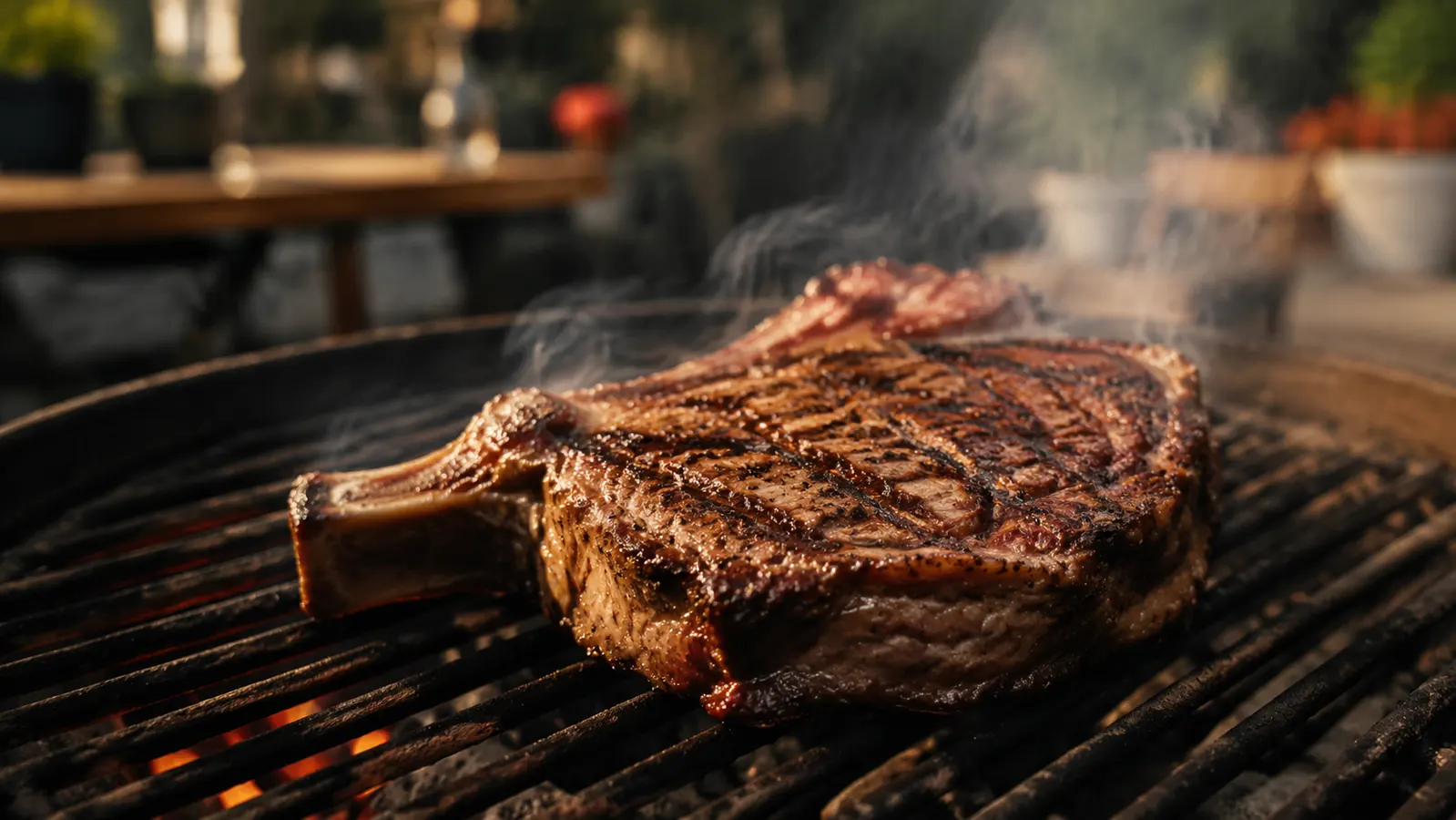
I have ruined more steaks than I care to admit, and almost every one of them came down to the same mistake: I guessed. I pressed the meat with my finger, checked the color on top, and pulled it when I thought it felt right. Sometimes I got lucky. Plenty of times I did not. The ribeye I served my brother-in-law three summers ago is still a sore spot at cookouts. It looked fine on the outside and was gray all the way through.
What fixed it was not a better grill or a more expensive cut. It was a fourteen-dollar instant-read thermometer. Specifically the Alpha Grillers digital thermometer, which now lives clipped to my apron every time I fire up the coals. If you have been chasing a reliable way to pull steaks at the exact doneness your guests want, this guide walks you through the whole process, step by step, using temperature as your guide instead of guesswork.
If you do not own an instant-read thermometer yet, start here.
The Alpha Grillers instant-read thermometer reads in about two seconds, folds flat for storage, and has over 90,000 reviews on Amazon at a 4.8-star average. It is the tool I use in every step below.
Amazon Check Today's Price on Amazon →Step 1: Pick the Right Cut and Let It Come to Room Temperature
The thermometer does not care what cut you choose, but the cut you choose affects how forgiving the process is. Thick steaks, an inch and a quarter or better, give you a wider window between underdone and overdone. Thin steaks cook too fast to use temperature effectively unless you are working a screaming-hot grill and moving quickly. My go-to cuts for this method are ribeye and New York strip, both at least an inch and a half thick. Bone-in cuts like a cowboy ribeye or a T-bone work just as well.
Thirty to forty-five minutes before you light the grill, pull your steaks from the refrigerator and let them sit at room temperature on the counter. A cold center takes longer to come up to temperature, which can leave you with an overdone outer ring while the middle catches up. This is the single easiest step most people skip. Season generously with kosher salt and coarse black pepper right before they go on the grill. Some folks salt twenty-four hours ahead for a dry brine, and that works well too, but the thirty-minute rest alone will help you get a more even cook.
Step 2: Build a Two-Zone Fire
Whether you are on charcoal or gas, two-zone cooking is the foundation of steak done right by temperature. On charcoal, pile your lit coals on one side of the grill and leave the other side empty. On gas, crank two burners to high and leave the third off. You now have a hot side for searing and a cooler side for bringing the internal temp up without burning the outside.
On charcoal I like to get the grate screaming hot before the steaks go on. Hold your hand six inches above the grate on the hot side. If you cannot keep it there for more than two seconds, you are ready to sear. Grill grates should be clean and oiled lightly so the crust releases without tearing. Run a paper towel folded around tongs and dipped in a little vegetable oil across the grates right before the steaks go on.
If you are cooking on a gas grill at high heat across the whole surface, the two-zone method is still available to you by turning one burner to low. Using a second zone as an insurance policy matters more as your steaks get thicker. A two-inch ribeye benefits from finishing over indirect heat once the sear is done. A one-inch strip often sears through without needing the cooler side at all.
Step 3: Sear Hard, Then Move Off Direct Heat
Place your steaks on the hot side of the grill. Do not touch them for the first two to three minutes. You want the crust to form completely before you try to move the meat. If the steak resists when you try to flip it, it is not ready to flip. Once it releases cleanly, flip once and sear the second side for two to three minutes. At this point, many thinner steaks will be close to temperature and can come off the grill. Thicker cuts will need to move to the cooler side to finish.
Avoid the temptation to press the steak with a spatula. That squeezes out juice and tells you nothing useful about doneness. That is exactly what you are trying to replace with the thermometer.
Step 4: Take Your First Temperature Read
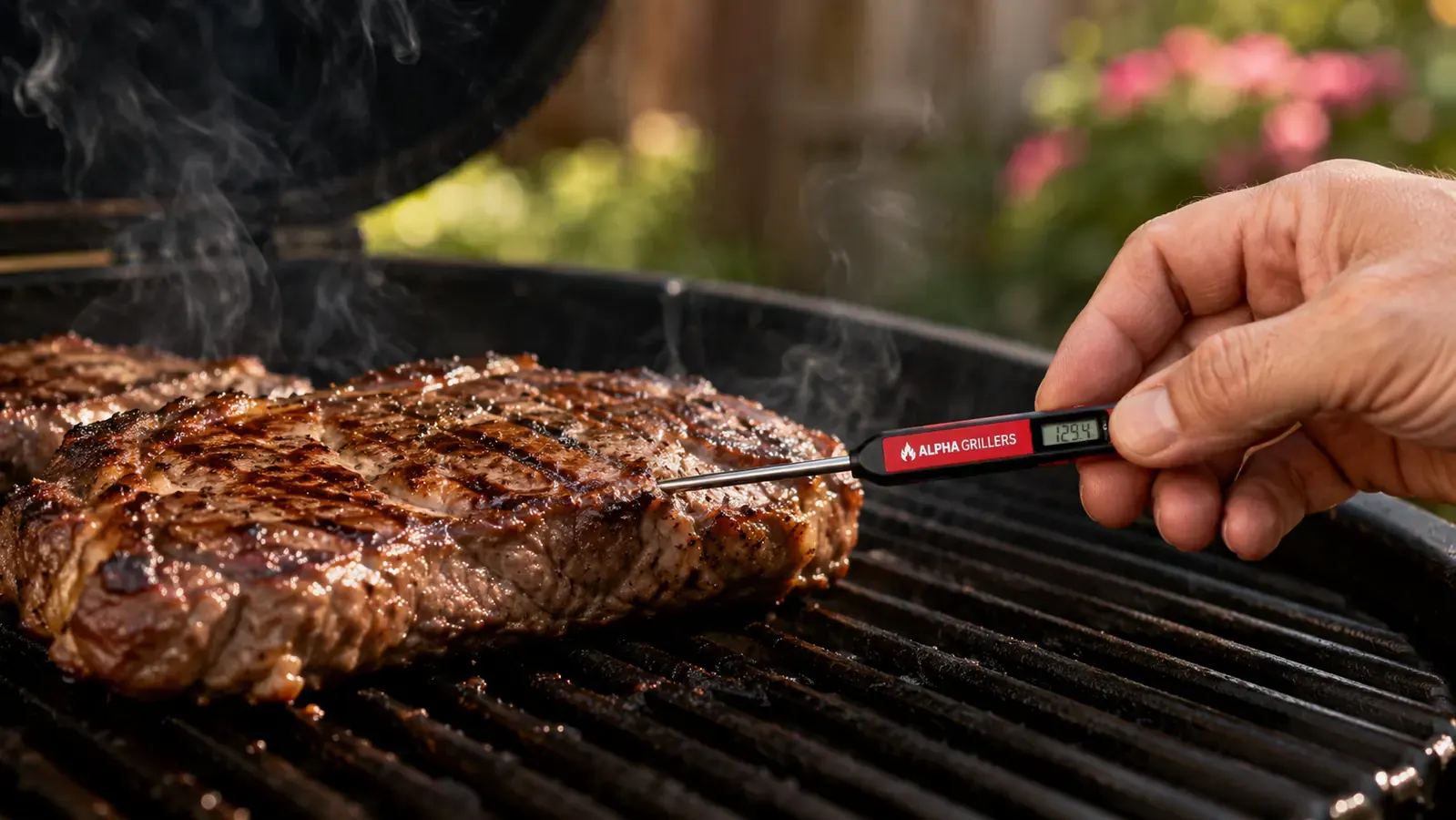
This is where the Alpha Grillers thermometer earns its place in the kit. Once the sear is done and the steak has moved to the indirect side, insert the probe horizontally into the thickest part of the steak. Aim for the center of the meat, not the fat cap, and not close to the bone if you have one. The Alpha Grillers reads in about two seconds, which is fast enough that you are not losing heat from the grill by standing there with the lid open. Fold the probe shut and clip it back to your apron between reads.
Here are the internal temperatures to aim for, measured at the thickest part of the steak before resting:
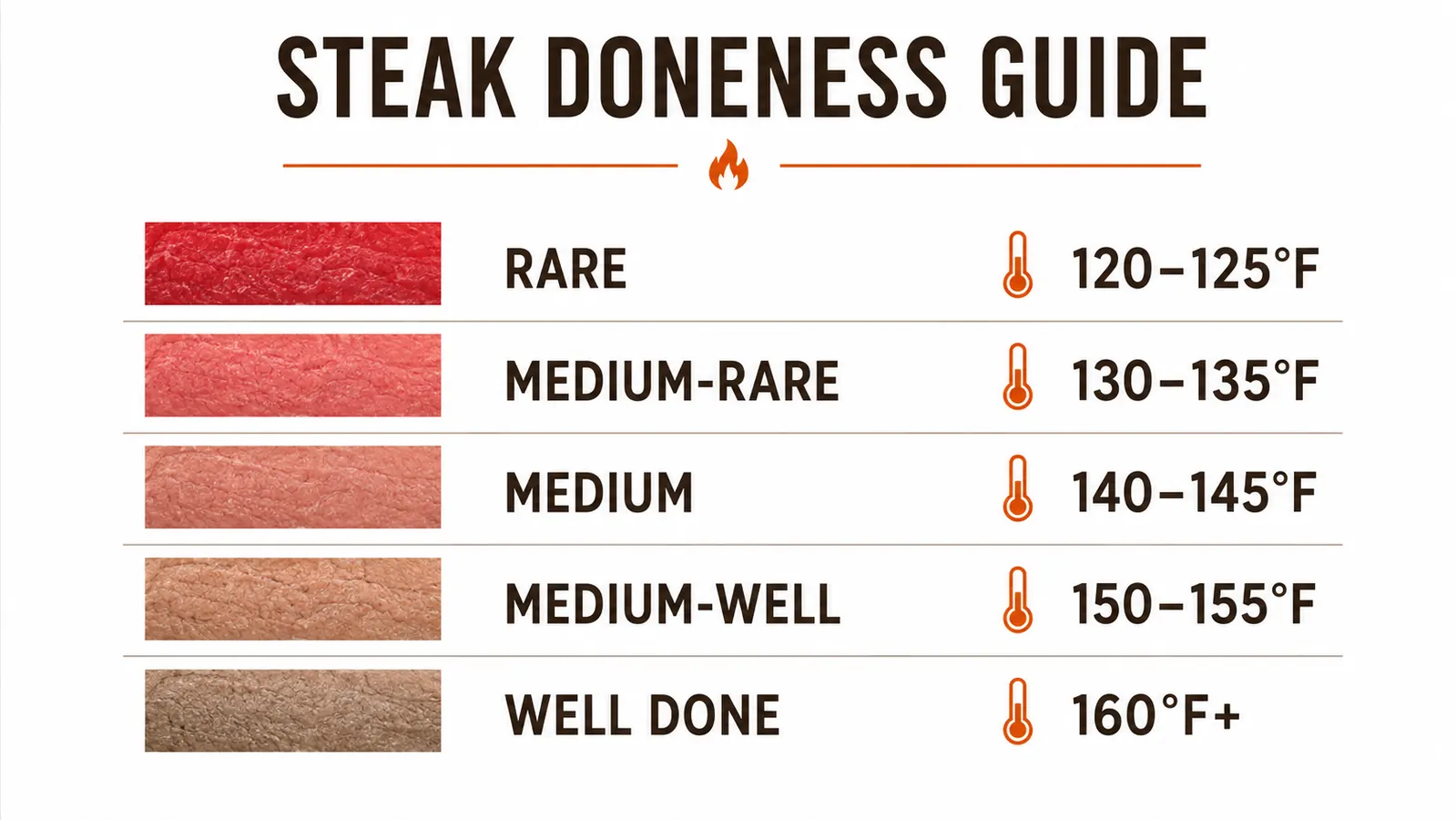
Rare: pull at 120 to 125 degrees Fahrenheit. Medium-rare: pull at 130 to 135. Medium: pull at 140 to 145. Medium-well: pull at 150 to 155. Well done: 160 and above. Every steak will carry over another 3 to 5 degrees after it comes off the heat, so always pull 3 to 5 degrees below your target. If your guest wants medium-rare, pull at 128 to 130 and the rest does the work.
Every steak carries over 3 to 5 degrees after it comes off the grill. Pull early, rest fully. That is the whole secret.
Step 5: Rest the Steak Before You Cut It
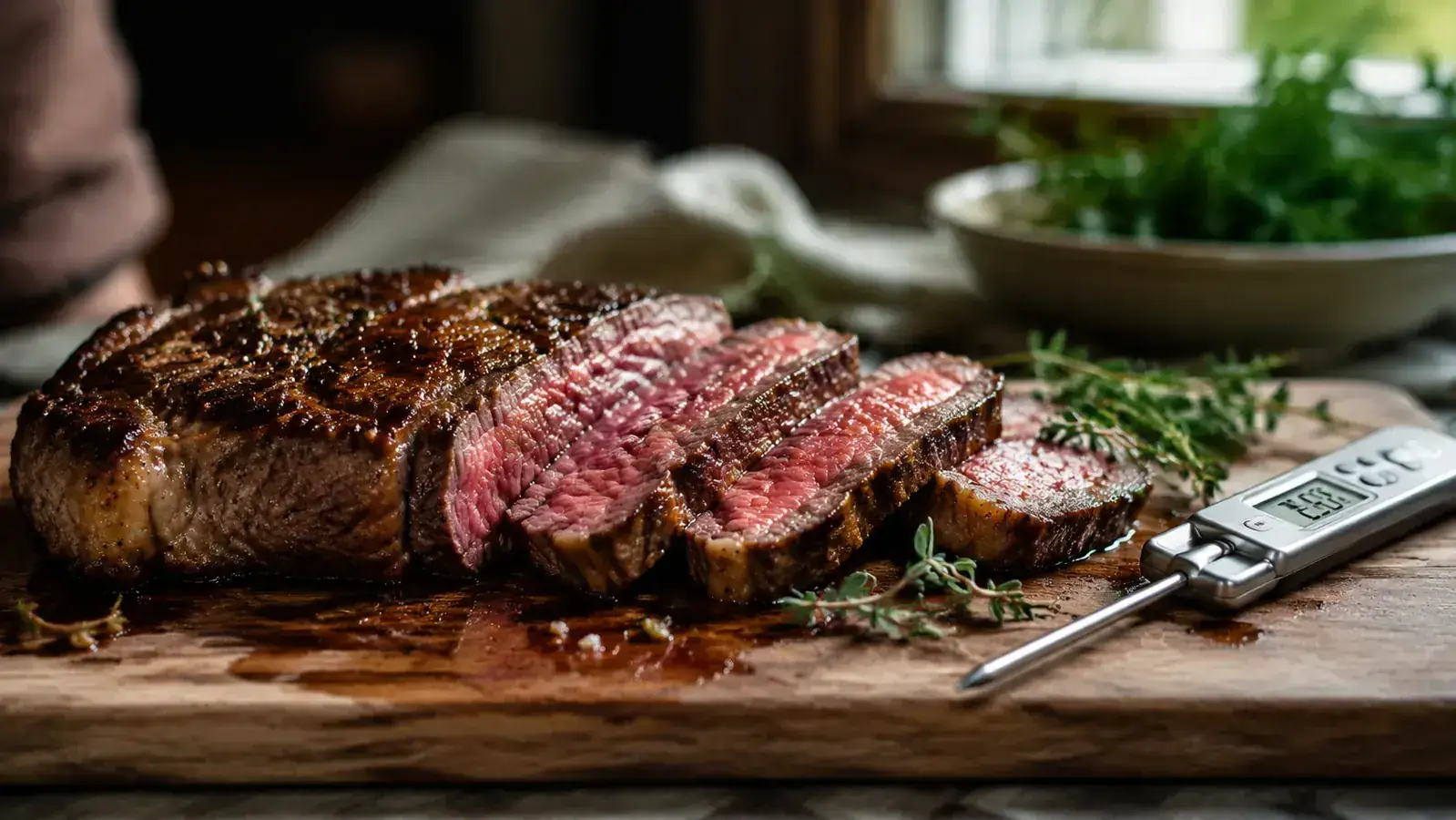
This step gets skipped more than any other, and it costs people a lot of quality they did not need to lose. Resting lets the muscle fibers relax and the juices redistribute through the meat. Cut too early and that juice runs straight onto your cutting board instead of staying inside the steak. For a one-inch steak, a five-minute rest is enough. For a two-inch ribeye or a thick T-bone, rest it eight to ten minutes, tented loosely with foil to hold some heat.
Take a second temperature read right before you cut if you are curious how much carryover actually happened. On a thick steak off a hot charcoal fire, I typically see the internal temp rise 4 to 6 degrees during the rest. That read also confirms you hit your target before the steak goes to the plate. The Alpha Grillers is accurate to plus or minus one degree Fahrenheit, so what you see is what you have got.
What Else Helps
Getting consistent results from grill to grill comes down to a few habits working together. First, a reliable thermometer is non-negotiable. The Alpha Grillers instant-read is my go-to because it is fast, accurate, and I have dropped it twice on concrete without losing the calibration. Over 90,000 reviewers have landed on the same tool for the same reason. Second, keep a notepad or use your phone to log what worked. The first time you nail a two-inch ribeye at exactly medium-rare, write down how long it sat on the hot side, how long it rested on the cool side, and what temp it hit when you pulled it. That information saves you next weekend.
Third, your grill temperature matters as much as your steak's internal temperature. If you do not know how hot your grill is running, you are working with one piece of information missing. A quality grill thermometer or an oven thermometer set on the grate gives you a baseline. Different grills run differently, and airflow on a charcoal grill changes throughout a cook. The more data you have, the fewer surprises you get.
One more thing worth saying plainly: the thermometer is not just for steaks. Once you get into the habit of reading temperature instead of guessing, you will use it on chicken thighs, pork chops, burgers, and anything else you put on the grill. The same Alpha Grillers tool that tells you your strip is at 132 degrees will tell you your chicken breast is at 165. One tool, every protein, zero guesswork. That is a good return on fourteen dollars.
If you want a longer look at how the thermometer itself holds up over time, I put together a full year-long review at the link below. And if you are on the fence about whether you even need one, the reasons listed in the listicle are worth a few minutes of your time before your next cookout.
Internal resources: see the full long-term breakdown at Alpha Grillers Thermometer Review: A Year of Backyard Use and the full breakdown of why thermometers matter at 10 Reasons an Instant-Read Thermometer Changes Your Grilling Game.
Your next steak does not have to be a guess.
The Alpha Grillers instant-read thermometer gives you a two-second read at a price that makes the upgrade a no-brainer. Over 90,000 cooks have made it their go-to, and it is the exact tool used in every step of this guide.
Amazon Check Today's Price on Amazon →