
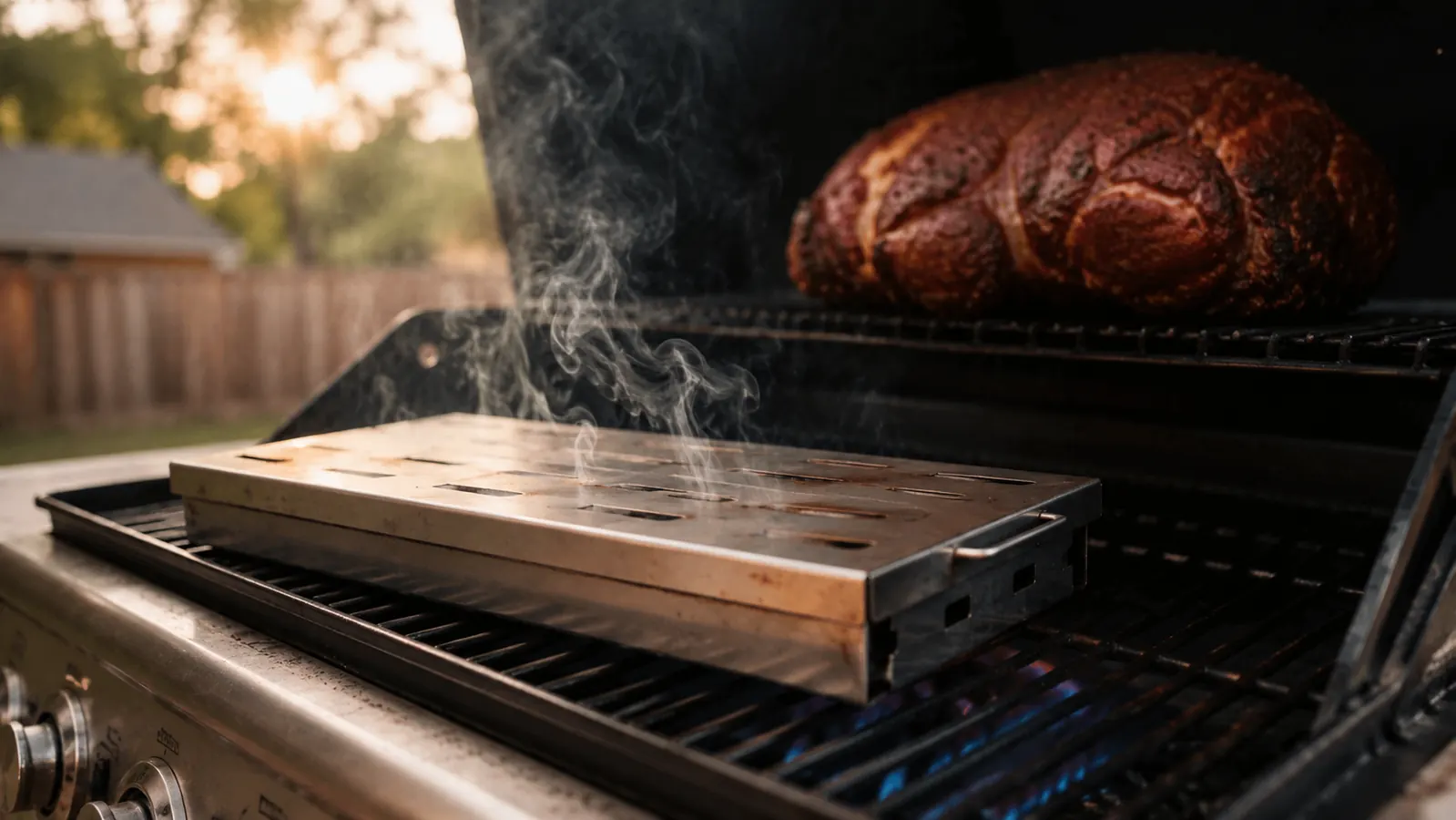
Let me be upfront about something. I went into my first session with the Weber Premium Universal Stainless Steel Smoker Box half-convinced it was going to be a marketing gimmick. A little metal box full of wood chips sitting over a gas burner, producing meaningful smoke flavor on a cut of pork? That sounded more hopeful than real. I have been cooking on gas grills for the better part of 12 years and the one thing every gas grill veteran knows is that gas burns clean, and clean-burning fuel does not produce smoke. So when I set this box up for the first time and smelled genuine hickory smoke rolling around inside my grill lid, I was genuinely surprised. But this review is not about that first surprise. It is about every cook after that, including the ones where the box let me down, and the specific situations where it underperforms that most write-ups gloss over entirely.
The Weber Premium Smoker Box carries a 4.6-star rating across nearly 3,843 Amazon reviews, and that rating is earned. But ratings average the good sessions with the bad, and the bad sessions have patterns worth understanding before you spend $40. This review is about those patterns.
The Quick Verdict
The Weber smoker box delivers real wood-smoke flavor on a gas grill, but it has a narrow performance window. Thick cuts on longer indirect cooks benefit the most. Thin cuts and quick cooks are where it can disappoint or even over-smoke.
Amazon Check Today's Price →Your gas grill food tastes flat and you know smoke is the missing piece.
Most gas grillers try the foil-packet trick first and quit after two burns. The Weber box solves every problem the foil packet has: it seals the smoke, survives multiple cooks, and does not dump ash on your burner covers. Check the current price before you improvise another workaround.
Amazon Check Today's Price on Amazon →How I Tested It (and What I Deliberately Pushed)
I ran the Weber smoker box through eight separate cook sessions covering four different proteins and three different gas grill configurations at a cookout at my buddy's place where we had access to his three-burner Weber Spirit and my neighbor's older two-burner Char-Broil. I used my own three-burner Genesis II for the remaining sessions. The idea was to test whether the box performs differently across grill models and BTU outputs, because that is something nobody talks about in the product reviews.
I also deliberately tested the scenarios where I suspected the box would struggle: thin chicken breasts on a hot direct cook, fish on a medium-low grill, a thick pork shoulder on a four-hour indirect session, and a quick steak cook where I had the burner cranked. I wanted to know where the performance floor was, not just where the ceiling was on a perfect setup.
The Surface Smoke Problem Nobody Mentions
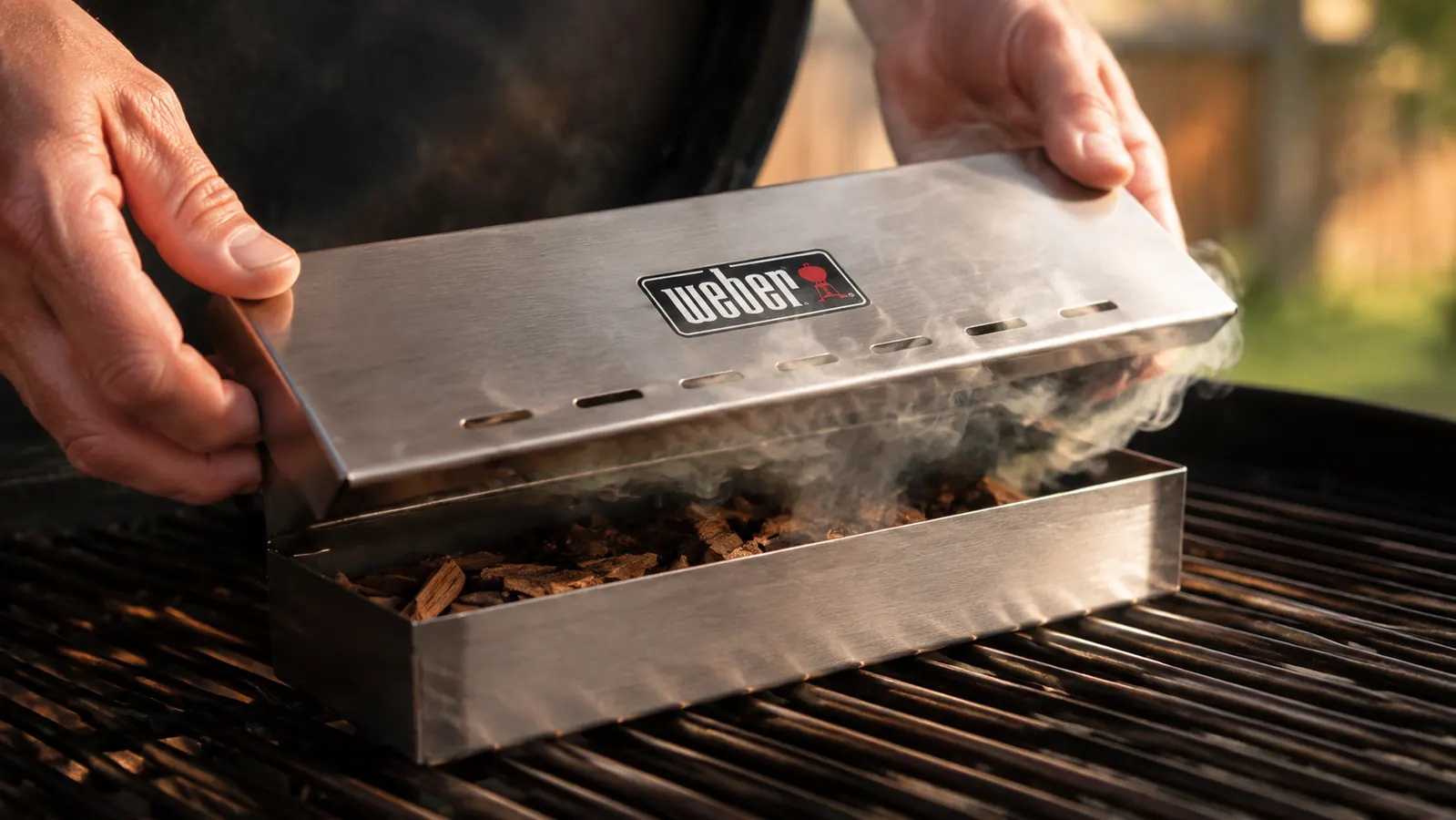
Here is something that took me a few sessions to understand. When people say a smoker box adds smoke flavor, they mean two distinct things that feel similar but are not. There is surface smoke flavor, which is the smell and light char note you get from smoke rolling over the outside of the meat during the cook. Then there is penetrating smoke flavor, the kind that actually works into the muscle fibers and produces a smoke ring and a deep smoked taste all the way through the cut. The Weber box reliably delivers the first kind. It delivers the second kind only under specific conditions.
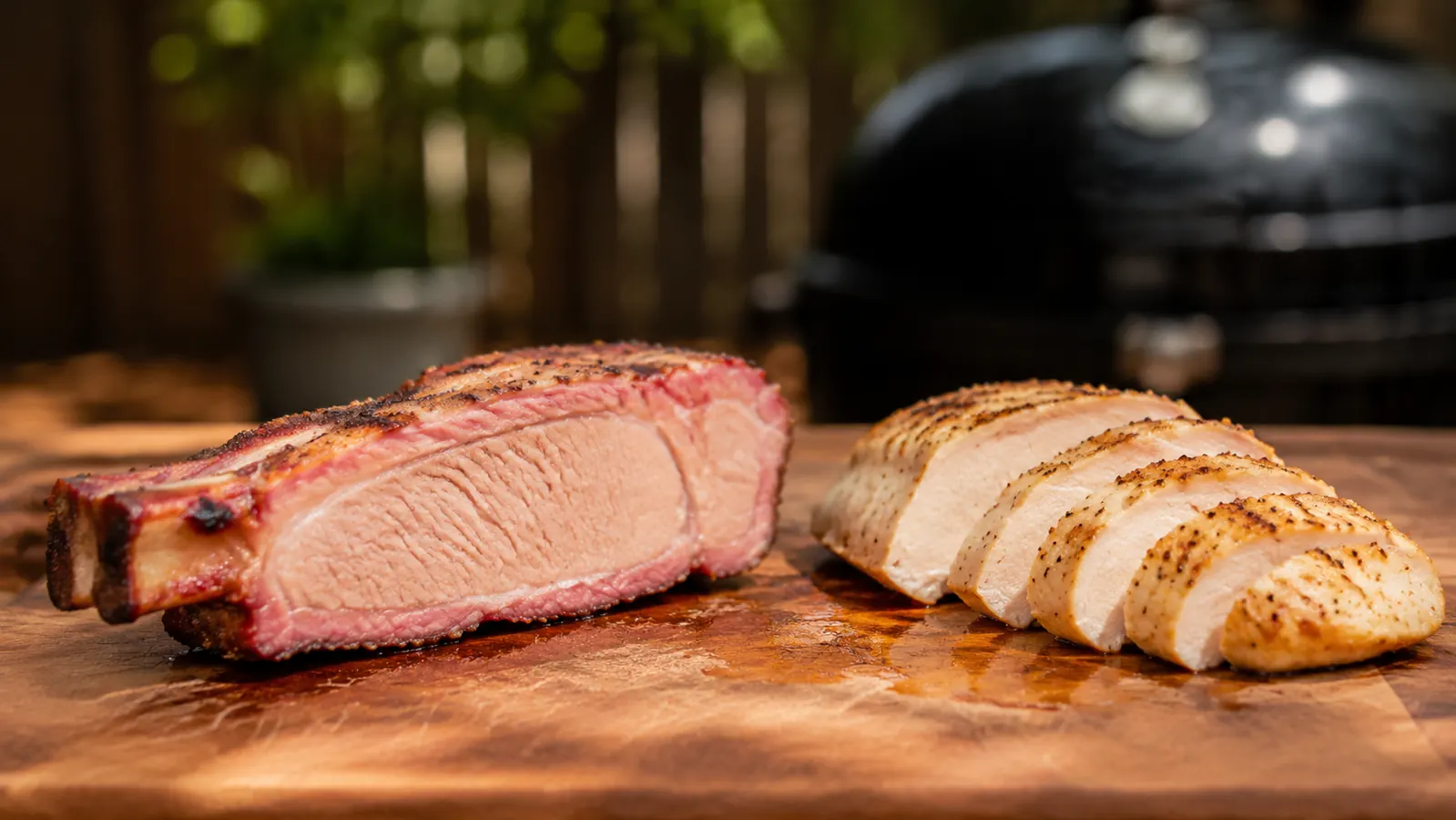
To get smoke penetration on a gas grill with a smoker box you need three things working at once: a long cook time (at least 90 minutes at indirect heat), a thick cut of meat (pork ribs, chicken quarters, a bone-in pork shoulder segment), and a grill lid that traps and circulates smoke instead of bleeding it out. On a well-sealed modern Weber like the Genesis or Spirit series, those conditions are achievable and the results are genuinely good. On an older grill with a warped lid or wide gaps around the vents, the smoke escapes faster than it can do its job and you end up with surface flavor only. That is not a flaw in the smoker box exactly. It is physics. But it is worth knowing before you expect competition-level results.
Where It Fails: Thin Cuts and High-Heat Cooks
This is the part of the review I wished someone had told me before I ruined a batch of tilapia fillets. Thin cuts cook fast. The Weber smoker box takes 10 to 15 minutes to get up to temperature and start producing meaningful smoke. By the time the box is running at full output, a thin chicken breast or a fish fillet is already three-quarters done. So what happens? The smoke hits the surface hard in the final few minutes and can over-smoke the exterior before the interior even registers a smoke note. On the tilapia this meant a bitter, acrid smoke flavor on the skin side with zero smoke inside the fillet. On a boneless, skinless chicken breast it meant a heavy smoke crust that my kids would not touch.
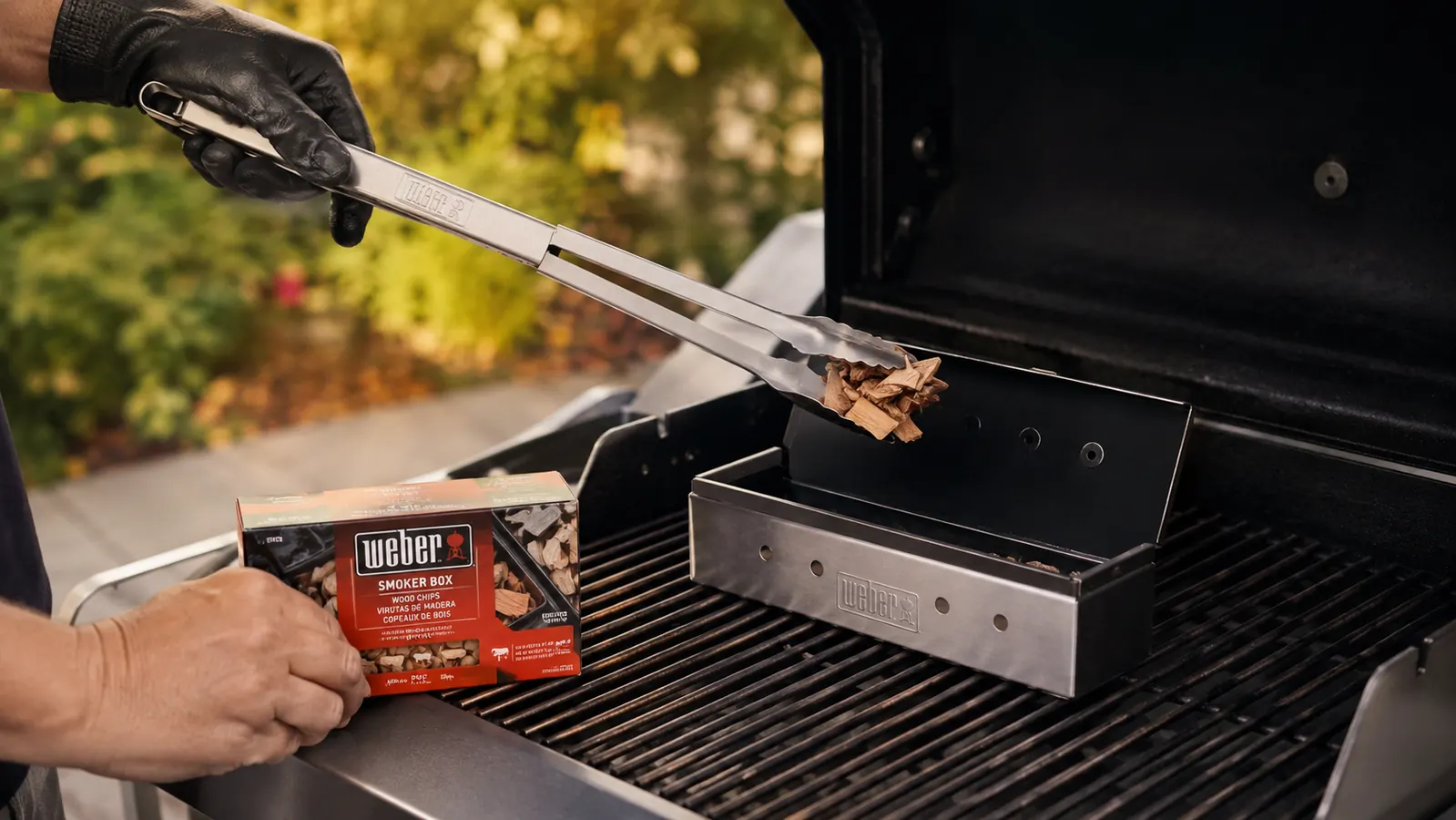
The workaround is to preheat the grill with the smoker box in place for 15 full minutes before you put anything on, so the box is already producing smoke when the food hits the grates. That way thin cuts get steady smoke exposure from the first minute rather than a late-session blast. It helps, but the smoker box is still not designed for fast high-heat cooks. Where it genuinely shines is on thick cuts: bone-in chicken thighs, baby back ribs on a two-hour indirect cook, a butterflied leg of lamb going low-and-slow. That is where the flavor penetration happens and the results justify the price of the box.
The smoker box takes 10 to 15 minutes to reach full output. If your cook is done in 20 minutes total, the smoke hits too late and too hard.
Weber Box vs. DIY Foil Packet: This Is Not Even Close
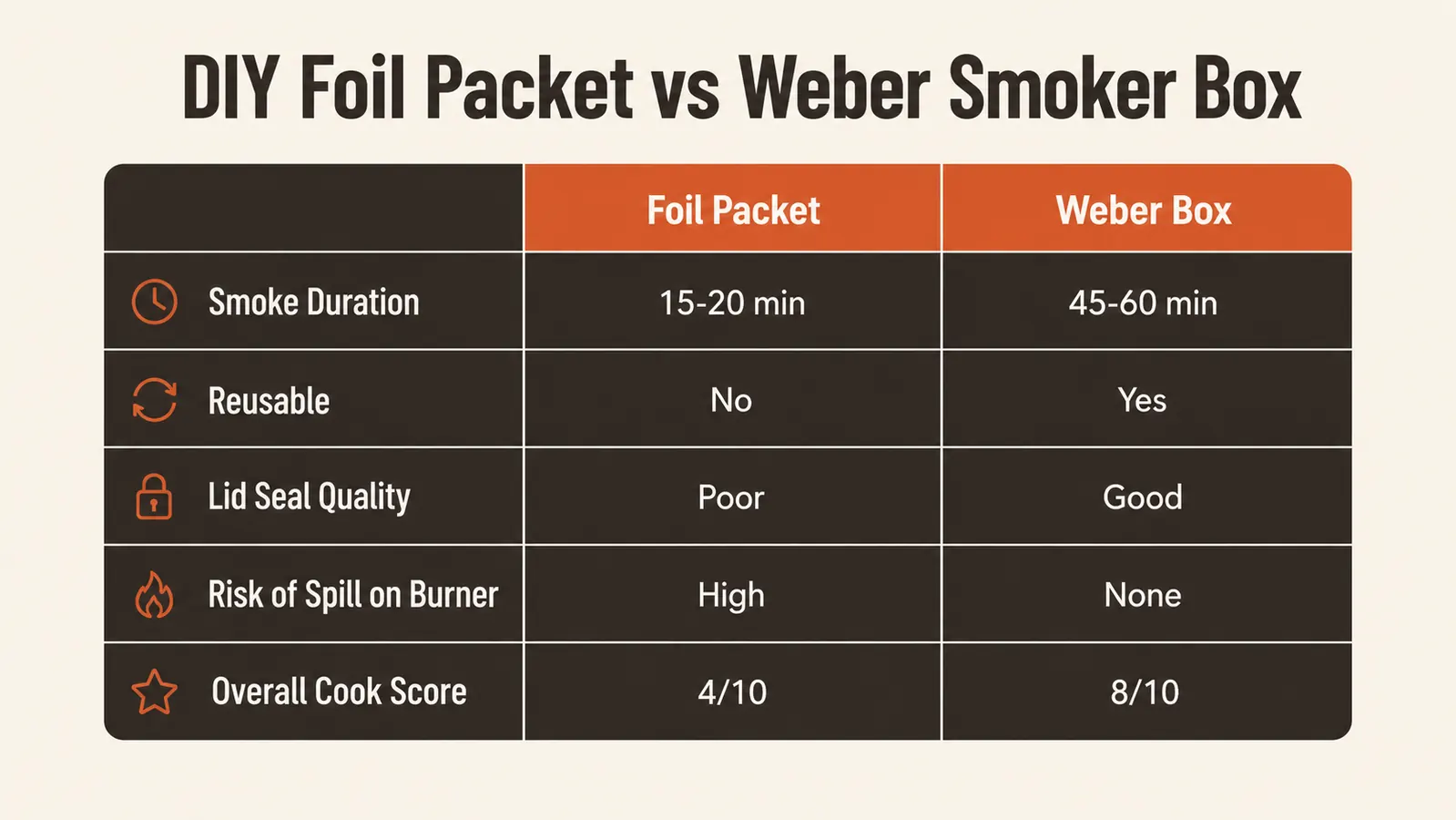
Before I bought the Weber box I spent two summers using the foil packet method: a handful of chips wrapped in heavy-duty aluminum foil with a few holes poked in the top, dropped over the burner. It is free, it is easy, and it looks like the same idea. It is not the same idea. The foil packet has no seal on the smoke output, so chips smolder unevenly depending on which part of the packet is closest to the flame. The packet tears or splits after one or two uses and you are making a new one every single cook. Worse, when the foil fails it can drop half-burned chips onto your burner covers and create a mess that is genuinely annoying to clean.
The Weber box solves every one of those problems. The hinged stainless lid controls the rate at which oxygen reaches the chips, which means a more even smolder and more consistent smoke output from start to finish. The box does not degrade. You load it, use it, dump the ash when it cools, and it is ready for the next cook. I have also noticed the smoke from the Weber box smells cleaner than what I got from foil packets. I suspect the foil itself contributes off-flavors at high heat, though I cannot prove that. What I can say is that switching from foil packets to the Weber box made an immediate and noticeable improvement in smoke quality.
Does Your Grill's BTU Output Matter?
Short answer: yes, more than I expected. I tested the smoker box on three grills with meaningfully different BTU ratings. My Genesis II runs about 39,000 BTU total across three burners. The older two-burner Char-Broil was a lower-output grill in the 24,000 to 26,000 range. The Spirit II we cooked on at my buddy's place sits around 26,500 BTU. The Weber box works on all three, but it reaches operating temperature faster on the higher-BTU Genesis. On the lower-output grills it took closer to 18 to 20 minutes before the box was producing steady smoke, which is a meaningful difference on a cook that is only 90 minutes long.
If you have a lower-BTU grill, run that burner on high for the preheat phase rather than medium-high. You need enough heat to get the chips smoking before you dial back to your cooking temperature. On higher-output grills you have more flexibility and can set the burner under the box at medium during a long cook without the box going cold. This is the kind of grill-specific adjustment that takes one or two sessions to dial in. It is not difficult once you understand what you are working with.
The Real Question: Is $40 Worth It When a Dedicated Smoker Starts Around $200?
This is the question I kept asking myself before I bought the Weber box, and it is worth answering directly. A basic entry-level dedicated smoker, something like a vertical bullet smoker or an offset, starts around $150 to $250 for a model that will actually hold temperature and produce consistent smoke. That is three to six times the price of the Weber box. The smoker box cannot match what a dedicated cooker produces. If you are serious about BBQ and want to make true competition-style pulled pork or brisket, the smoker box will eventually feel like a compromise and you will want a real smoker.
But that is not the right frame for most people reading this. If you already own a gas grill, love cooking on it, and want noticeably better smoke flavor on ribs and chicken without buying and storing a second piece of equipment, the Weber smoker box is a practical and genuinely effective $40 upgrade. It does not demand a new spot on your patio or a learning curve that takes months. It fits into your existing gas grill workflow with one small adjustment. That is the specific value proposition, and within that context it is a strong buy. If you are torn between spending $40 on this or saving toward a real smoker, I would tell you to buy the Weber box now and use it while you save up. It will make your gas grill better in the meantime and it will not conflict with whatever you upgrade to later.
What I Liked
- Produces genuine wood-smoke flavor that guests can taste, especially on thick cuts cooked low-and-slow on indirect heat
- Dramatically better than DIY foil packets in smoke consistency, cleanliness, and durability
- Thick stainless steel construction shows zero rust or warping after extended use
- Hinged lid controls oxygen access to chips for a more even, consistent smolder
- Universal design fits most gas, charcoal, and electric grills with standard grate spacing
- At $40, adds real smoke to your existing gas grill without buying a second cooker
Where It Falls Short
- Takes 10 to 15 minutes to reach full smoke output, which can over-smoke thin cuts or deliver smoke too late on quick cooks
- Smoke penetration is real but limited compared to a charcoal grill, kamado, or dedicated smoker
- Performance varies with grill BTU output; low-output grills take longer to get the box producing
- Lid must be reloaded mid-cook on sessions longer than 60 minutes, requiring care around a live hot burner
- On grills with worn or warped lids, smoke escapes faster and penetration suffers
Who This Is For
The Weber Premium Smoker Box is built for gas grill owners who cook on indirect heat for longer sessions, typically 90 minutes or more, and who want real wood-smoke flavor without buying or storing a dedicated smoker. If your regular rotation includes baby back ribs, bone-in chicken pieces, pork shoulder, or whole chickens and you have noticed the food tastes good but not smoky, this box is a direct and practical fix. It works best on a modern, well-sealed gas grill from Weber or a comparable quality brand. It rewards a small amount of attention to chip load timing and BTU management, both of which come naturally after two or three sessions.
Who Should Skip It
Skip this if your main grill repertoire is quick high-heat cooks: steaks, burgers, fish fillets, boneless chicken breasts, hot dogs. The box is not set up for fast cooks and the timing mismatch can actually hurt your results on thin cuts. Skip it also if you already have a charcoal grill, a pellet grill, or any kind of dedicated smoker. Those cookers have smoke built into the method and the Weber box adds nothing you do not already have. And if you are seriously considering buying a real entry-level smoker and using the $40 for that instead, that is a defensible call. What the Weber box will not do is make your gas grill cook like a stick burner. It is a meaningful upgrade with real limits, and the people happiest with it go in knowing both sides of that.
Ribs and chicken on a gas grill that actually taste smoky, without a second cooker taking up patio space.
After testing it across multiple grills and cook types, the Weber Premium Smoker Box is the recommendation for gas grill owners who want a real smoke upgrade. It is not magic, but it is the most practical $40 you can spend on your current setup. Check the current price on Amazon and read the customer questions before you order to confirm your grate spacing is compatible.
Amazon Check Today's Price on Amazon →